Second Avenue subway phase 2 could open Harlem transit hub by 2032
Harlem’s next subway link could finally arrive by 2032, ending a century-long wait and creating a major transfer hub at 125th Street.

The Second Avenue subway’s long-promised second phase could bring the Q line to 125th Street by 2032, turning East Harlem into a transit hub with direct links to the 4, 5 and 6 trains and Metro-North. For a corridor that has waited through generations of delay, the project is the clearest test yet of whether New York can finish what it planned a century ago.
The line was first proposed in 1920 and appeared again in a 1929 transit plan for a route from Houston Street to the Harlem River. Then the Great Depression, World War II and the fiscal crisis of the 1970s pushed it back again and again. When the Second Avenue El ended service above 57th Street in 1940, the East Side lost a key subway spine and became heavily dependent on the Lexington Avenue line, a burden that still shapes daily commutes.
Phase 2 would extend the Q line from 96th Street to 125th Street, with new stations at 106th Street and 116th Street and a third station at 125th Street and Lexington Avenue. The MTA says the project also includes an entrance at Park Avenue for transfers to the Harlem-125th Street Metro-North station. All three stations are planned to be ADA-accessible, and officials say some riders could save as much as 20 minutes. The agency expects about 100,000 daily riders to benefit, while the extension could create one-seat trips for roughly 300,000 riders to the Upper East Side, Midtown West and Coney Island.

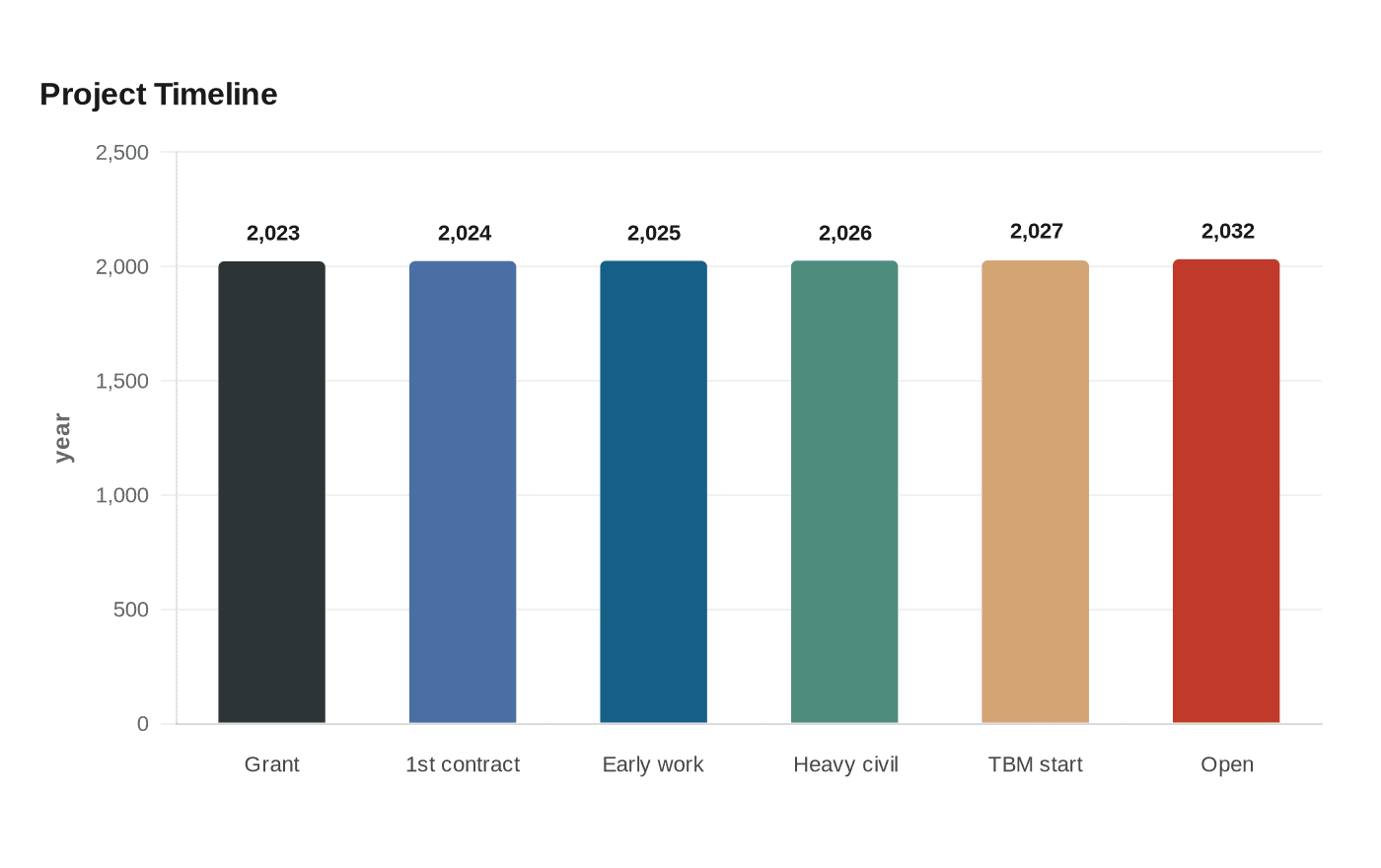
The financing and construction plan has advanced in stages. The MTA secured a $3.4 billion federal Full Funding Grant Agreement in November 2023, awarded its first construction contract in 2024 for utility relocation, and in August 2025 gave a $1.972 billion tunneling contract to Connect Plus Partners, a joint venture of Halmar International and FCC Construction. State and MTA officials say early work began in 2025, heavy civil construction is set for early 2026 and tunnel boring is expected to start in 2027.
The project is projected to cost nearly $7 billion and to come in about 10 percent cheaper than Phase 1. The MTA says the redesign saves $1.3 billion, including about $500 million from reusing tunnel work built in the 1970s for the future 116th Street station, and it is being delivered through four construction contracts instead of the larger package used before. Officials also say Phase 2 will generate more than 70,000 jobs, with a 20 percent local hiring goal for East Harlem residents.
Gov. Kathy Hochul and MTA Chair and CEO Janno Lieber have framed the extension as overdue transit equity for East and Central Harlem. On the street, the promise of faster trips and easier transfers is colliding with a harder reality: some East Harlem business owners say construction has already cut foot traffic, strained access and parking, and may force relocations before the line ever opens.
This article was produced by Prism’s automated news system from verified source data, official records, and press releases, then run through automated quality and moderation checks before publishing. The system is built and supervised by the people who set the standards it runs under. Read our full AI policy.
Did this article answer your question?