Selective Service Registration Still Required for Men Despite No Active Draft
Men who skip Selective Service face felony charges and lost federal benefits, even as the U.S. shifts to automatic federal enrollment by December 2026.
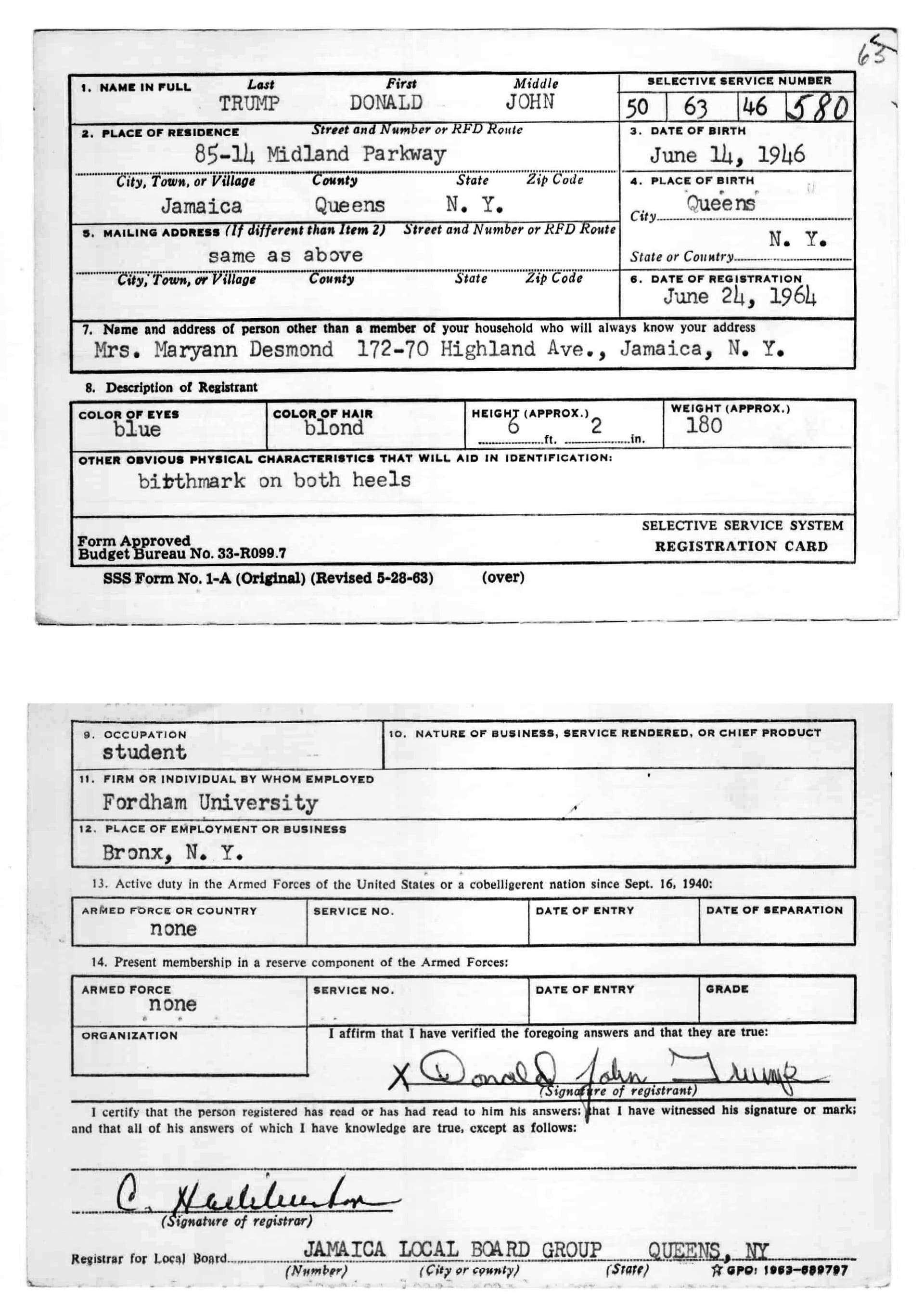
Men ages 18 through 25 are still legally required to register with the Selective Service System, a federal obligation carrying felony-level consequences that many Americans assume lapsed with the end of the Vietnam War draft more than 50 years ago.
Under the Military Selective Service Act, failure to register is punishable by up to five years in prison and a fine of up to $250,000. Unregistered men also lose eligibility for certain federal student loans, federal employment, and job training programs. In 2024, 81% of eligible men were registered with the Selective Service System, down three percentage points from the prior year. Total registrations fell from 15.6 million in 2022 to 15.2 million in 2023, a decline partly driven by the removal of the registration requirement from the FAFSA form.
That compliance gap is set to close. President Donald Trump signed the fiscal year 2026 National Defense Authorization Act into law on December 18, 2025, with Section 535 mandating automatic Selective Service registration for all male U.S. residents starting December 18, 2026. The Selective Service System will draw on existing federal databases, including Social Security Administration records, to identify and enroll eligible men within 30 days of their 18th birthday, with no action required on their part. The agency received $6 million from the Technology Modernization Fund to build the automated infrastructure and submitted a proposed rule to the Office of Information and Regulatory Affairs on March 30, 2026, currently awaiting finalization.
Registration, automatic or otherwise, does not mean a military draft. The U.S. has maintained an all-volunteer force since 1973, and activating a draft would require a separate act of Congress. White House Press Secretary Karoline Leavitt said in March 2026 that a draft is "not part of the current plan," though she noted President Trump likes to "keep his options on the table."
The provision was introduced with bipartisan support by Rep. Chrissy Houlahan, D-PA, and Rep. Don Bacon, R-NE. Houlahan said the change "not only saves taxpayer dollars by eliminating the need to advertise, but finally ensures that young men are not unknowingly penalized," adding that it "simply moves the burden of filing the registration paperwork from the individual to the government, where it belongs." The SSS carries an annual budget of approximately $30 million, with much of it historically directed toward outreach campaigns. Automatic registration is already standard practice in 46 states and territories.

Not everyone embraced the shift. Draft resistance analyst Edward Hasbrouck argued the new system "won't produce an accurate or complete list of potential draftees" and warned it "will increase the likelihood of war and violate the privacy of US citizens and residents." Privacy advocates described the framework as giving the federal government an unprecedented surveillance footprint over an entire demographic. The Center on Conscience and War noted that conscientious objectors would now be enrolled without taking any action themselves.
Women remain ineligible for the draft and are not required to register. A congressionally mandated commission in March 2020 recommended women be made draft-eligible, and the House passed an NDAA version in September 2021 extending registration to "all Americans," but that language was removed before final passage. The FY2026 NDAA made no change to women's status.
The Selective Service System was established by President Woodrow Wilson in 1917. Self-registration has been required since President Jimmy Carter reinstated it in 1980 following a five-year suspension, with the Supreme Court upholding the male-only requirement in Rostker v. Goldberg one year later. The December 2026 transition to automatic enrollment represents the most significant structural change to the system in more than four decades.
This article was produced by Prism’s automated news system from verified source data, official records, and press releases, then run through automated quality and moderation checks before publishing. The system is built and supervised by the people who set the standards it runs under. Read our full AI policy.
Did this article answer your question?