Sen. Warren and Sanders Propose New Tax on Ultra-Millionaires
Warren and Sanders unveiled the Ultra-Millionaire Tax Act of 2026, which would hit America's 905 billionaires — worth a combined $7.8 trillion — with up to a 3% annual wealth tax.
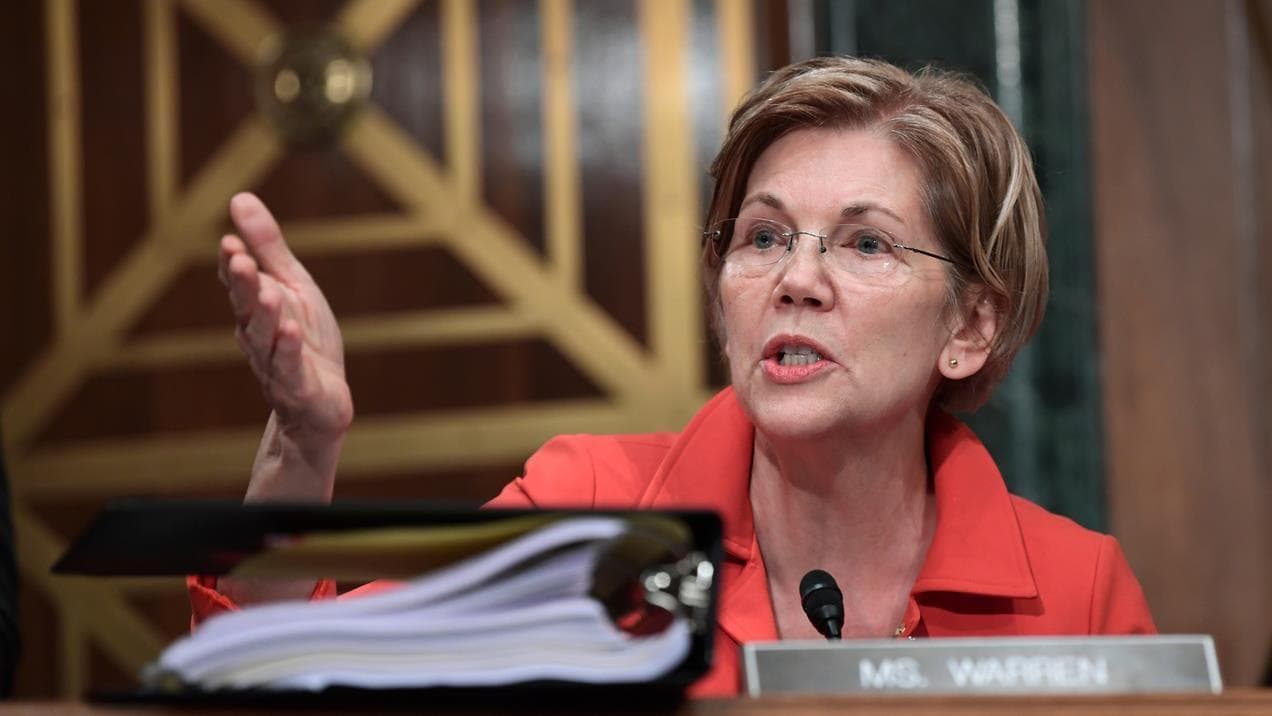
Between 2014 and 2018, Warren Buffett's fortune grew by $24 billion. His total tax bill over those four years: $23.7 million, an effective rate of about 0.1%, according to ProPublica. Jeff Bezos did marginally better, paying $973 million in taxes on a $99 billion increase in wealth, roughly 1 cent on every dollar gained. Sen. Elizabeth Warren cited figures like those Monday when she unveiled the Ultra-Millionaire Tax Act of 2026, a proposal that would impose an annual levy on the net worth of the ultra-rich for the first time in American history.
The bill would impose an annual 2% tax on the net worth of households and trusts over $50 million, and an additional 1% tax on the wealth of billionaires. More precisely, the structure works as a 2% annual tax on net worth between $50 million and $1 billion and a 3% tax on every dollar of net worth above $1 billion. To prevent the wealthiest from simply renouncing their citizenship to escape the levy, the bill includes a 40% exit tax on net worth above $50 million for any U.S. citizen who renounces their citizenship.
About 260,000 U.S. households would be subject to Warren's wealth tax, according to Saez and Zucman's analysis of the new bill. Warren's own Senate materials describe the affected population as roughly the wealthiest 75,000 households, or the top 0.1%.
The bill's projected revenue figures vary depending on which analysis is cited. Warren's Senate release estimates the legislation would raise $2.75 trillion over ten years, based on projections from University of California, Berkeley economists Emmanuel Saez and Gabriel Zucman, who are renowned for their work on economic inequality. A newer Saez and Zucman analysis, however, puts the figure at $6.2 trillion over the next decade, more than double the earlier forecast. People on Forbes' list of the 400 richest Americans paid a lower effective tax rate than all other U.S. taxpayers, Saez and Zucman found in a 2025 research paper, helping explain why updated wealth levels produce a dramatically larger revenue estimate.
"While multi-millionaires and billionaires are getting richer and richer, families are getting squeezed by a rigged economy," Warren said in a statement. "My bill is about basic fairness and making the ultra-wealthy pay their fair share. It's time for the government to stop listening to the richest of the rich and start working for working people."
The scale of wealth concentration driving those projections is stark. As of September, the nation's 905 billionaires were worth a combined $7.8 trillion, an increase of more than 25% from a year earlier, according to the progressive Institute for Policy Studies.

UC Berkeley economist Emmanuel Saez, whose research underpins the bill's revenue projections, offered unambiguous support. "A progressive wealth tax is the most direct policy tool to curb the growing concentration of wealth in the United States," Saez and Zucman said in a statement, adding that it "will also bring substantial and much needed tax revenue to address the many challenges the country is facing."
The bill has 10 Democratic co-sponsors in the Senate, including Sen. Chris Van Hollen of Maryland. In the House, Rep. Pramila Jayapal of Washington is the lead sponsor, with Rep. Brendan Boyle of Pennsylvania as co-lead, backed by 39 Democratic co-sponsors. Vermont Sen. Bernie Sanders is among the Senate co-sponsors. "The current tax code is rigged against working people and the middle class," Boyle said in a statement.
The legislation faces real obstacles beyond the current Republican-controlled Congress. A wealth tax would levy a 2% annual tax on households and trusts valued at between $50 million and $1 billion, with all net worth over $1 billion taxed at 3%, but administering such a tax presents significant practical challenges: the rich often hold assets that are difficult to value, from private businesses to art collections to complex trusts. Legal questions add another layer of uncertainty. A 2024 Supreme Court ruling led legal scholar Galle and other constitutional experts to conclude the Court could potentially rule both wealth taxes and mark-to-market taxes unconstitutional, according to reporting by the San Francisco Examiner.
Washington state recently passed a millionaires' tax, while New York City Mayor Zohran Mamdani wants to add a 2% tax on residents who earn over $1 million, signaling that Warren's federal proposal arrives alongside a broader push at multiple levels of government. Almost 60% of respondents to a 2025 poll by the Pew Research Center said tax rates should be higher on households with more than $400,000 in income.
Warren has introduced versions of this legislation in 2019 and 2021, each time without success. The 2026 bill carries the same fundamental architecture but a significantly larger price tag, a direct consequence of how much richer America's wealthiest families have become in the intervening years.
This article was produced by Prism’s automated news system from verified source data, official records, and press releases, then run through automated quality and moderation checks before publishing. The system is built and supervised by the people who set the standards it runs under. Read our full AI policy.
Did this article answer your question?

