Senate Democrats Weigh GOP Deal to Strip ICE Funding Amid DHS Shutdown
Only one Senate Democrat, John Fetterman, backed the GOP's offer to strip $5.5B in ICE deportation funds while 40-plus days of airport chaos mount pressure.
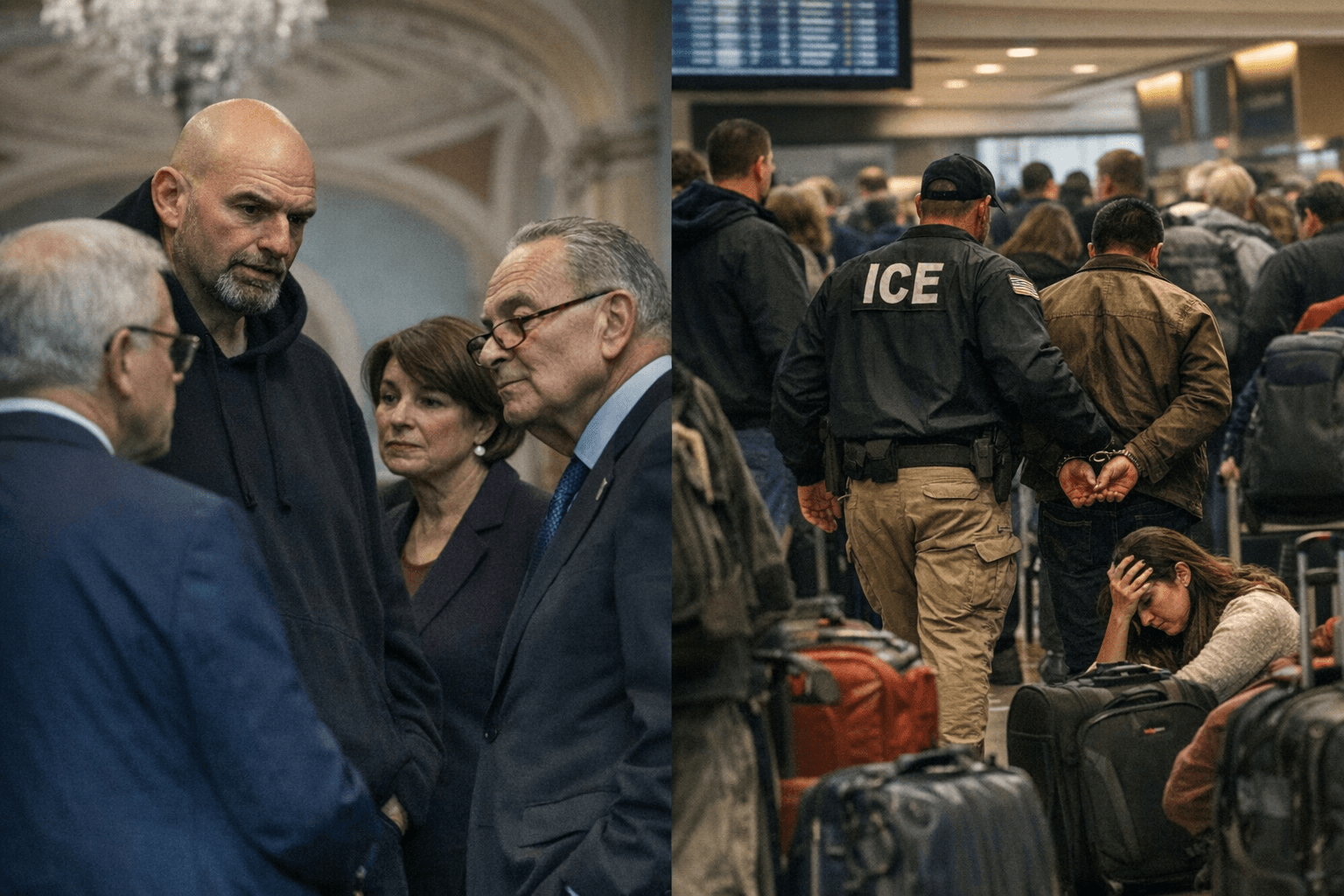
Senate Democrats on Thursday were weighing what Majority Leader John Thune called Republicans' "last and final" offer to end the shutdown of the Department of Homeland Security, a standoff rooted in two fatal Minneapolis shootings by federal agents that has now left TSA workers without pay for over a month and security lines snaking out of airport terminals across the country.
Thune told reporters that the GOP offer would fund 94% of the DHS budget while withholding $5.5 billion for ICE's deportation arm, known as Enforcement and Removal Operations. According to a notice from Majority Whip John Barrasso's office, the Senate was scheduled to convene at noon and hold two votes at 1:30 p.m.: the first on advancing an amendment to the SAVE America Act, which would require photo ID to cast a vote, and the second on advancing the DHS funding measure itself, with additional votes possible later in the day.
A motion to advance the bill previously failed 47-37, falling short of the 60 votes needed to overcome a Democratic filibuster. Centrist Sen. John Fetterman of Pennsylvania was the only Democrat to vote yes. Republicans were hoping to peel off more Democratic support Thursday. It marked the fifth time that Democrats voted to block the Homeland Security Appropriations bill since funding for the department expired on Feb. 14.
The math is unforgiving. The funding package needs 60 votes to overcome the filibuster and pass the Senate. Republicans hold a 53-47 majority, meaning Democratic support will be needed to pass the measure. So far, that support has not materialized.
DHS funding lapsed the month after federal agents shot and killed two U.S. citizens in Minneapolis as part of an immigration enforcement surge. The deadly shooting of Alex Pretti, a 37-year-old ICU nurse who was a U.S. citizen, in Minneapolis on a Saturday morning ignited already simmering concern among Democrats about funding DHS. Democrats were already angry about the fatal shooting of Minneapolis resident Renee Good by an ICE officer in that city on Jan. 7.
Those killings hardened the Democratic caucus. Sen. Brian Schatz of Hawaii was direct about his position: "I am voting against any funding for DHS until and unless more controls are put in place to hold ICE accountable." Democrats have dug in against any bill that would fund ICE and Customs and Border Protection without implementing reforms to immigration enforcement operations, such as requiring federal officers to obtain judicial warrants before entering homes and banning them from wearing masks. Democrats say the latest framework does not include other demands, like requiring judicial warrants for immigration agents to enter homes and businesses and a ban on face coverings for agents.
The offer added some new restraints on immigration officers, including the use of body cameras, but excluded Democratic demands such as requirements that federal agents wear identification and refrain from conducting raids around schools, churches or other sensitive places. Senate Minority Leader Chuck Schumer rejected the Republican offer as containing "nothing that had been talked about" and said Democrats sent their own counteroffer that would "contain significant reform."
Sen. Catherine Cortez Masto of Nevada, one of the Democrats who joined Republicans to end the last shutdown, said she would not support the current DHS funding bill, calling instead for lawmakers to "pass the remaining five bipartisan bills and fund essential agencies" while continuing to negotiate over DHS. A spokesperson for Thune's office said the measures would come up as one bill, not separately.
Complicating Republican efforts further, a procedural vote remained open on the floor since about 1:40 p.m., an indication that talks were continuing behind closed doors. Senators were under intense pressure to resolve the impasse as chaos at airports continued. The chamber was set to leave Washington for a two-week recess at the end of the week, though Thune had not ruled out delaying the break if the shutdown was not resolved.
The stakes at airports were already severe. The TSA had already lost more than 480 transportation security officers during the shutdown, while callout rates accelerated. At some airports, 40 to 50% of the workforce was calling out on certain days. "This has led to the highest wait times in TSA history, with some wait times greater than four and a half hours," TSA's top official told a House committee.
Senate Republican leaders told GOP colleagues at a recent lunch meeting that Trump supported the proposed deal, but the president had yet to embrace it publicly. Trump told reporters he was "pretty much not happy" with any deal reached with Democrats and pledged to take a "hard look" at whatever negotiators finally hammered out.
The broader funding package that Republicans insisted on keeping intact includes provisions Democrats count as political wins: money for child care, mental health services, housing assistance and Pell Grants. That bundling strategy gave GOP leadership leverage to resist decoupling DHS funding, but it has not moved enough Democrats to close the seven-vote gap that stands between the Senate and ending the longest DHS shutdown in the department's history.
This article was produced by Prism’s automated news system from verified source data, official records, and press releases, then run through automated quality and moderation checks before publishing. The system is built and supervised by the people who set the standards it runs under. Read our full AI policy.
Did this article answer your question?

