Senegal files formal complaint over Rabat security and accommodations
Senegalese federation lodged public complaints about arrival security, hotel and training arrangements ahead of the AFCON final in Rabat.
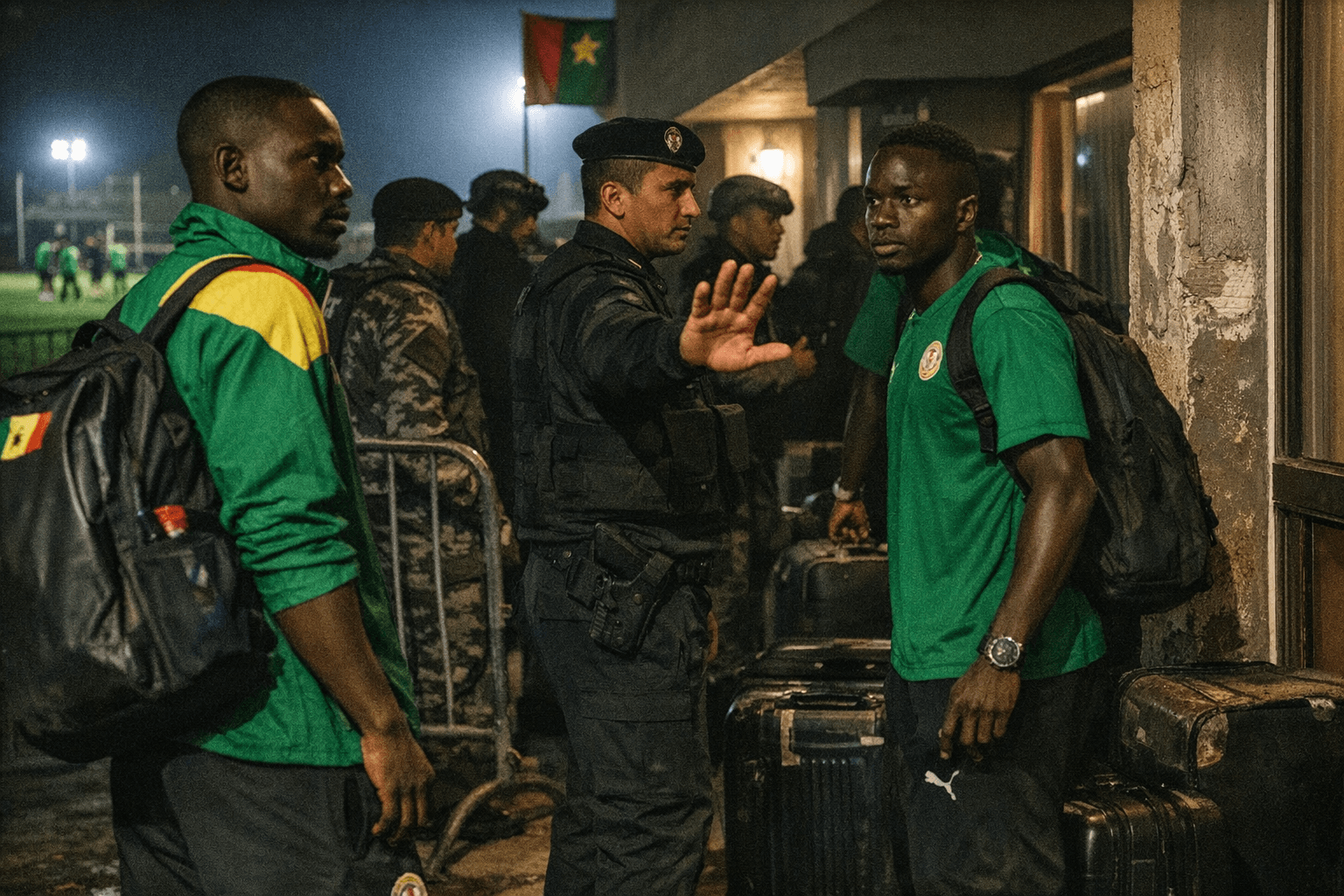
The Senegalese Football Federation lodged a formal complaint with the Confederation of African Football and made public a scathing account of how its delegation was handled on arrival in Rabat ahead of Sunday's Africa Cup of Nations final against Morocco. The federation said a series of logistical failures threatened player safety, recovery and the principle of sporting fairness at football's premier continental match.
In a statement signed by the Secretariat of the Teranga Lions of Senegal, the FSF said there was a “clear absence of adequate safety device” when the Senegalese delegation arrived at Rabat railway station and warned that the deficiency “exposed players and officials to a promiscuity and risks incompatible with the standards of a competition of this magnitude and the standing of a continental final.” The public airing of those security concerns sharpened attention on host responsibilities in a tournament that is watched across the continent and by large African diasporas.
The federation also described a fight over accommodation. The FSF said it had to file “an official protest by mail” before being placed in acceptable lodgings, and that “a 5-star hotel was finally awarded to the Lions, thus guaranteeing the required recovery conditions.” The federation did not detail the state of the initially offered accommodation but framed the intervention as necessary to ensure the team could prepare properly for the final.
Training access was the other flashpoint. Senegal notified CAF of its “categorical refusal” to train at the Mohammed VI Complex, the facility where Morocco has been based throughout the tournament, and said it had not been informed of an alternative site. The FSF framed the situation as raising “a question of sporting fairness,” and said the matter had been formally raised with organizers. The federation additionally flagged ticketing as a grievance, noting it managed to purchase 2,850 tickets, the CAF-authorized maximum, which it called “insufficient given the demand,” deploring “the imposed restrictions, which penalize the Senegalese public.”
Organizational lapses of this kind carry consequences beyond immediate team comfort. For players at the elite level, hotel quality, secure arrival channels and predictable training routines are integral to physical recovery and tactical preparation. Disruption in those areas can erode marginal advantages, alter match readiness and, in a tight final, affect outcomes. The dispute will also test CAF's ability to manage host obligations under the intense commercial and political pressure surrounding AFCON finals, where broadcasters, sponsors and national governments all have reputational stakes.
Culturally, the controversy taps into bigger dynamics. A Senegal-Morocco final is not just a sporting event but a focal point for national pride and diaspora mobilization; restrictions on supporter access risk inflaming public sentiment on both sides and can shape narratives about fairness and respect among African nations. The FSF said it published the complaints “in the interest of transparency and to defend the interests of the Senegalese national team,” signaling a desire to use public scrutiny to enforce standards.
As of the federation's statement, CAF had not issued a detailed public response and the Senegal team had not disclosed an alternative training location. With millions watching and valuable commercial relationships on the line, the final will now be contested under a heightened spotlight on organization, equity and the broader governance of African football.
This article was produced by Prism’s automated news system from verified source data, official records, and press releases, then run through automated quality and moderation checks before publishing. The system is built and supervised by the people who set the standards it runs under. Read our full AI policy.
Did this article answer your question?