Senegal Parrot Home Care Guide: Cage, Diet, Enrichment, Health Signs
Short-form care guidance outlined species-specific needs for Senegal parrots, giving owners compact, practical tips on cages, diet, enrichment, and when to seek veterinary care.

Senegal parrots demand compact, targeted care that balances physical space, mental stimulation, diet, and close observation for medical flags. Owners learned practical, species-specific steps to shape home habitats and spot early signs of problems, focusing on enrichment that fits a medium-parrot energy profile.
Start with housing. Senegal parrots need cages arranged for climbing and foraging rather than long-distance flight. Position perches at multiple heights to encourage vertical movement and include branches or perches with varied diameters to protect feet. Allow room for food and foraging toys so Senegals can work for treats and rotate toys frequently to prevent boredom. Provide secure cuttlefish bone access for calcium and be mindful of placement so it does not soil food or water.
Nutrition matters for plumage, weight, and behavior. A base of balanced pellets should form the majority of the daily ration, supplemented with leafy greens as staples. Offer fruit only as a controlled treat and avoid high-fat seed mixes that can lead to obesity and nutritional imbalance. Watch body condition closely during seasonal changes and molt; dull feathers or unexpected weight change can signal dietary shortfalls.
Enrichment should match Senegal activity patterns. Foraging toys that conceal small amounts of fresh greens or pellet rewards encourage natural search behavior, and safe climbing structures provide exercise that mimics vertical movement in the wild. Rotate chewable and puzzle toys to engage beak work and problem solving. Cuttlebone, wooden foraging blocks, and ropes sized for medium parrots are suitable choices when inspected regularly for wear and safety.
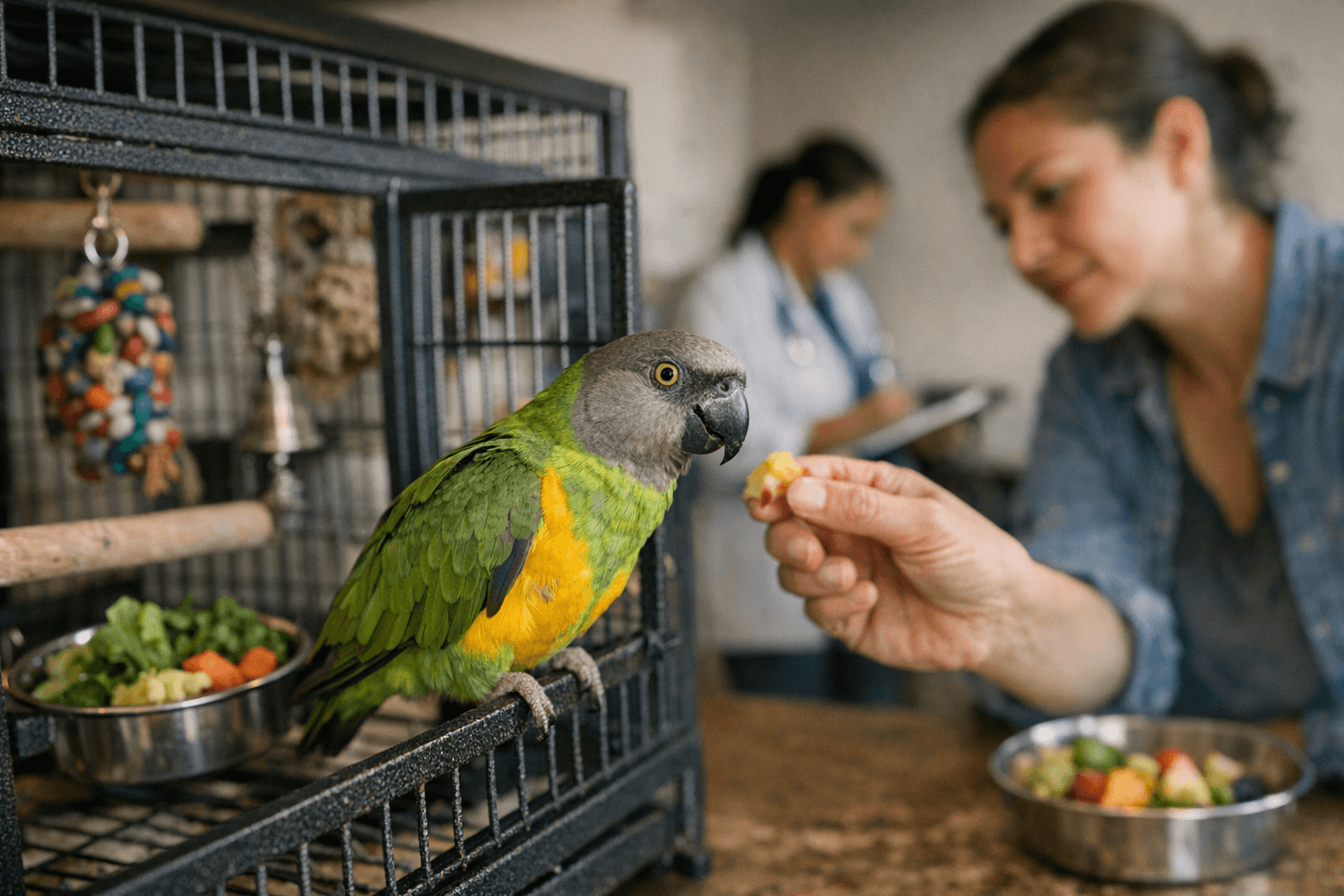
Behavioral expectations include regular vocalizations and social time. Senegal parrots typically enjoy daily interaction and benefits from consistent social routines. Short, focused sessions of training or play several times a day suit their attention span better than one long session. Monitor changes in vocal patterns and activity levels; decreased vocalizing or lethargy can be an early behavioral red flag.
Medical watchpoints are modest but important. Expect normal feather molt cycles, but watch for prolonged dull plumage or abrupt weight changes as possible signs of nutritional imbalance or illness. If feather condition, weight trajectory, or activity levels decline and do not improve with dietary or environmental adjustments, contact an avian veterinarian for evaluation.
For community keepers, these species-focused practices translate into immediate, actionable steps: rework perch layouts for vertical play, make pellets the base of the diet, use foraging puzzles to channel energy, and check feathers and weight regularly. Paying attention now reduces vet visits later and keeps Senegals lively, curious, and healthy.
Know something we missed? Have a correction or additional information?
Submit a Tip