Seoul hosts power nap contest to spotlight sleep deprivation
Hundreds in Seoul lay down for a power nap contest, turning a riverside park into a spectacle that exposed a country averaging just 6 hours and 58 minutes of sleep.
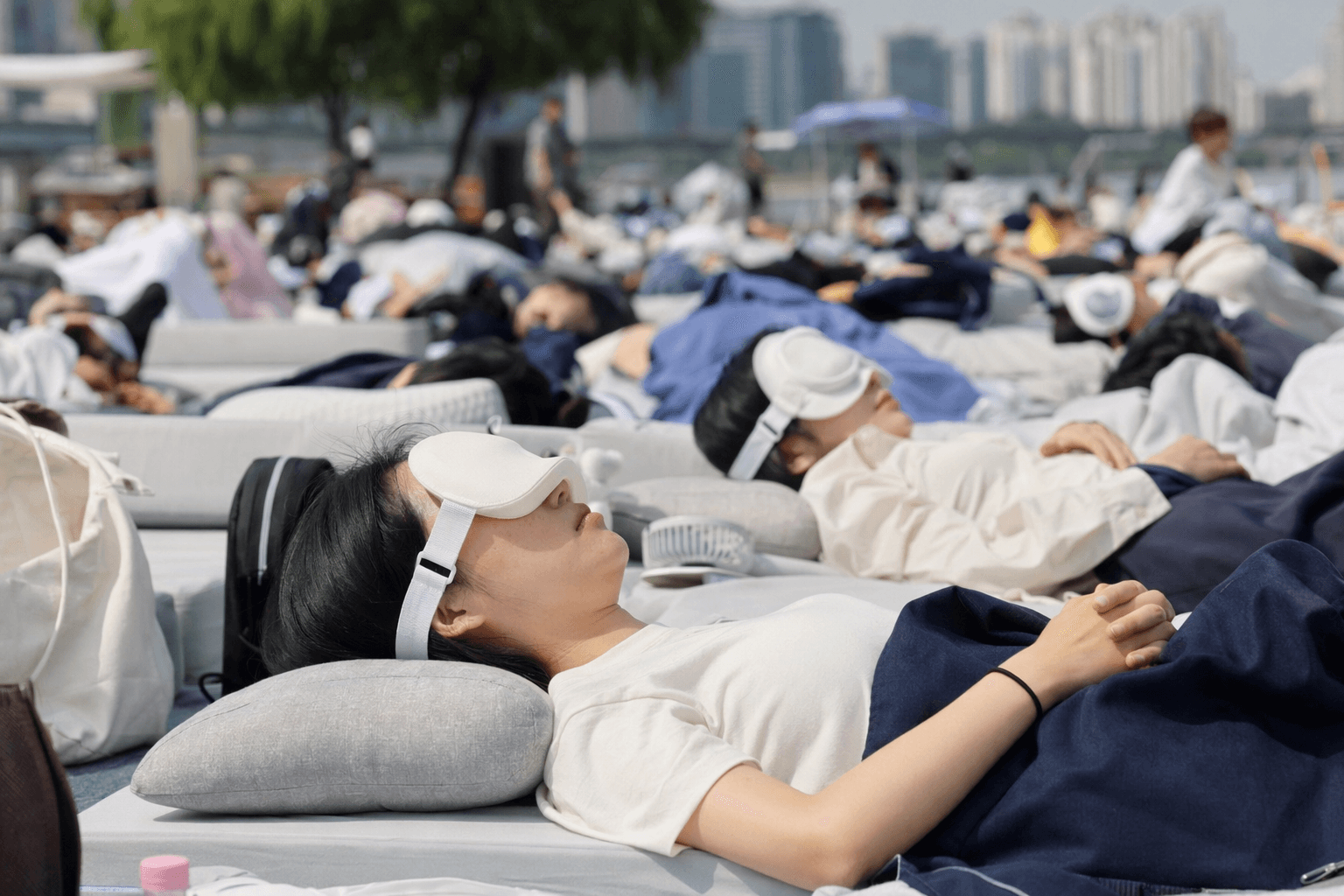
Hundreds of young Seoul residents stretched out on the lawn at Han River park under hazy spring sunshine, turning rest into a public contest as the city tried to spotlight a problem that reaches far beyond one afternoon of novelty: South Korea’s deepening sleep debt. The Seoul Metropolitan Government staged the power nap contest for the third straight year on Saturday, with the event beginning at 3 p.m. local time and asking contestants to arrive tired, but with a full stomach, and dressed like a sleeping beauty or sleeping prince.
The scene was playful, but the reasons people came were not. Park Jun-seok, a 20-year-old university student, said he had been sleeping only three or four hours a night because of exam preparation and part-time jobs. He arrived in silk crimson robes meant to evoke a Joseon Dynasty monarch and said he wanted to show “exactly how a king sleeps.” Yoo Mi-yeon, an English teacher from Ilsan, wore an oversized koala onesie, a nod to the animal’s reputation for deep sleep, while she hoped to borrow some of that energy to cope with insomnia. Another contestant said he was determined to sleep to “fully recharge” and was pleased to finish second.
The contest made for a cheerful public image, but the numbers behind it are stark. Recent reporting has placed South Korea’s average daily sleep time at 7 hours and 41 minutes, far below the OECD average of 8 hours and 22 minutes. A 2024 Korean Sleep Survey cited in March 2026 found Koreans averaging 6 hours and 58 minutes of sleep, and only 7 percent of respondents said they slept well every night. Stress, worry and smartphone use were among the biggest sleep disruptors, while other coverage has pointed to frequent overtime work, after-hours socializing and intense competition as forces that keep people awake.
That context explains why a nap contest can feel like more than a stunt. Sleep disorder treatment has risen sharply in recent years, and the event offered Seoul a way to turn an invisible health issue into something residents could see, and even cheer for, in a park by the Han River. It also reflected a broader social reality: in one of Asia’s fastest-paced societies, rest has become scarce enough to turn into spectacle, and exhaustion has become ordinary enough to need a stage.
This article was produced by Prism’s automated news system from verified source data, official records, and press releases, then run through automated quality and moderation checks before publishing. The system is built and supervised by the people who set the standards it runs under. Read our full AI policy.
Did this article answer your question?