Seven essential Beltrami County places: parks, historic sites and services
Three Island Park’s uncovered archaeological site — backed by DNR and Legacy grants — highlights county stewardship and public-engagement opportunities among seven essential Beltrami County parks, historic sites and services.
1. Lake Bemidji State Park
Lake Bemidji State Park appears on the evergreen list as one of the seven essential places every resident and many visitors should know. As a named state park in the guide, it functions as a recreational anchor for Bemidji’s lakefront and figures into local conservation and tourism planning that county officials cite when discussing parks and public access.
2. Beltrami County History Center
The Beltrami County History Center is listed as an essential local institution and connects directly to county efforts to document and display the area’s past. County staff – including those who oversaw recent archaeological work at Three Island Park – have explicitly called for "county historical societies" and "local museums" to make use of available funding, underscoring the History Center’s role in stewardship and public interpretation.
3. Bemidji’s downtown
Bemidji’s downtown is named in the guide alongside other cultural touchstones and serves as the commercial and civic core for Beltrami County. Its inclusion signals the intersection of heritage, everyday services and visitor traffic that local officials consider when framing development, signage and interpretive programming.
4. Paul Bunyan statue
The Paul Bunyan statue in Bemidji is identified in the evergreen list and remains one of the county’s most recognizable cultural landmarks. Grouped with downtown in the guide, the statue functions as both a local symbol and a tourist draw that influences downtown planning, wayfinding and historic-interpretation priorities.
5. Beltrami County Courthouse and Judicial
The guide lists "Beltrami County Courthouse and Judicial" among the seven essential places; the supplied text ends mid-phrase after "Courthouse and Judicial." That placement emphasizes the courthouse’s role as a hub for civic life and access to government, a reminder that institutional transparency, court schedules and public services housed there are core components of civic engagement in the county.
6. Three Island Park (archaeological site and preservation)
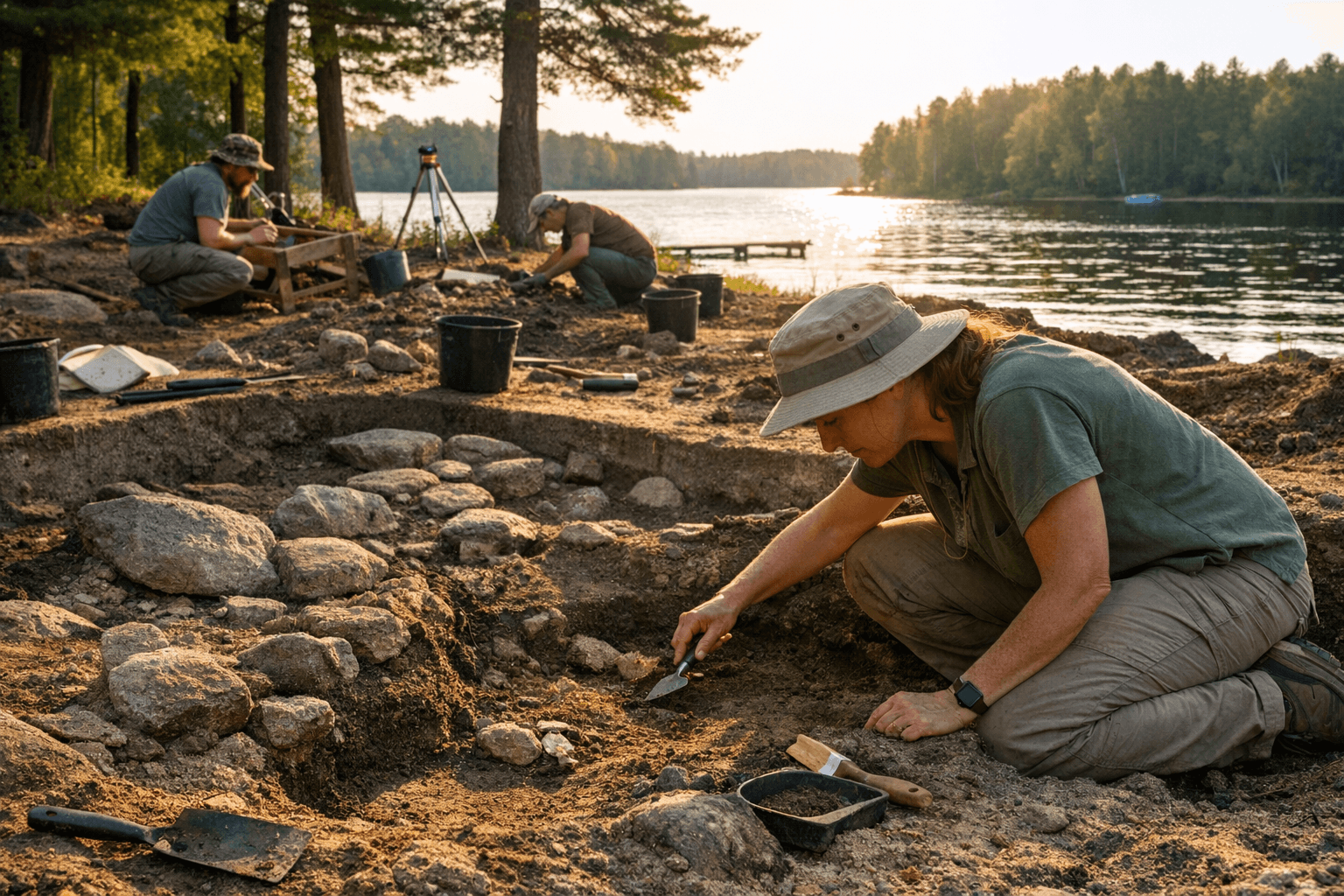
"Beltrami County acquired the Three Island Park land in 1967 when Minnesota deeded the land to the county to be used exclusively for parks and recreation." The site was uncovered when "the archeological site was uncovered as the county prepared for planned park improvements." A grant from the Minnesota Department of Natural Resources funded environmental reviews for wetlands and archeology, and "it then obtained Legacy grants to do Phase 1 and Phase 2 investigations — done by Terrell’s team — to thoroughly examine the area." Investigators dated artifacts back as far as the Early Woodland Period "(1000 B.C. to 400 [...)," a parenthetical provided in the source that is incomplete in the supplied text. County officials framed the site as unusually intact: "It’s a site that has not been disturbed," said John Winter, recreation resource manager for Beltrami County, adding that "It’s probably one of the most unusual." Beltrami County "not only preserved the site by doing erosion control, but it welcomed the public with signs, he said." The discovery drew broader interest: "Archeologists around the state are certainly excited about this," and Winter said, "I’m hoping that more county parks, county historical societies, local museums will step up and take advantage of this funding." He also signaled public outreach ambitions: "Further, he hopes that the public will be invited to get involved in discovering Minnesota’s historical past, perhaps by taking part in an archeological dig or through interactive programs." On outreach value he said, "I think that’s some of the best outreach that we can do in terms of connecting with the public," and conveyed surprise at low public awareness in a fragmented remark: "I’m often surprised that a lot of the public doesn’t even know that archeologically exists here. They see it on the Discovery Channel and it [...] exists here. They see it on the Discovery Channel and it seems like a long ways away. But we’ve got some really archeology in Minnesota."
7. Beltrami County parks and local services
Taken together, the entries on this list point to county stewardship of land and public programs. The Three Island Park narrative supplies concrete examples of county action — acquisition, review and preservation — and the guide explicitly ties places like parks and museums into a broader civic infrastructure. County actions named in the source include environmental reviews (DNR-funded), Legacy grant-funded Phase 1 and Phase 2 investigations by "Terrell’s team," erosion control measures and public signage; those details illustrate how local government manages both conservation and public access. The repeated references to funding programs and outreach underscore institutional levers residents and trustees will watch closely as sites move from investigation to interpretation.
Conclusion This seven-place list combines landmark attractions (downtown, Paul Bunyan), public institutions (History Center, courthouse), and active stewardship projects (Lake Bemidji State Park, Three Island Park, county parks and services). The Three Island Park work, in particular, foregrounds how state and county grants — Minnesota Department of Natural Resources reviews and Legacy grants — translate into preservation, archaeology and public programming. County officials have framed the discovery as an outreach opportunity and as a prompt for other local institutions to pursue funding; residents should expect more details from county staff as Phase 1 and Phase 2 results are finalized and interpretive programs are developed.
Know something we missed? Have a correction or additional information?
Submit a Tip