Seven Hours of Sleep May Be Metabolic Sweet Spot, Study Finds
Seven hours a night was the study’s metabolic tipping point, and more than two hours of weekend catch-up sleep tracked with worse insulin resistance.

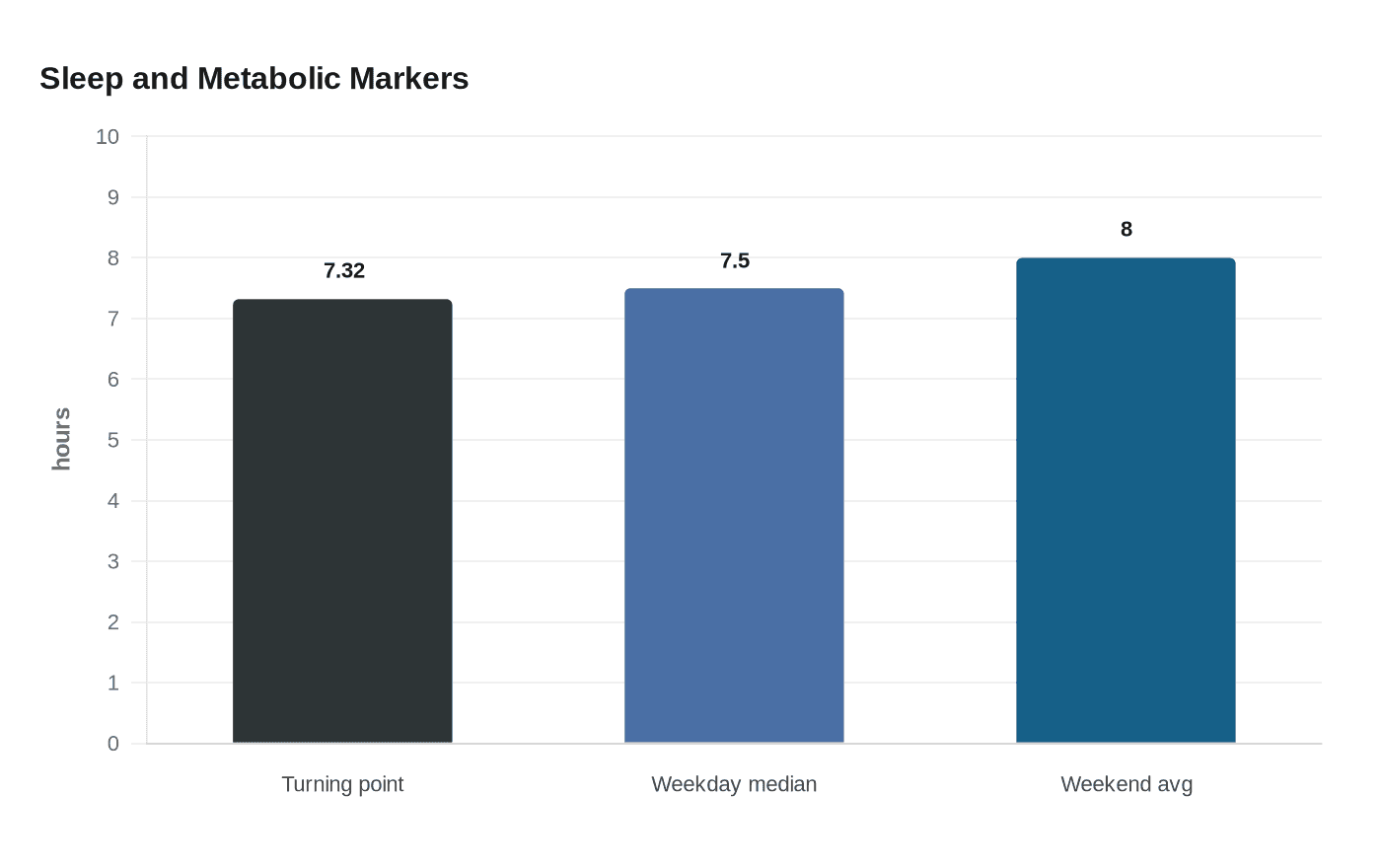
A large U.S. analysis points to roughly seven hours of sleep a night as the metabolic middle ground, but it also warns against reading weekend catch-up sleep as a cure for weekday deprivation. In a study of 23,475 adults ages 20 to 80 drawn from the National Health and Nutrition Examination Survey, weekday sleep followed an inverted U-shaped pattern with estimated glucose disposal rate, a marker used to gauge insulin resistance. The turning point came at 7.32 hours a night.
Below that threshold, more sleep lined up with better insulin sensitivity. The association was positive, with a beta coefficient of 0.273, and the confidence interval stayed well above zero. Above 7.32 hours, the pattern flipped. Longer sleep was associated with lower eGDR, with a beta coefficient of minus 0.222. The finding does not diagnose diabetes and does not prove cause and effect, but it does add weight to the idea that both short sleep and very long sleep can travel with worse metabolic health.
Weekend recovery sleep made the picture more complicated. Among the 10,817 participants with weekend sleep data, nearly half reported some catch-up sleep. Median weekday sleep was 7.5 hours and average weekend sleep was 8.0 hours. For people who slept less than 7.32 hours on weekdays, one to two hours of weekend catch-up sleep was associated with higher eGDR, with a beta coefficient of 0.296. But more than two hours of weekend catch-up sleep moved in the opposite direction, negatively moderating the weekday sleep and eGDR relationship with a beta of minus 0.568.
That is the part that should cool talk of a simple sleep debt fix. The study suggests that modest weekend recovery may help people who are short on sleep during the week, but it also suggests there is a ceiling, and possibly a cost, when catch-up sleep gets too large. The relationship was especially pronounced among women and adults ages 40 to 59, underscoring that sleep and metabolism do not line up the same way for every group.
Public health guidance has long treated sleep as more than a lifestyle preference. The National Heart, Lung, and Blood Institute says sleep deficiency can lead to physical and mental health problems, and the Centers for Disease Control and Prevention says poor sleep habits can make blood sugar harder to manage for people with diabetes. This study fits that broader warning. The practical message is not to chase extra hours on Saturday and Sunday, but to keep sleep timing steadier across the week, with about seven hours emerging as the point where the curve looks most favorable.
This article was produced by Prism’s automated news system from verified source data, official records, and press releases, then run through automated quality and moderation checks before publishing. The system is built and supervised by the people who set the standards it runs under. Read our full AI policy.
Did this article answer your question?