Seven Practical Mindfulness Practices to Start and Sustain Daily Habits
This compact tutorial lays out seven evidence informed mindfulness practices that beginners and intermediate practitioners can use to reduce stress, build attention, and increase wellbeing. Each practice includes simple step by step instructions, typical durations, accessibility options, and safety notes so you can start today and adapt practice to daily life.
Mindfulness practice becomes useful when it fits into real life. Here are seven approachable, evidence informed practices you can try, with clear how to steps, typical session lengths, and the benefits you can expect.
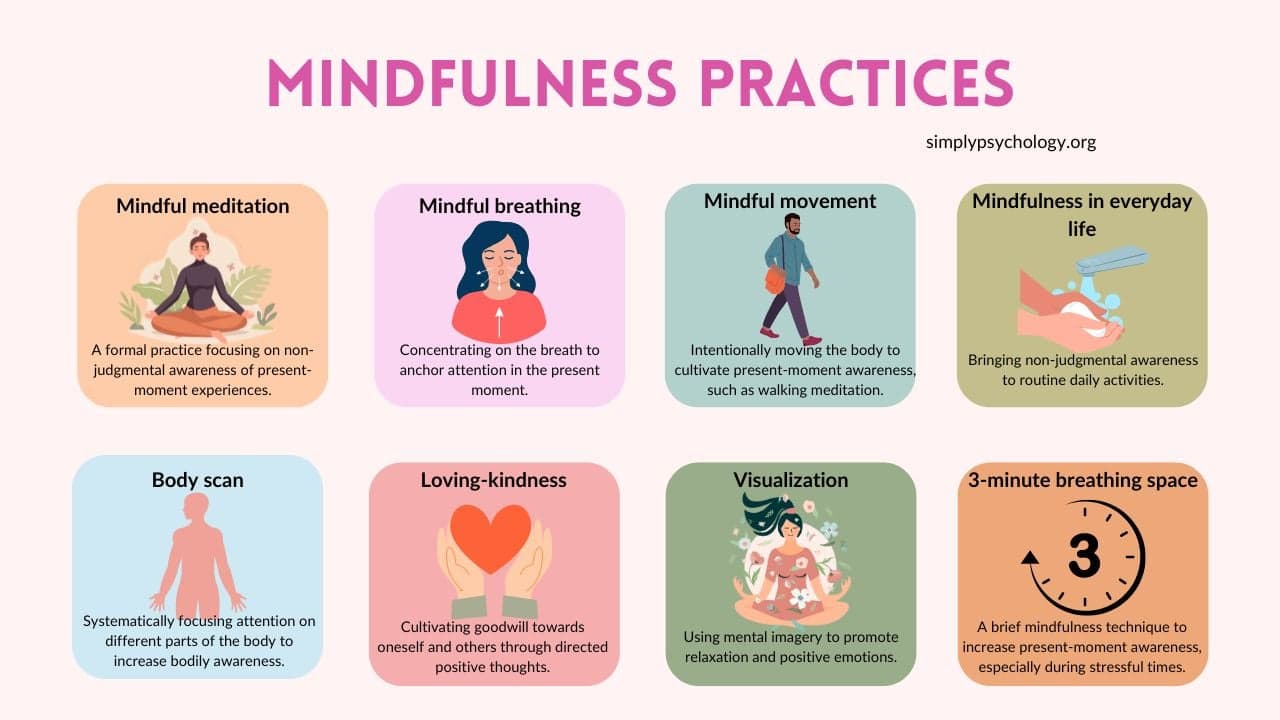
Begin with mindful breathing for five to ten minutes. Sit comfortably with eyes closed or half open and focus on the sensations of the breath at the nostrils, chest, or abdomen. Try a short timer, inhale one two three, exhale one two three, and notice the rise and fall. When attention drifts, gently note thinking and return to the breath without self criticism. This quick anchor reduces stress and builds attentional stability.
Next, practice a body scan for ten to twenty minutes. Lie or sit comfortably and move attention systematically from the toes up to the head, spending about thirty to ninety seconds on each region. Notice sensations such as tightness, warmth, or tingling without trying to change them. The body scan supports deep relaxation and improves interoceptive awareness.
Walking meditation offers an embodied option for five to twenty minutes. Choose a quiet straight path or a short circuit and walk slowly, coordinating awareness with each step. You can count ten steps and repeat. This practice is especially useful if sitting is difficult, and it strengthens present moment awareness in motion.
Open monitoring or choiceless awareness runs ten to fifteen minutes. After a brief breath anchor, widen attention to sounds, thoughts, and body feelings and let them pass without engagement. When a thought arises, note its quality such as plan or memory and let it go. This trains nonreactivity and reduces habitual reactivity.

Loving kindness meditation lasts ten to fifteen minutes and cultivates goodwill through silently repeating short phrases such as may I be safe, may I be well. Start with yourself, then widen the circle to loved ones, neutral people, difficult people, and all beings. Regular practice increases positive affect and social connectedness and can counteract stress and anger.
Guided mindfulness using apps, recordings, or local teachers is useful for beginners. Ten to thirty minute guided sessions help maintain structure and motivation. Start with short sessions and practice consistently, for example five to ten minutes daily, and combine guided and silent practice to lower dropout and improve adherence.
Finally, micro practices last one to three minutes. Use three mindful breaths at transitions, single minute body check ins, or a mindful sip of water. Anchor these to existing habits such as after washing hands or use phone reminders to build consistency. Small daily pauses produce cumulative stress reduction and sharper attention.
Start small and be consistent. Nonjudgment is part of the practice, noticing distraction is itself progress. Adjust posture and practice format for accessibility, using chairs or lying down if needed, and seek professional support if symptoms of severe anxiety, PTSD, or major depression are present. For courses, look for MBSR based or MBCT programmes, local meditation centers such as insight, zen, or Plum Village communities, and scientific summaries in open access journals including Mindfulness, BMC Psychiatry, and JAMA Network Open.
Know something we missed? Have a correction or additional information?
Submit a Tip