Severe storms move east after tornadoes, giant hail hit Kansas
After an EF-2 tornado tore through Ottawa and hail up to 2.75 inches hit three Kansas counties, the storm system shifted east into a risk zone of more than 101 million people.
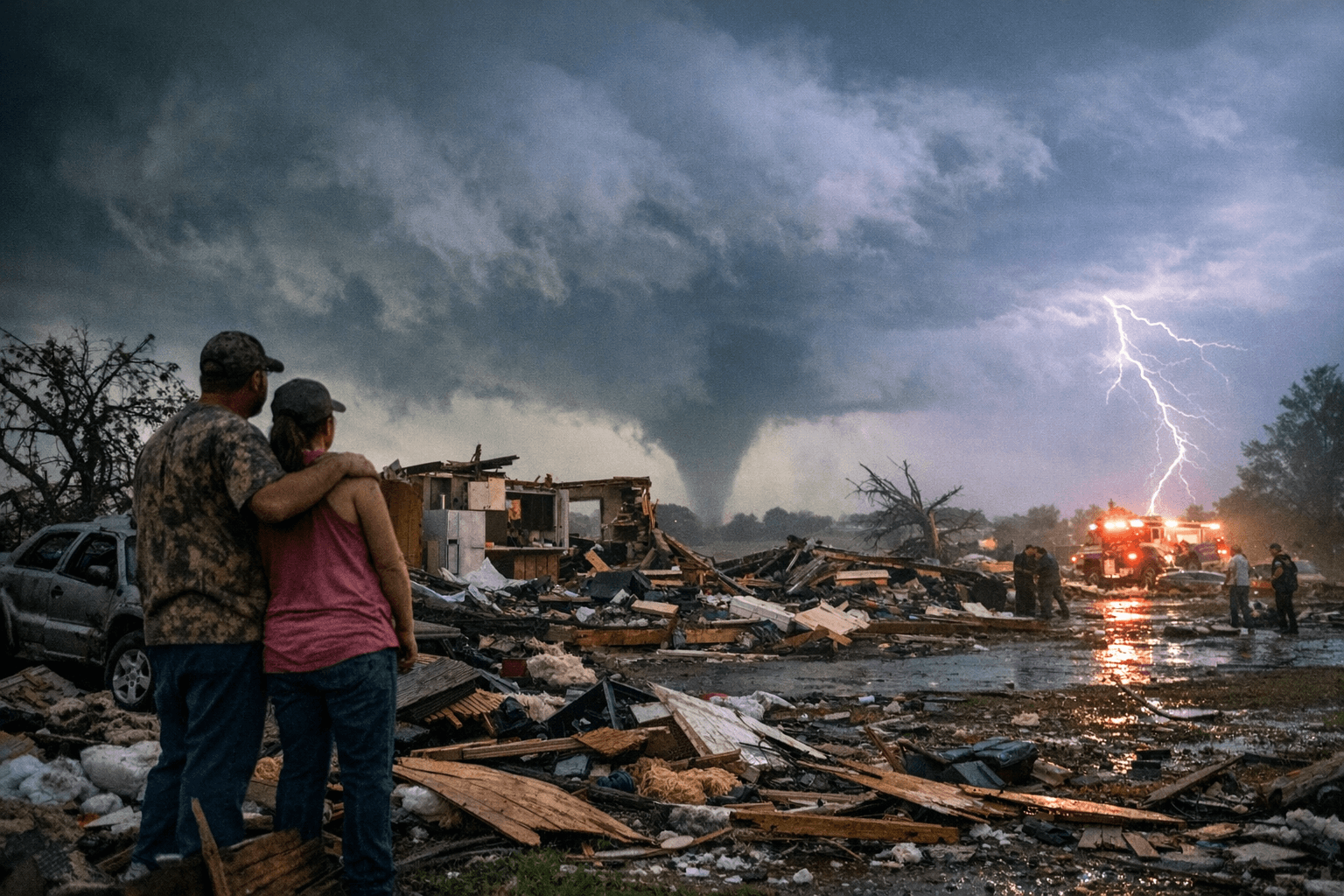
Severe weather that tore through eastern Kansas was pushing into a far larger threat zone on Tuesday, widening the danger footprint from the Plains toward the Great Lakes and putting millions more people under the gun for tornadoes, hail and damaging winds.
In eastern Kansas, the outbreak already left a clear mark. The National Weather Service office in Topeka confirmed at least two tornadoes on April 13, including an EF-2 tornado in Ottawa, in Franklin County. Very large hail, measured at up to 2.75 inches, was reported in Lyon, Osage and Franklin counties. Despite the damage, no one was seriously injured in the Kansas storms, the weather service said.
By April 15, forecasters said the risk had expanded dramatically. More than 101 million people were in the severe-weather zone stretching from the Plains to the Great Lakes, as the storm system continued its eastward march. The Storm Prediction Center warned of another round of damaging winds, large hail and possible tornadoes, underscoring how quickly the threat had shifted from a regional outbreak in the central U.S. to a broader national problem.
The pattern was not a one-day event. Meteorologists had been describing a multi-day severe-weather setup moving from the central U.S. into the Midwest, with repeated rounds of storms hammering the same general corridor before the system advanced east. That persistence matters for communities already dealing with downed trees, damaged roofs and clogged roads, because each new round of storms can complicate cleanup, delay repairs and stretch emergency crews.
The risk also comes with broader social costs. A severe-weather zone this large can trigger school closures, disrupt travel and cause power outages across multiple states at once, leaving families to manage evacuations, missed work and uncertain shelter plans. The early intensity of the 2026 tornado season has already made it one of the more active starts in recent years, and the latest outbreak shows how quickly one storm cycle can turn into another before people have had time to recover.
This article was produced by Prism’s automated news system from verified source data, official records, and press releases, then run through automated quality and moderation checks before publishing. The system is built and supervised by the people who set the standards it runs under. Read our full AI policy.
Did this article answer your question?