Severe storms threaten 50 million across Midwest and Northeast
More than 50 million people were in the storm zone Saturday, while heavy rain raised a flash-flood risk from Texas to Missouri.
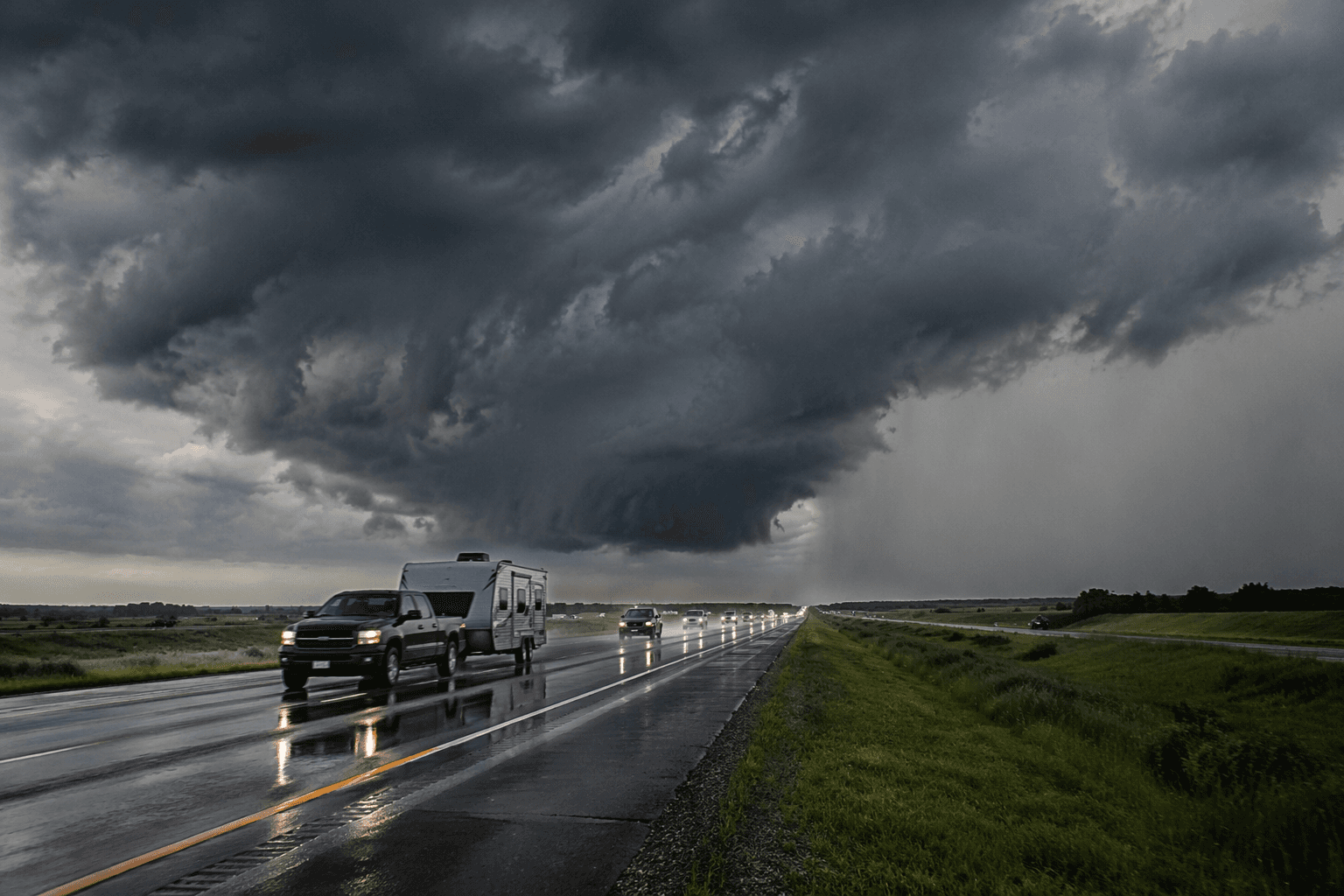
More than 50 million Americans were in the severe-weather threat zone Saturday afternoon, a broad swath stretching from Indiana into the Northeast and putting major metro areas on alert for damaging wind, hail and dangerous lightning.
A level 2 out of 5 severe weather risk covered Cleveland, Pittsburgh, Philadelphia, New York City, Albany, New York, and Hartford, Connecticut. Damaging wind gusts were the main concern, but stronger storms also carried the chance of isolated large hail and frequent lightning, with some forecasts warning of tornado potential in parts of the central U.S.
The same storm pattern was driving a second threat farther west and south, where heavy rain and repeated thunderstorms were expected to drench Texas and the mid-Mississippi Valley. Forecasters said the flooding risk could become more dangerous than the storms themselves in places where rain fell over and over, especially in low-lying neighborhoods, urban corridors and areas with poor drainage.
In central Indiana, the National Weather Service said a few thunderstorms were possible in the far northern part of the region Saturday morning, followed by scattered storms Saturday afternoon and evening mainly north of Interstate 74. That meant the worst weather could line up with busy travel windows, adding the risk of downed trees, scattered outages and hazardous driving on top of the severe-storm threat.
The weekend setup was part of a wider active pattern affecting multiple regions at once, including Texas, the Midwest, the Ohio Valley and the Northeast. In central Indiana, thunderstorms were also possible at times Sunday through Wednesday, though forecasters said it was too early to tell whether those storms would turn severe. The broader danger now is not just where the strongest cells form, but where repeated rounds of rain can overwhelm streets, creeks and storm drains before residents have time to react.
This article was produced by Prism’s automated news system from verified source data, official records, and press releases, then run through automated quality and moderation checks before publishing. The system is built and supervised by the people who set the standards it runs under. Read our full AI policy.
Know something we missed? Have a correction or additional information?
Submit a Tip