SFMTA Faces $307M Shortfall Threatening Major Muni Cuts and Layoffs
SFMTA warns a $307 million 2026–27 shortfall could eliminate one-third of Muni service and trigger up to 2,100 layoffs unless regional and local funding pass.

San Francisco’s transit agency says it faces a $307 million deficit for the fiscal year that begins July 1, 2026, and that failure to secure new, long-term revenue could force “significant cuts to Muni” including the potential to “eliminate one-third of service.” Julie Kirschbaum, SFMTA director of transportation, told agency directors the scenarios could include cutting up to 20 routes, longer waits for trains and buses, ending regular service at 9 p.m., and reducing or cutting cable car and historic F-Market/Wharves streetcar service; Kirschbaum added, “To hear about the possibility of all of these cuts, it’s going to hurt.”
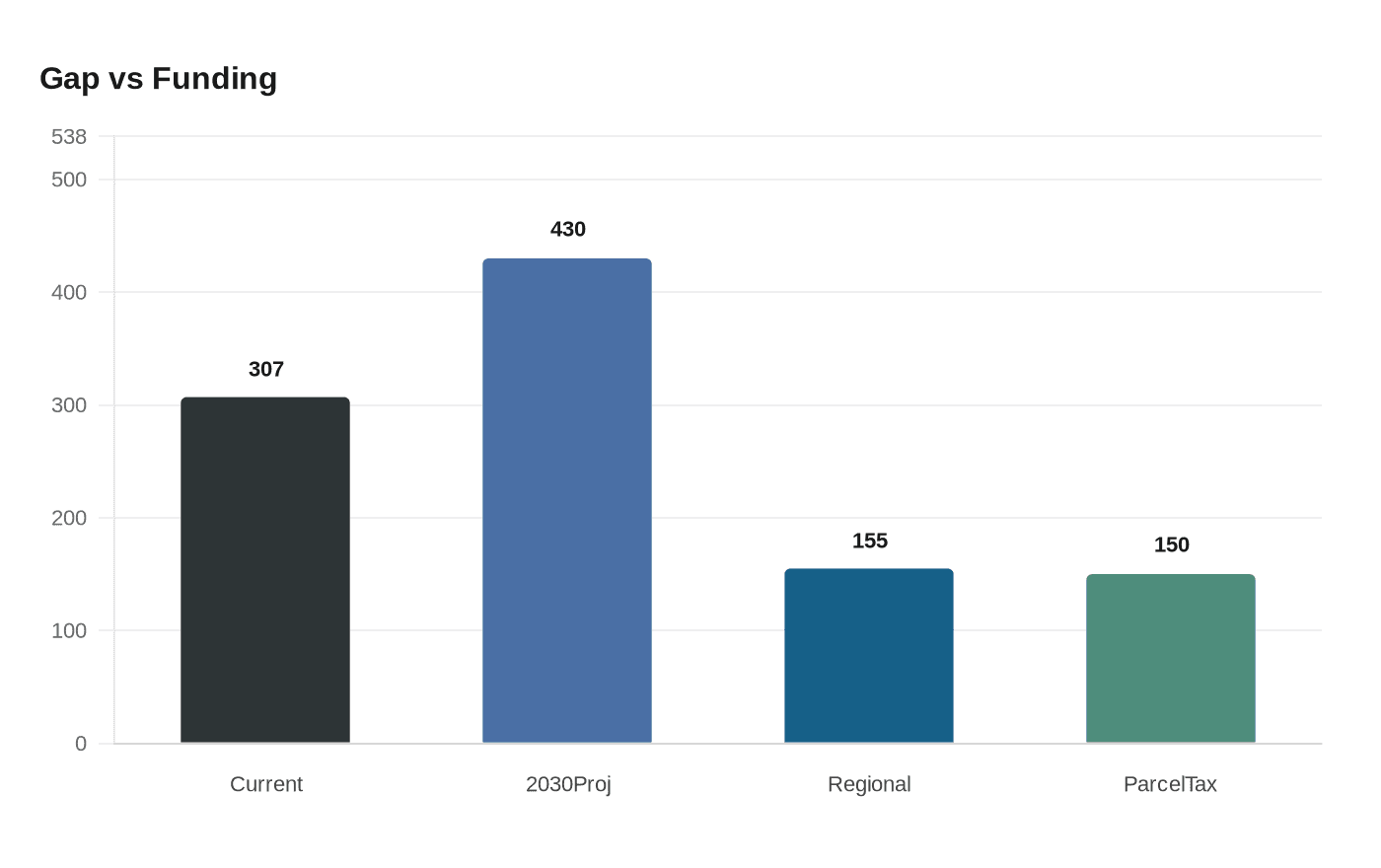
SFMTA materials say the agency “have already reduced what could have been a $440 million budget deficit to $307 million by finding ways to cut costs and be even more efficient,” but project the shortfall will grow to $430 million by 2030 if no durable revenue is found. The agency points to the end of one-time federal, state and regional pandemic relief as a primary driver of the structural gap and highlights that “Every day, we help more than 500,000 people get around San Francisco.”
Agency leaders are laying out a three-legged funding strategy they describe as a “three-legged stool”: a regional sales tax measure, a local parcel tax, and continued internal efficiencies. The regional proposal — tied to the fragmentary “Connect Bay Area Act” name in materials — is estimated to raise roughly $1 billion for Bay Area transit agencies with SFMTA’s share about $155 million annually. A proposed parcel tax is estimated to deliver roughly $150 million to the SFMTA, with at least $10 million specifically earmarked for transit improvements. SFMTA frames the approach bluntly: “In order to close our deficit, to maintain programs and grow Muni service in the future, our financial situation will require multiple sources of new funding.”
Short-term relief has arrived in the form of a Metropolitan Transportation Commission agreement with Governor Gavin Newsom’s office and the California Department of Finance for a $590 million loan to Bay Area agencies, a reduction from the original $750 million ask. MTC and state officials say the loan is intended to avoid service cuts during the 2026–27 fiscal year but does not resolve the longer-term structural deficit; SFMTA warns the agency “continue[s] this work every day. But it won't be enough to bridge the gap.” If the ballot measures fail, SFMTA would begin planning and public outreach about service reductions in early 2027.
Staffing projections presented to the agency show steep job risks: one failed measure could lead to 700–900 layoffs while failure of both revenue measures could expose up to 2,100 positions. Nicole Christian of SEIU Local 1021 framed the human toll: “Having 2,000 people lose their jobs, that’s 2,000 families. That is 2,000 families that will have to decide between rent and food, that will have to decide between food and gas, food and commuting, rent and paying all the rest of their bills, clothes for their kids, medical care.”
Advocates are offering alternatives and limits: Jaime Viloria of San Francisco Transit Riders urged raising revenue from parking “instead of on the backs of transit riders,” and warned, “There’s only so much you can charge before people start using other modes of transportation.” City leaders, labor and community groups now face a compressed timeline to finalize ballot language, publicize fiscal details such as parcel tax rates and loan terms, and persuade voters that the combined regional, local and efficiency package can prevent the cuts officials warned would reshape Muni service across San Francisco. The agency sums up the stakes plainly: “This is the last thing we want for our riders.”
Know something we missed? Have a correction or additional information?
Submit a Tip