Sherpa guide survives Everest ordeal, crawls to safety after days missing
After six days missing above Camp III, Dawa Sherpa crawled out of the Khumbu Icefall with frostbite, dehydration and a fractured thigh bone.

Dawa Sherpa, also known as Hillary, survived a harrowing six-day ordeal on Mount Everest and is now out of intensive care in Kathmandu after being found crawling toward Base Camp with little food or water. The Sherpa guide’s rescue has exposed the brutal limits of evacuation on the world’s highest mountain, where a fall can leave even an experienced climber far beyond the reach of a quick response.
Sherpa went missing on May 29, 2026, while descending Everest near Camp III and the Yellow Band section above it, on the final day of Nepal’s official spring climbing season. He was working with the Himalayan Traverse expedition and guiding a Polish climber when he disappeared. Reports say he fell into a crevasse, then kept moving on his own despite the danger, surviving on a few chocolates and snacks in his pockets before later chewing ice to stay alive when he had nothing else to eat.
He was eventually spotted on June 4 by members of the Sagarmatha Pollution Control Committee, the Nepali team that helps maintain routes and remove waste on Everest. They found him crawling out of the Khumbu Icefall and still moving slowly toward Everest Base Camp, then arranged a helicopter evacuation to Kathmandu. At HAMS Hospital, doctors treated him for frostbite, severe dehydration and a fractured thigh bone, and he was later moved out of intensive care as he recovered.
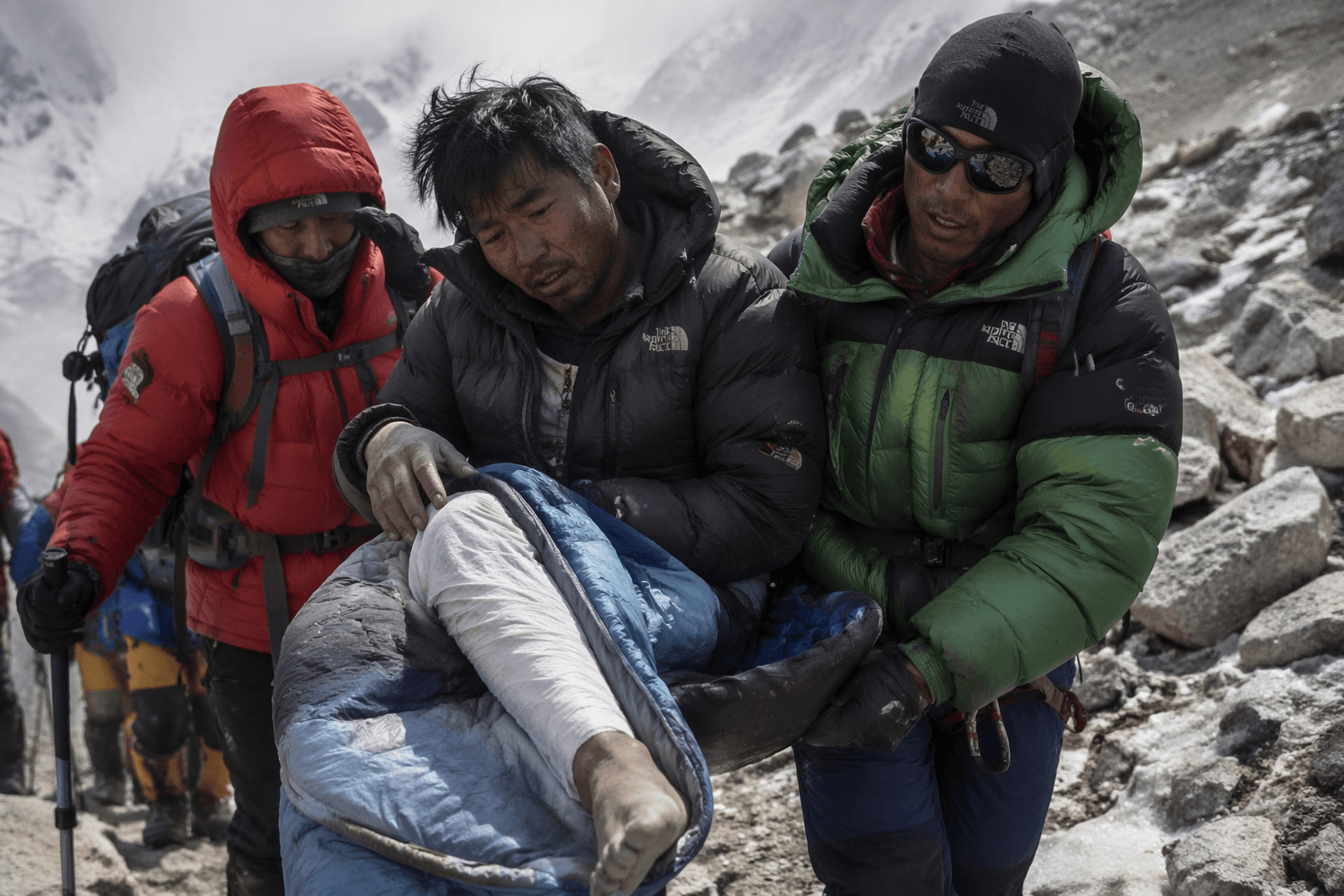
The case has quickly turned from a survival story into a question of responsibility. Maya Sherpa, president of the Everest Summiteers Association, said: “There has been negligence in his case,” and called for an investigation to prevent similar incidents. The Nepal Mountaineering Association also pressed the government to form a probe committee after visiting him at HAMS Hospital, saying the circumstances raised serious ethical and humanitarian concerns.
Sherpa’s family has questioned why rescue efforts were delayed and has sought legal action against those responsible. The episode has sharpened scrutiny of Everest’s rescue system at a moment when commercial expeditions, prestige and tight seasonal schedules put immense pressure on operators and Sherpa teams to keep the mountain moving. On Everest, the difference between routine descent and catastrophe can be only a misplaced step, a hidden crevasse and a rescue window that closes before help arrives.
This article was produced by Prism’s automated news system from verified source data, official records, and press releases, then run through automated quality and moderation checks before publishing. The system is built and supervised by the people who set the standards it runs under. Read our full AI policy.
Know something we missed? Have a correction or additional information?
Submit a Tip