Shipping Companies Reroute to Cape of Good Hope, Facing Longer, Costlier Voyages
Houthi attacks have driven container traffic through the Suez Canal down 90%, forcing carriers like Maersk onto the Cape of Good Hope route and adding up to 14 extra days at sea.
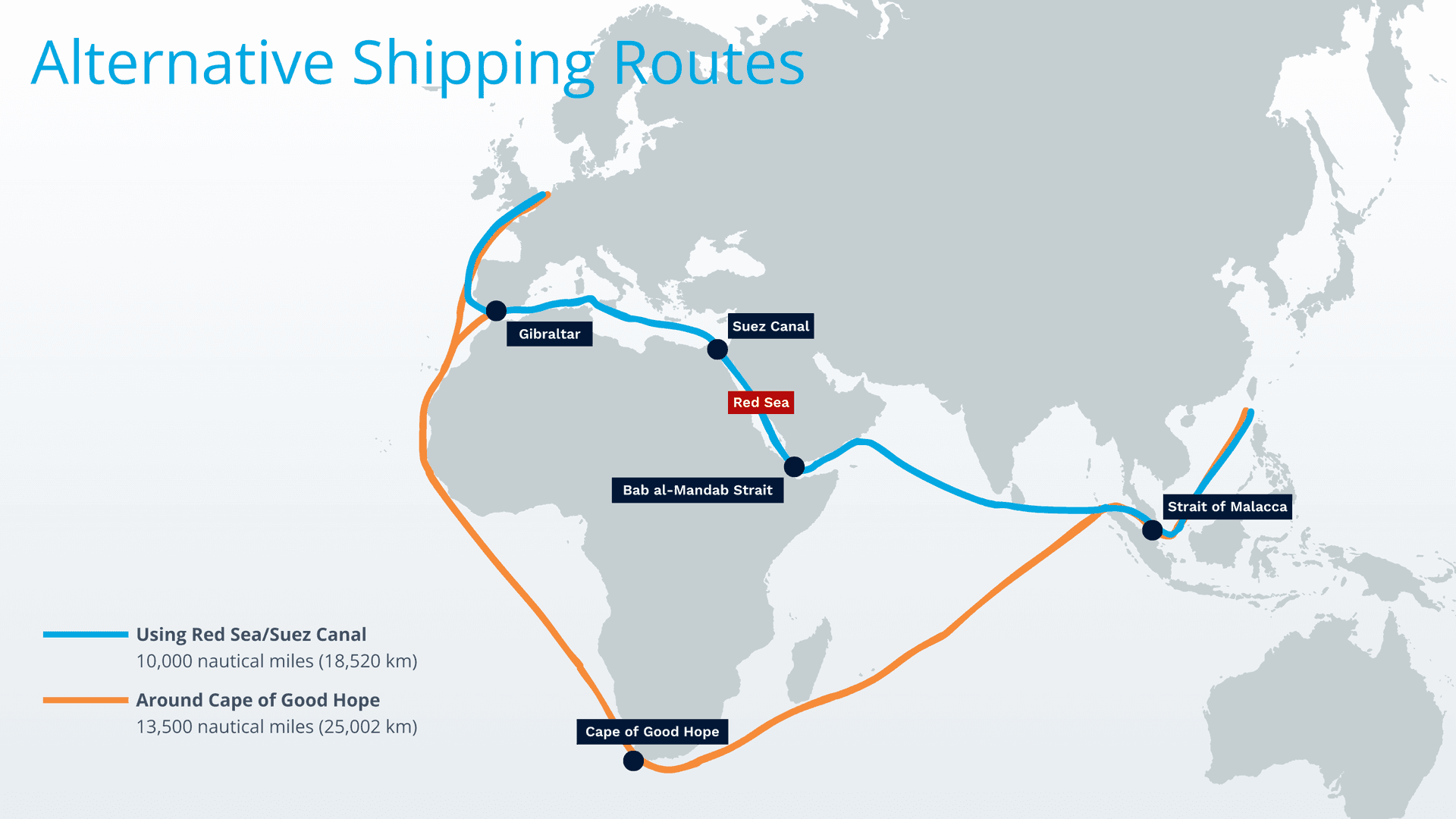
More than 190 Houthi missile and drone attacks on commercial vessels in the Red Sea since late 2023 have effectively closed one of the world's most critical maritime corridors to routine trade, compelling the shipping industry to undertake one of its most disruptive logistical overhauls in decades. The Red Sea and Bab el-Mandeb strait corridor normally carries between 12 and 15 percent of global trade and up to one-third of East-West container flows. Rerouting around Africa's southern tip has become the industry's default response, carrying enormous costs.
When carriers divert from the Suez Canal, they must travel an additional 11,000 nautical miles around Africa's Cape of Good Hope, adding as much as 10 to 14 days to transit times. That extended voyage has boosted fuel consumption by up to 40 percent, according to FreightAmigo's 2025 logistics report. Carriers have faced sustained freight premiums of 25 to 35 percent as a result.
Major carriers including Maersk, MSC, and CMA CGM abandoned the Suez Canal en masse as container traffic through the canal plummeted 90 percent compared to March 2023 levels. The financial toll has been severe. Maersk reported a $153 million loss in its Ocean division for the fourth quarter of 2025, its first quarterly loss in years, and issued wide 2026 guidance ranging from a $1.5 billion loss to a $1.0 billion profit, reflecting deep uncertainty around the pace of any sustained Red Sea reopening.
The situation has been marked by reversals. By January 2026, more than 70 percent of diverted container traffic had returned to Suez routes as Houthi attacks appeared to moderate. But those gains proved fragile. Peter Sand, chief analyst at Xeneta, warned that the repercussions of military operations against Iran "will see the further weaponization of trade and shatter hopes of a large-scale return of container shipping to the Red Sea in 2026," a view that prompted the Gemini Cooperation to reverse its recent decision to reroute its ME11 service back through the Red Sea.
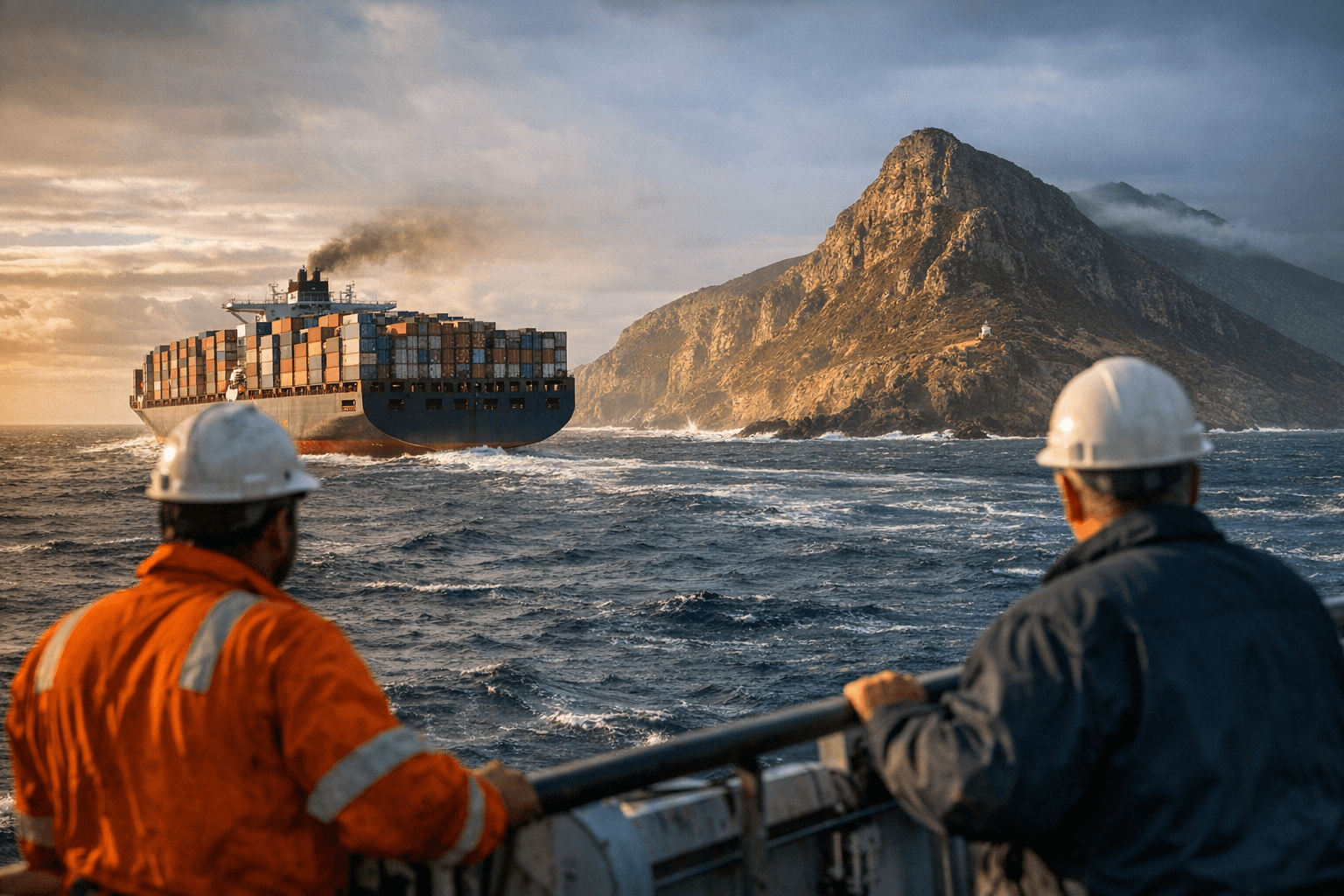
Ocean Network Express chief executive Jeremy Nixon had earlier framed Cape routing as the new normal. "There seems to be no political breakthrough, we can't put the vessels, the cargo, the crew at risk," Nixon said at the Marine Money Week Asia conference in Singapore. "The supply chain has adapted and that's going to be business as normal."
The operational appeal of the Red Sea route remains clear: westbound ME11 sailings save 19 days via Suez, while eastbound voyages are seven days shorter. But with insurers still charging elevated war-risk premiums and no durable political resolution in sight, the extra weeks and fuel costs of the Cape route appear set to persist as the industry's unavoidable price of doing business safely.
This article was produced by Prism’s automated news system from verified source data, official records, and press releases, then run through automated quality and moderation checks before publishing. The system is built and supervised by the people who set the standards it runs under. Read our full AI policy.
Did this article answer your question?