Shopify Restores Login Access, Merchants Face Disruption on Cyber Monday
Shopify said it identified and fixed a problem in its login authentication flow that left thousands of merchants unable to access admin panels and point of sale systems on Cyber Monday. The outage peaked late morning and raised immediate concerns about lost sales during one of the busiest shopping days of the year, though reports of problems fell sharply by mid afternoon.

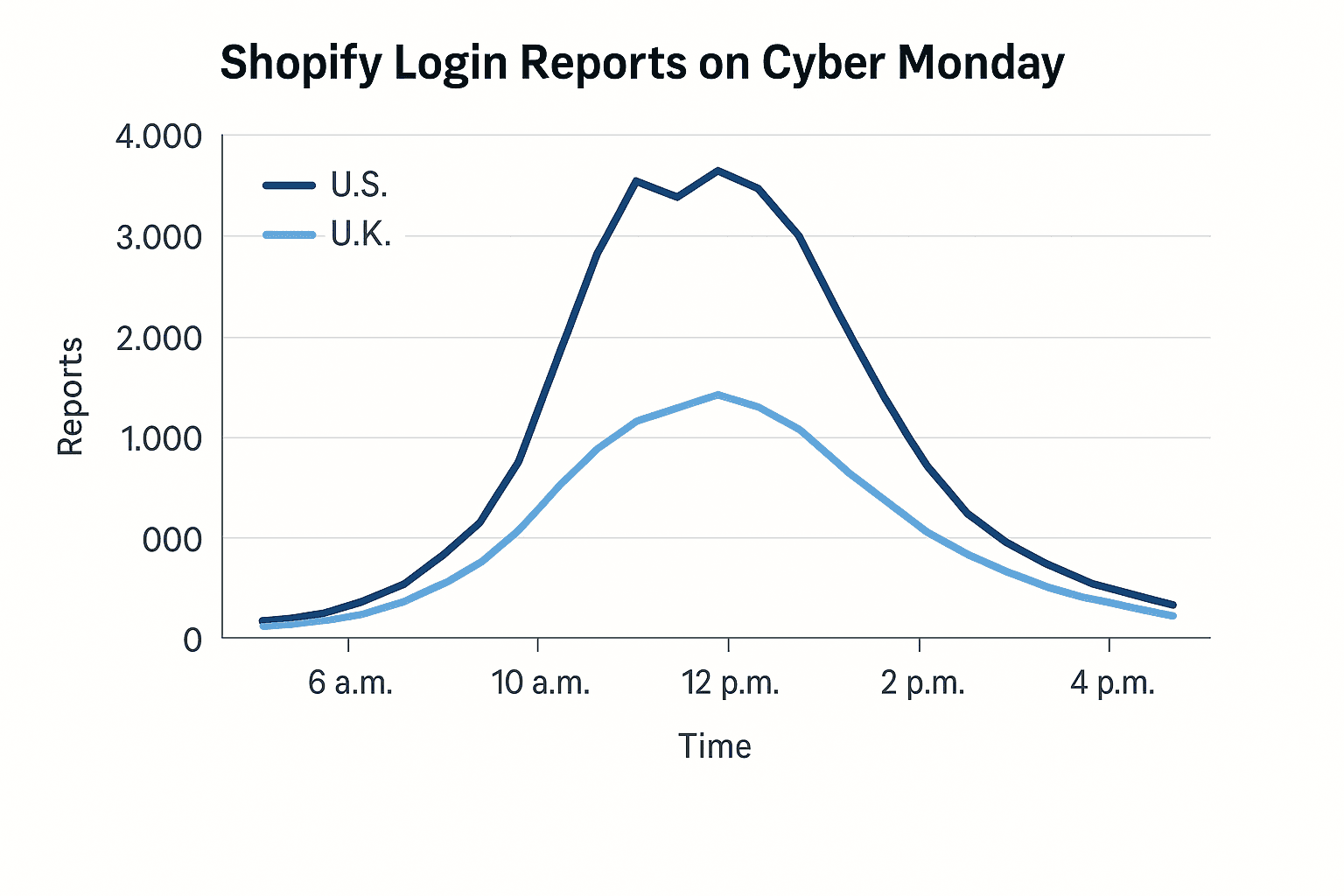
On December 1 Shopify experienced an authentication problem that temporarily blocked merchants from accessing administrative functions and point of sale systems, company engineers said, disrupting operations during one of the busiest online shopping days of the year. The issue began to surface in the morning and peaked around 11 a.m. Eastern time, when incident trackers recorded roughly 4,000 reports in the United States and about 2,500 in the United Kingdom. By mid afternoon the volume of reports had fallen to about 128, indicating a widespread but relatively short lived disruption.
The company said it identified a fault in its login authentication flow and deployed a fix, then continued monitoring the platform to ensure full recovery. While Shopify did not quantify financial losses, it acknowledged that some merchants may have been unable to process checkouts or use POS terminals while the outage persisted, creating the risk of missed sales and frustrated customers at a critical moment for retail.
For many small and medium sized merchants on Shopify, access to the admin dashboard and point of sale devices is central to accepting payments, updating inventory and fulfilling orders. Interruptions that prevent staff from completing transactions can translate quickly into lost revenue, abandoned carts, and long lines in physical stores. The timing heightened the stakes because Cyber Monday is a pivotal day in the holiday shopping calendar, when retailers often earn a disproportionate share of seasonal sales.

The outage drew rapid attention on social platforms and through outage monitoring services, underscoring the extent to which a handful of cloud platforms now function as essential infrastructure for commerce. The incident reignited questions about redundancy and contingency planning for businesses that rely on single providers for critical services. Analysts said firms large and small should review fallback procedures for payments and order processing so that sales can continue when a platform is degraded.
Shopify said its teams worked to restore normal operations and were keeping a close watch on related systems. The company also faced the task of communicating with merchants and restoring confidence after a high profile disruption. For businesses that lost sales there will be practical follow ups, including reconciling transactions, handling customer complaints, and recalibrating staffing and logistics for the remainder of the holiday rush.
The episode serves as a reminder of the trade offs merchants face when they embrace cloud based platforms for convenience and scalability. Those platforms can streamline operations for thousands of stores, but when they fail the effects are immediate and concentrated. As holiday shopping continues, affected retailers will be weighing the short term financial hit against the benefits of the integrated services that companies like Shopify provide.
This article was produced by Prism’s automated news system from verified source data, official records, and press releases, then run through automated quality and moderation checks before publishing. The system is built and supervised by the people who set the standards it runs under. Read our full AI policy.
Did this article answer your question?