Short Sessions and Drive-Aware Techniques to Train High-Drive Puppies' Attention
Outleash’s new guide backs 1–5 minute sessions and drive‑aware progressions—start with clicks and calm, introduce a lightweight leash at 8–10 weeks, and ramp to 10 consecutive responses before adding distractions.

Outleash published a comprehensive guide to puppy attention training targeting owners dealing with high‑drive, distractible pups; the piece — posted within the last week (crawled and indexed Feb. 19, 2026) — frames attention building in a structured four‑pillar approach to build voluntary engagement. Below are practical, drive‑aware techniques pulled from that guidance plus Ollie Pets’ stepwise session rules and a real‑world case from Thewellheeledway (Maya) so you can start training today.
1. Short sessions: match puppy attention spans
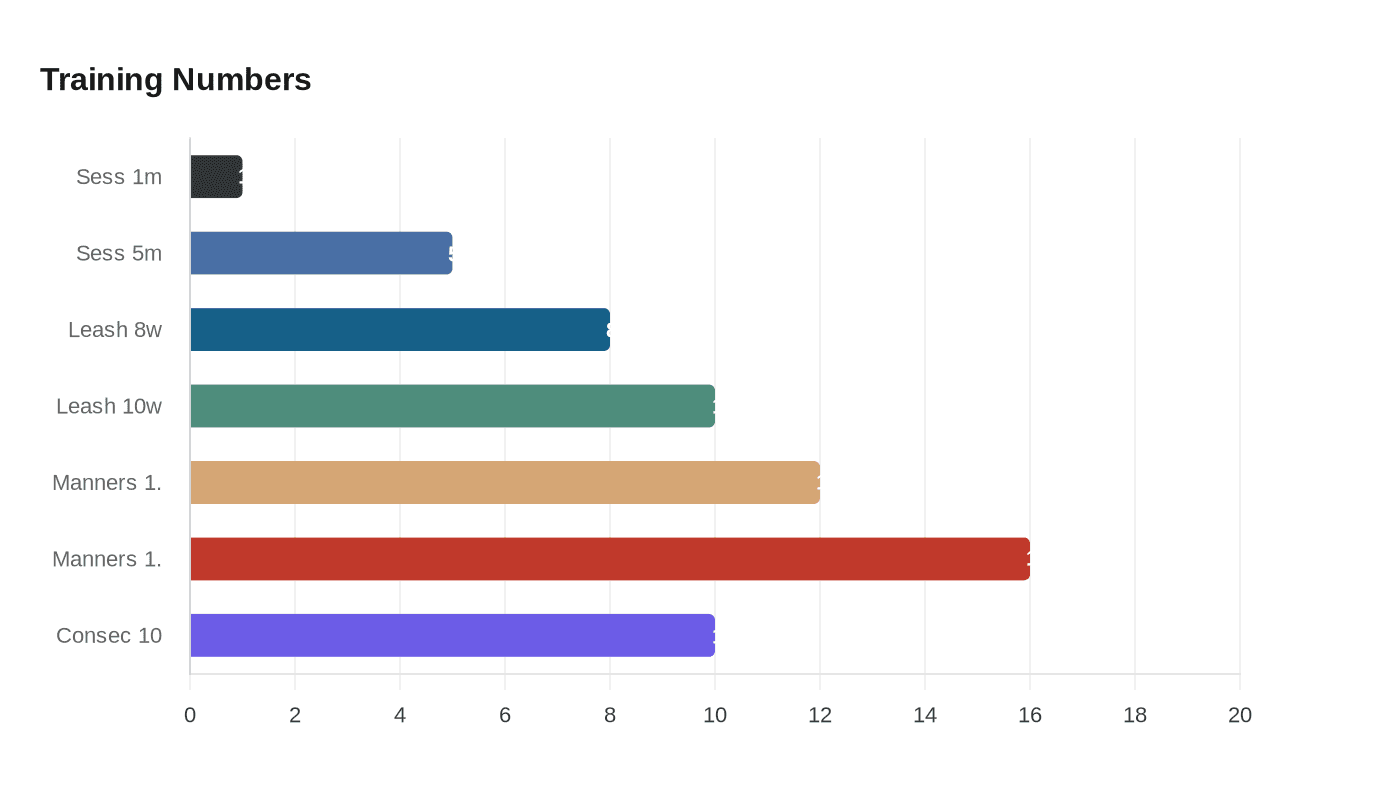
Puppies have short windows for focus — Ollie Pets puts it bluntly: “Puppies have the attention span of a gnat. Aim for 1–5 minute sessions, a few times a day. Quit while they’re still having fun.” Keep sessions brief (1–5 minutes) and frequent, so high‑drive pups don’t burn out or learn that training equals drag. End each session on success so the last memory is positive.
2. Reward timing: speed matters
Timing is decisive for building the connection. “The reward needs to happen immediately—within seconds—for your puppy to connect the dots. Delay, and they won’t understand what they did right,” Ollie advises. Use a ready supply of high‑value treats or an instant click + treat so the consequence is unmistakably linked to the behavior.
3. Use positive reinforcement: make training a jackpot
Ollie says to “Reward behaviors you like—with treats, praise, toys, or playtime. Make your puppy feel like they hit the jackpot when they get it right.” For high‑drive puppies, rotate rewards (food, toy, play) so motivation stays high; reserve the most exciting rewards for the toughest steps (first reliable look, first calm sit amid distraction).
4. Consistency across handlers: agree on house rules
Conflicting responses confuse pups: “If one person lets the puppy jump on the couch and another scolds them for it, your puppy will be confused,” Ollie warns. Establish household rules and cue words, then run short, identical practice blocks with every family member to reinforce the same outcomes across contexts.
5. Clear, simple cues: repeat the same words
Use compact cues and repeat them often. Ollie highlights “Clear, Simple Cues,” and Thewellheeledway recommends consistent words like “place” and “stay” during progression. Keep commands to a single word and deliver them consistently across reps so the puppy learns the cue, not a string of variable phrasing.
6. Leash timeline: when to introduce hardware
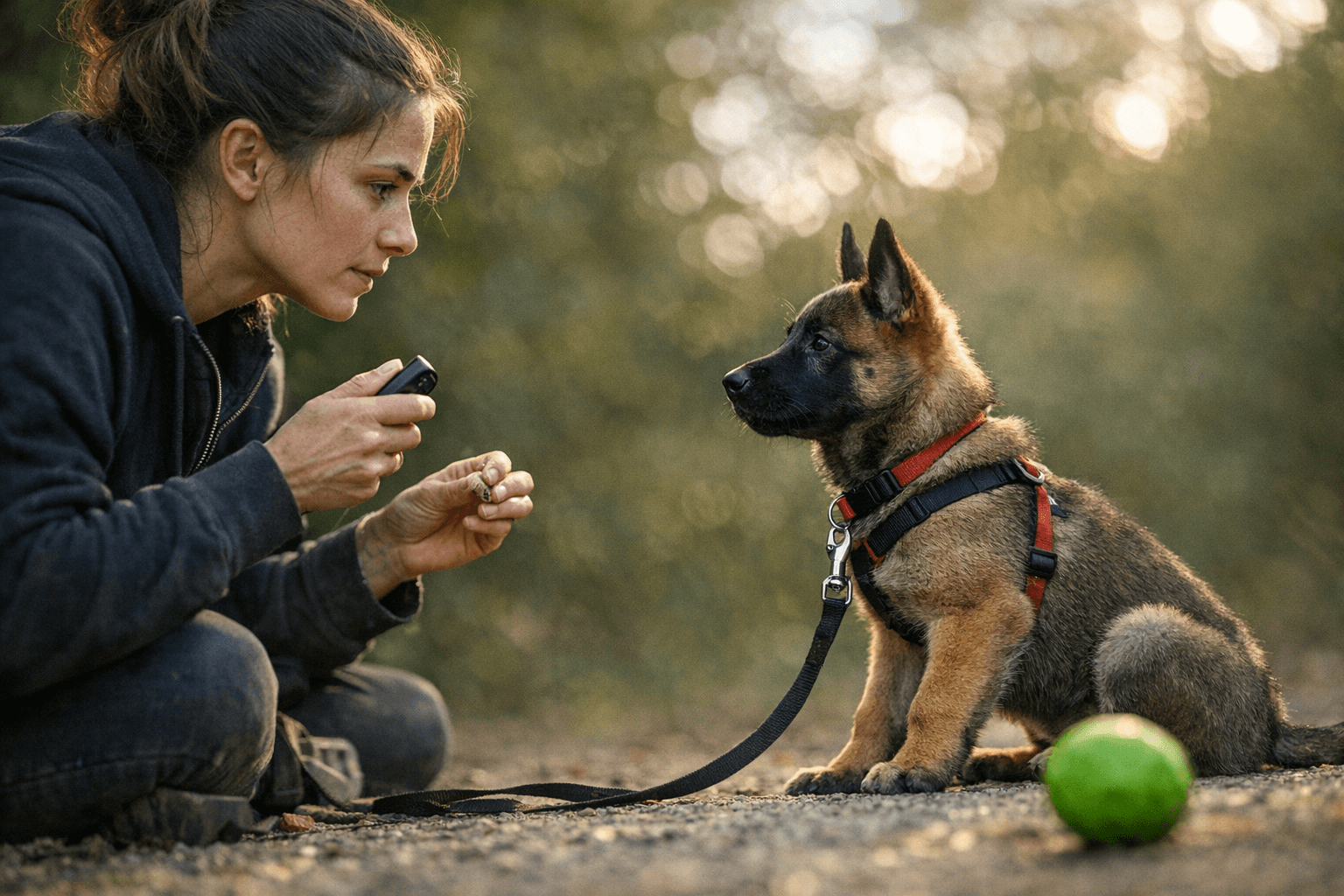
Introduce a lightweight leash at home early: “Introduce a lightweight leash at home around 8–10 weeks old,” Ollie recommends. Practice short, fun leash sessions indoors so the pup accepts gear calmly; “True leash manners (walking without pulling) will develop between 12–16 weeks with short, fun practice sessions,” Ollie adds—so expect raw leash manners to mature across that 12–16 week window with consistent micro‑training.
7. Start small with operant conditioning and clicks
Thewellheeledway models a low‑distraction start: “Working with Maya, I used operant conditioning with very little distraction in an effort to get her to look at me and to ‘sit’ for 10 times in a row.” Begin inside or in a small, quiet area, use a clicker or marker, and reward the exact behavior you want to strengthen so the pup links the action and the payoff.
8. Reinforce calm and set measurable criteria
Don’t reward contact or over‑arousal. Thewellheeledway is explicit: “It’s important to wait until she’s not bumping, licking, or putting teeth on me before I reward her.” Set a clear performance target before you raise difficulty — Thewellheeledway uses “aim for 10 consecutive behaviors” (or “sit for 10 times in a row”) as the criterion to move to the next level.
9. Add distractions methodically — use another dog as a controlled trigger
To convert look and sit into reliable focus around triggers, introduce distraction in staged steps. As in Maya’s case: “To work on this, I added another level of distraction by adding another dog to our training sessions and again aim for 10 consecutive behaviors. When your dog focuses on you and not the other dog (or whatever distraction you are using), reward and reinforce.” Keep distance, use a longer training line, and only progress once the pup hits the consecutive‑rep benchmark under the new distraction level.
10. Take training outside with a longer training line
Thewellheeledway’s “Attention when OUTSIDE” guidance is practical: move your work outdoors to expand options while keeping expectations stable. “Move your training sessions outside with more space, and a longer training line. Repeat the same kind of attention exercises and commands. Vary your environment, but be consistent with the commands and expectations. And remember, keep sessions short!” Use the longer line to allow safe movement and graduated distance while preserving immediate reward timing.
11. Tools and kit: what to have on hand
Assemble a compact kit: a clicker, pouch of high‑value treats, a variety of toys, a lightweight leash for early home introduction, and a longer training line for outdoors. Ollie emphasizes treats/toys/play as reward options; Thewellheeledway highlights clicks + rewards and a training line for outdoor progression. Keep the kit accessible so you can deliver rewards within seconds.
12. Normal developmental behaviors — manage expectations
Ollie lists normal, trainable puppy behaviors: “Mouthing and nipping,” “Zoomies,” “Potty accidents,” “Chewing everything,” and “Short attention spans.” Treat these as expected stages: redirect mouthing to appropriate chews, channel zoomies with play or brief exercise before training, accept accidents as part of development, and structure sessions to the pup’s attention window.
13. A simple progression plan you can follow today
Start with 2–4 short indoor sessions daily (1–5 minutes each) focusing on look and sit with click + treat. Once you can get 10 consecutive calm reps in low distraction, add a mild distractor (another person or toy), re‑establish 10 consecutive reps, then move outside on a long line and repeat the cycle. Use the 8–10 week window to introduce a lightweight leash and expect true leash manners to emerge between 12–16 weeks with consistent short practice.
14. What Outleash adds — and what to check next
Outleash’s recent guide is the news peg here: it “provides a structured four‑pillar approach to build voluntary engagement.” That framework frames these short sessions and progressive, drive‑aware steps as part of a broader plan; consult the full Outleash guide for the pillar names and how they slot into a longer training timeline.
- If your pup escalates (lunging, frantic barking), step back to the previous, easier criterion and rebuild consecutive reps there.
- Rotate reward types to prevent satiation — keep the highest‑value item for hardest reps.
- If household consistency breaks down, run a short family training huddle to align cues and consequences.
15. Quick safety and troubleshooting tips
Wrap: practical next moves Start today with one or two 2‑minute clicker sessions, stack treats so you can reward within seconds, and measure progress by consecutive calm reps — Thewellheeledway’s 10‑rep target and Ollie’s 1–5 minute session rule are simple anchors for high‑drive pups. If you want deeper structure, the Outleash guide’s four‑pillar framing is the logical next read to fold these tactics into a complete attention program.
Know something we missed? Have a correction or additional information?
Submit a Tip