Sidelined U.S. alcohol study finds risks rise at one drink daily
A federal alcohol study was pushed aside until an outside journal published its warning: one drink a day carried at least a 1 in 1,000 lifetime death risk.

Why did a government-commissioned study warning that even low levels of drinking can raise health risks have to find an outside journal to reach the public? The answer lies in a bruising fight over alcohol policy, one that put federal scientists, congressional Republicans, and the spirits industry on opposing sides of a debate with real consequences for how Americans understand “moderate” drinking.
The Alcohol Intake and Health Study, commissioned by the U.S. Department of Health and Human Services to help update the 2025-2030 Dietary Guidelines for Americans, found that the lifetime risk of dying from an alcohol-related cause, including injuries and road accidents, was at least 1 in 1,000 for Americans drinking one drink a day. That risk rose to 1 in 100 for people consuming two drinks a day, and to 1 in 25 for American men at that level. The study had circulated in draft form in January 2025, but it was not the version federal officials relied on when they issued the new drinking guidance on January 7, 2026.
Instead, the Trump administration used a separate National Academies review requested by Congress. That choice immediately sharpened the policy divide over whether federal advice should keep treating low-level drinking as relatively safe. The Distilled Spirits Council of the United States said Tuesday that a congressional investigation led by Rep. James Comer, a Kentucky Republican, had concluded the alcohol study was “irretrievably flawed” and should not be considered for the dietary guidelines.
The House Committee on Oversight and Government Reform said its investigation began in April 2024 and culminated in a January 2026 staff report that called the study biased, argued it was inconsistent with federal law, and said the Biden administration had produced only 31 pages of responsive documents before the committee subpoenaed HHS. Federal health officials and the study’s researchers have maintained that the evidence reflects a broad scientific record linking alcohol to cancer, cardiovascular disease and other harms.
The stakes go far beyond a dispute over serving sizes. The Dietary Guidelines for Americans are published jointly every five years by USDA and HHS under a 1990 law, and the 2025-2030 edition is the first in 25 years to give advice directly to consumers. Those recommendations shape federal nutrition programs, medical counseling and public-health messaging nationwide. HHS has said alcohol use is the third leading preventable cause of cancer in the United States, contributing to nearly 100,000 cancer cases and about 20,000 cancer deaths each year, with the causal link first established in the late 1980s.
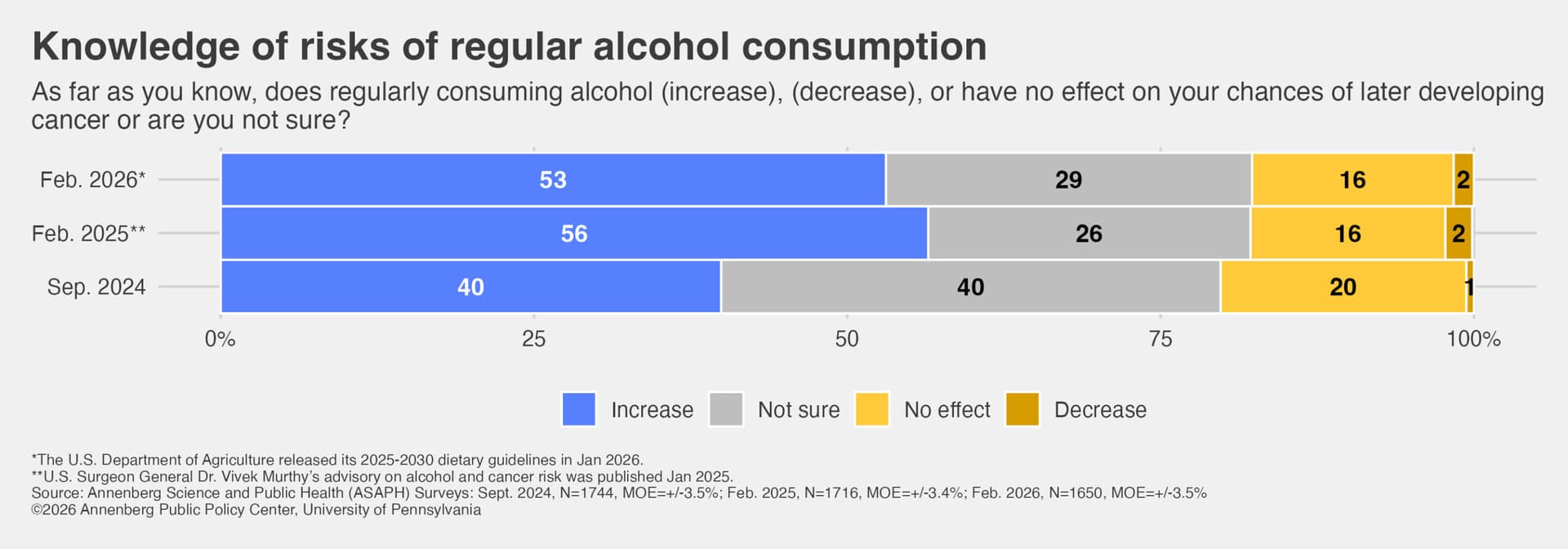
That makes the suppressed study more than a bureaucratic footnote. It is a reminder that the country’s drinking advice is still being written in the space between science, politics and industry pressure, even as the health costs of alcohol continue to land in clinics, emergency rooms and communities across the United States.
This article was produced by Prism’s automated news system from verified source data, official records, and press releases, then run through automated quality and moderation checks before publishing. The system is built and supervised by the people who set the standards it runs under. Read our full AI policy.
Know something we missed? Have a correction or additional information?
Submit a Tip