Simple Meditation Practices That Reduce Stress Quickly and Safely
A concise set of clinician-reviewed meditation practices offers straightforward ways to reduce stress in minutes without special equipment. These techniques are portable, inexpensive, and designed to fit into busy lives, making them practical tools for improving emotional balance and supporting overall health.

Meditation is a low-cost, accessible practice that can restore calm and reduce stress in just a few minutes. Anyone can try it, whether standing on a bus, walking in the park, waiting at a doctor's office, or pausing during a busy workday. Because it requires no special equipment and only minimal time, meditation is an easy entry point for people seeking immediate relief from anxiety and tension.
Historically used to deepen understanding of sacred and mystical forces, meditation today is most often practiced to relax and lower stress. As a mind-body complementary approach, it works by helping you focus on a single point of attention and quiet the stream of thoughts that contributes to emotional strain. That process can produce both immediate calm and longer-term improvements in physical and emotional well-being.
Practical value comes from the flexibility of techniques. Guided meditation or visualization uses a narrated focus to lead attention; mantra meditation anchors the mind with a repeated word or phrase; mindfulness meditation centers on present-moment awareness and often focuses on the breath; and movement-based options such as qigong, tai chi, and yoga combine movement, breathing, and focus to produce similar calming effects. Each approach can be adapted to the time and setting you have available.
Core elements common to effective practice include focused attention, relaxed diaphragmatic breathing, and a quiet setting for beginners. Simple starter exercises include a brief breathing practice in which you notice the breath at the nostrils and gently return attention when the mind wanders; a body scan that moves attention through each part of the body to notice sensations and release tension; and repeating a short calming phrase or single word to maintain an anchor for attention. Start with a few minutes a day, find a comfortable posture, and treat wandering thoughts with patience rather than frustration.
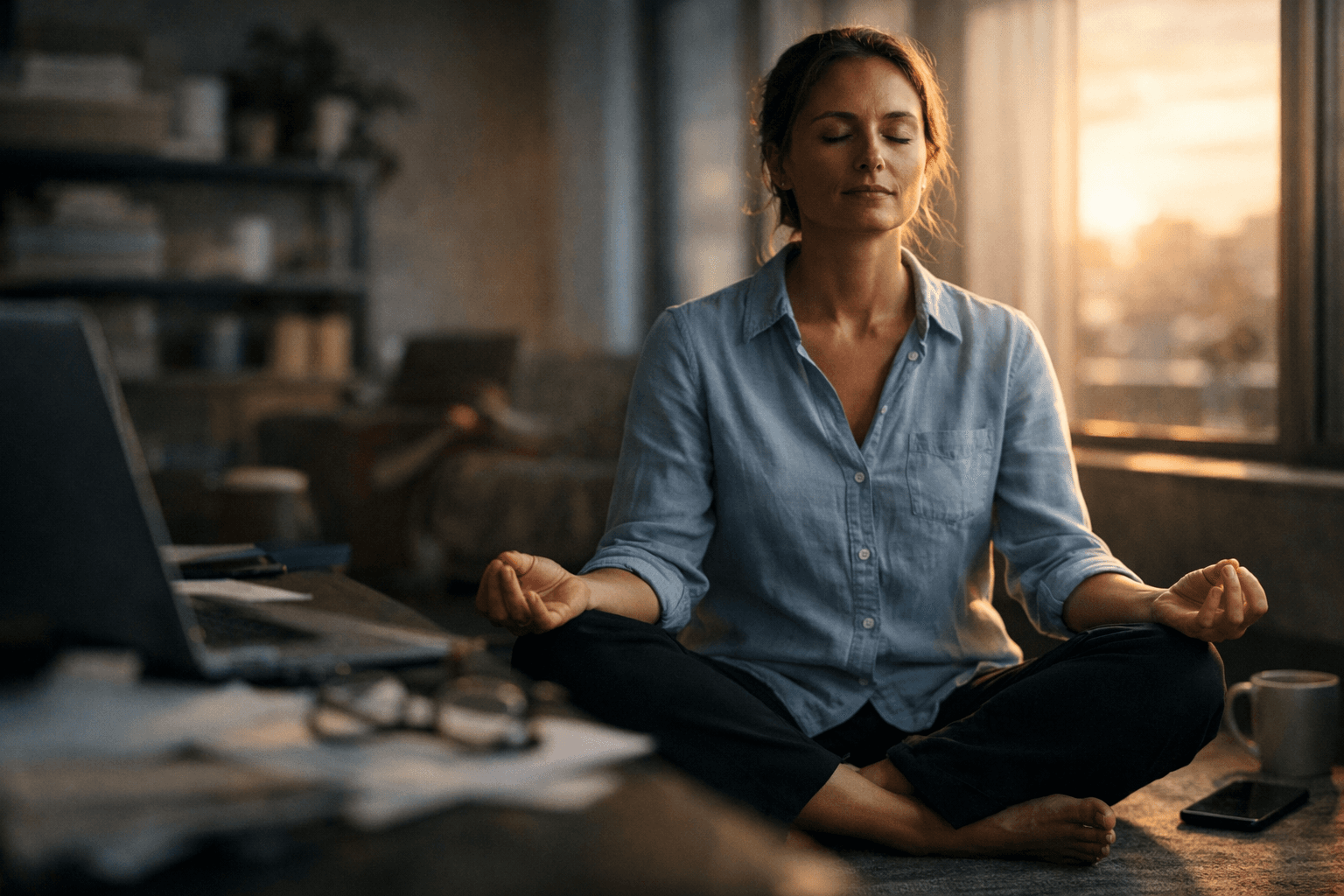
Meditation’s benefits extend beyond the cushion. Regular practice can help you move through daily stressors with more steadiness and may assist in managing symptoms of some medical conditions when used alongside conventional care. When you plan to use meditation to address health concerns, consult your healthcare provider to ensure it complements any existing treatment.
For community members juggling work, family, and health commitments, meditation offers a practical, evidence-informed option you can use today. Try three to five minutes of focused breathing during a commute or a short body scan in a waiting room to experience how small, consistent practices can change the tone of your day.
Know something we missed? Have a correction or additional information?
Submit a Tip