SlamBall revival boosts community play and safety-focused training
SlamBall's modern relaunch has driven renewed league play, broadcasts, and community attention on aerial safety and training. Local organizers and players should prepare for fast, contact-heavy action.
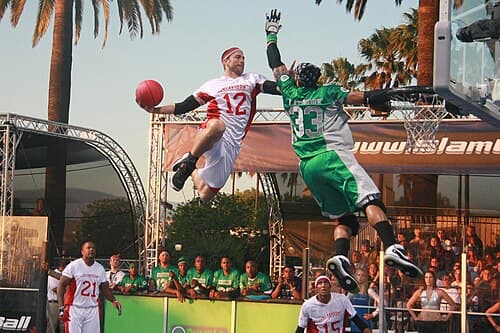
SlamBall has returned to the spotlight with a modern relaunch that combines renewed league activity, investor backing, and broadcast partnerships — and that matters to players, coaches, and community organizers planning events or training programs. The 2023 season staged a Las Vegas regular season and playoffs, giving the revival a visible showcase and sparking local interest in both competitive and recreational play.
The sport blends basketball, football and gymnastics into a high-energy, full-contact contest played on a court with four trampolines embedded in front of each hoop and protective boards around the edges. Two teams typically field four players on the court at a time and score by putting the ball through the hoop. The modern formats kept SlamBall's trademark rim-rattling aerials while adding rule tweaks like a four-point arc in some competitions, and higher-value scoring for dunks and long-distance shots in other setups.
Games remain short and fast-paced to suit both broadcast windows and community events. Professional formats have used either four five-minute quarters or a single 20-minute game, and many rulesets employ an active shot clock - 20 seconds in some versions - to keep possessions moving. Rolling substitutions, much like hockey line changes, allow teams to keep fresh legs on the trampoline and sustain the game's frantic tempo. Physical contact, including mid-air collisions and blocks, is legal and expected; fouls are tracked and players can be removed after accruing a set number of personal fouls. Tie resolution procedures and stoppage protocols, such as face-offs after certain fouls, remain part of the formal ruleset.
For anyone organizing clinics, leagues, or pick-up nights, practical focus should be on aerial awareness, safe landing mechanics and controlled contact. Coaches and referees need to emphasize body positioning on takeoff and landing, spotting and progression for trampoline skills, and drills that build explosive vertical power without sacrificing control. Facility hosts must account for embedded trampolines and court boards when planning layouts, padding, and emergency procedures.

SlamBall's history stretches back to around 1999 with early televised runs in the early 2000s and international exhibitions that generated particular interest in China. The current revival is building on that legacy while refining rules and competition formats for modern audiences and community play.
Our two cents? Treat SlamBall like a high-intensity, contact-driven hybrid sport: prioritize technique over theatrics, train landing and collision drills before chasing highlight dunks, and stage rules-briefing sessions for every new player so air time stays impressive and safe.
Sources:
Know something we missed? Have a correction or additional information?
Submit a Tip