Sleep apnea pill cuts breathing interruptions in clinical trial
A nightly pill cut sleep apnea breathing interruptions far more than placebo, but side effects and dropouts show it is still no CPAP replacement.

A once-nightly pill moved obstructive sleep apnea closer to a simpler treatment for patients who cannot tolerate CPAP, but the experimental drug still faces major hurdles before it could become routine care.
In the 26-week SynAIRgy trial, the fixed-dose combination AD109 reduced breathing interruptions by 44.1% from baseline, compared with 17.6% for placebo. Nearly 18% of participants achieved complete control of their sleep apnea, a result that matters because untreated apnea can fragment sleep, lower blood oxygen, and raise cardiovascular risk.
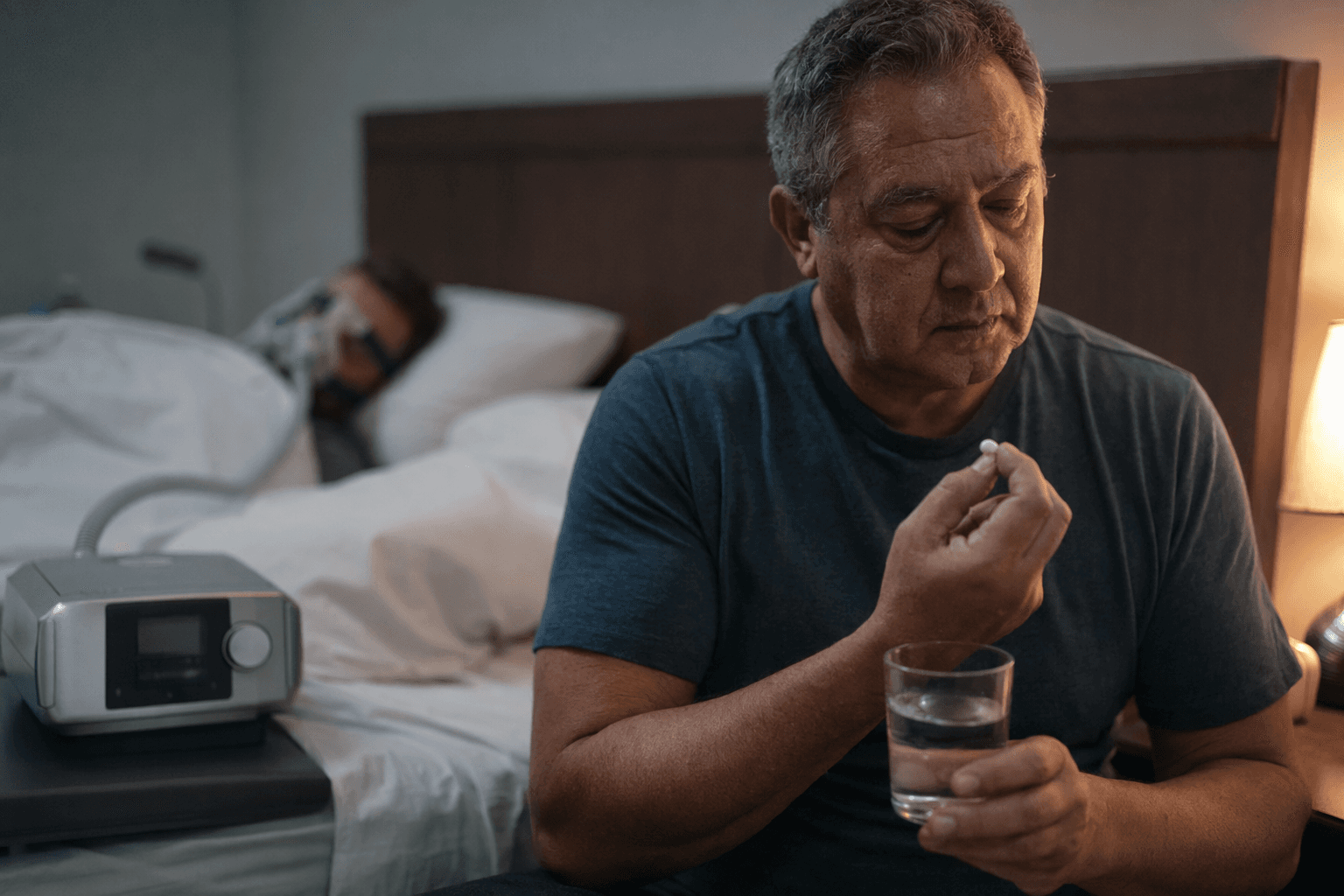
The study randomized 646 eligible adults across 69 centers. Participants had mild, moderate, or severe obstructive sleep apnea, with a median age of 58, 49.3% women, and a median body mass index of 32.4 kg/m2. Their median baseline apnea-hypopnea index was 19.6 events per hour, and all had either been intolerant of positive airway pressure therapy or had refused it altogether.
AD109 combines aroxybutynin 2.5 mg and atomoxetine 75 mg taken once daily at bedtime. Researchers said the drug is designed to keep the airway from collapsing during sleep by acting on the neuromuscular drivers of the disorder, rather than mechanically splinting the throat open the way CPAP does. The American Thoracic Society described AD109 as the first therapy to target those causes of airway collapse.
The numbers were encouraging, but they were not a wholesale substitute for CPAP. The mean treatment difference at week 26 was -4.0 events per hour versus placebo, and the pill also improved oxygen drops overnight. At the same time, 21.2% of participants on AD109 discontinued because of adverse events, compared with 3.1% on placebo. The most common side effects were dry mouth, nausea, insomnia, and urinary hesitation.
The result builds on earlier work, including a small 2019 crossover study in 20 participants and a 2026 randomized crossover trial in 58 participants that also suggested atomoxetine plus oxybutynin could reduce apnea severity. Apnimed, the company developing AD109, has already reported another phase 3 study, LunAIRo, with a 46.8% mean reduction in apnea-hypopnea index versus 6.8% for placebo, and it has said it intends to pursue U.S. Food and Drug Administration review.
For now, CPAP remains the standard. AD109 may eventually widen the treatment options for patients who cannot sleep with a mask, but doctors will need stronger evidence on long-term safety, tolerability, and real-world benefit before a pill can claim that role.
Know something we missed? Have a correction or additional information?
Submit a Tip