Social Media Spreads Contraception Misinformation Amid Real Women's Side Effect Concerns
Nearly half of analyzed TikTok posts about birth control push women to stop hormonal contraception, research shows, as real side effect concerns fuel a growing misinformation cycle.
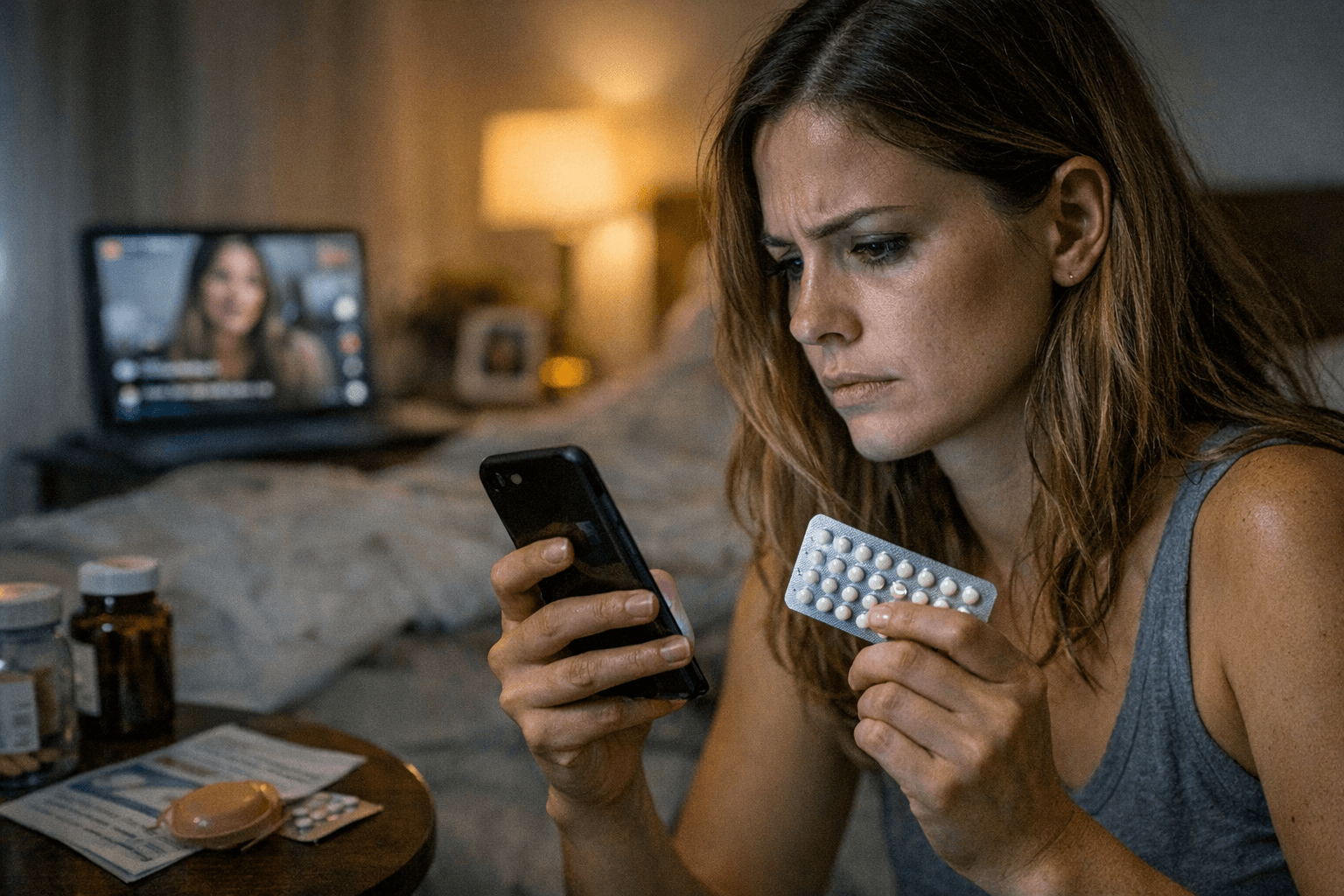
A viral TikTok shows a woman in an emergency room questioning whether hormonal birth control is silently driving a cancer and infertility crisis among women in their 30s. The video has collected 2.6 million likes and 21,000 comments, and it is one node in a sprawling web of contraception misinformation that researchers say is measurably shifting how younger women think about their own health care.
Contraception faces sustained attacks on platforms including TikTok and YouTube, where influencers routinely amplify the perceived dangers of hormonal birth control while urging followers to discontinue effective care and return to a more "natural" state. The numbers behind that trend are striking. In a 2023 study, 74 percent of YouTube influencers sampled who spoke about birth control encouraged discontinuation of contraception. A 2024 TikTok study found that nearly 50 percent of the posts analyzed promoted the same idea, with creators collectively identifying 57 alleged negative side effects of hormonal contraceptives. Those claims are usually based on personal anecdotes, not scientific evidence.
Research published in late 2025 through Stanford University School of Medicine found that side effects are the most frequently discussed topic across all social media formats, with negative effects discussed far more frequently than benefits. That imbalance matters because some women's concerns about side effects are clinically grounded. Between 4 and 10 percent of users do report negative mood changes while using the combined pill. A large study showed a positive association between the use of a levonorgestrel-containing IUD and depression, anxiety, and sleep problems in women who did not have those conditions before use. Poor outcomes can occur when practitioners deny a woman's observed relationship between depression, anxiety symptoms, and the oral contraceptive. The clinical literature, in other words, validates real frustration even as it undercuts the scale of harm that influencers routinely claim.
Research suggests that when women ages 18 to 29 perceive an influencer as more trustworthy or as having greater expertise, they are more likely to act on contraception misinformation, a dynamic that makes the credibility performance of social media creators particularly consequential. The problem is compounded by a second, distinct strand of misinformation that reframes contraception itself as something it is not. Emergency contraception and IUDs are safe, effective methods for preventing pregnancy, but some anti-abortion groups misrepresent them as abortifacients. The FDA clarified in 2022 on the Plan B label that it does not block implantation, yet the misinformation persists. The legal confusion that follows is real: KFF polling from 2023 found that about half of women in states where abortion is banned either believed emergency contraception was illegal or were unsure of its legality.
Misleading claims about contraceptive safety and effectiveness on social media can be driven by a number of factors, including lack of high-quality contraceptive counseling, gaps in patient knowledge about potential side effects, and wellness influencers who speak out against hormones. Evaluating a claim before acting on it requires checking whether it is backed by peer-reviewed research rather than a single story, whether the creator discloses medical credentials, and whether the content discourages professional consultation altogether. Any post urging immediate discontinuation without a conversation with a clinician is a red flag regardless of how many likes it has accumulated.
Clinicians bear some responsibility here too. Dismissing a patient's account of mood changes or other symptoms linked to their contraceptive method is not a neutral act; it is precisely the kind of dismissal that drives women toward platforms where their concerns will at least be heard, even if the answers they find there are wrong.
This article was produced by Prism’s automated news system from verified source data, official records, and press releases, then run through automated quality and moderation checks before publishing. The system is built and supervised by the people who set the standards it runs under. Read our full AI policy.
Did this article answer your question?


