U.S. Births Drop 1% in 2025, Teen Rates Hit Record Low
Teen births hit a record low of 11.7 per 1,000 in 2025, but a simultaneous rise in C-sections to a 12-year high signals deepening strain on maternal health systems.

The U.S. recorded an estimated 3,606,400 births in 2025, a 1% decline from the prior year, according to provisional data released April 9 by the National Center for Health Statistics. The numbers tell a split story: teen birth rates dropped to their lowest level ever measured, while the rate of cesarean deliveries climbed to a 12-year high, raising pointed questions about obstetric practice patterns and the mounting costs they impose on patients and health systems alike.
The general fertility rate slipped to 53.1 births per 1,000 females ages 15 to 44. The Centers for Disease Control and Prevention based those estimates on more than 99% of registered U.S. births, giving the figures strong statistical grounding even in their provisional form.
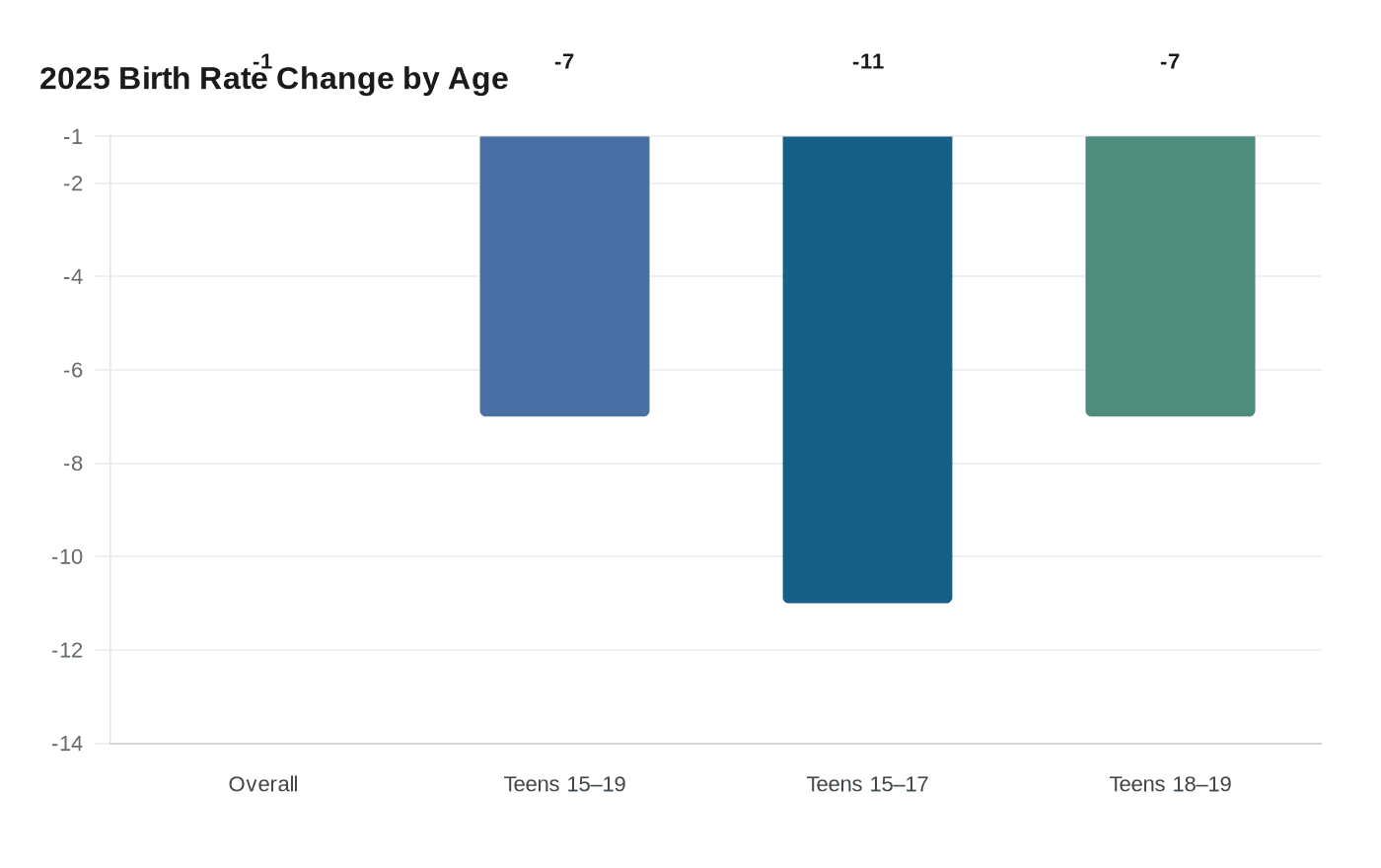
The sharpest movement in the data came from younger age groups. The birth rate for teenagers ages 15 to 19 fell 7% to 11.7 per 1,000, the lowest in modern record-keeping. Among girls ages 15 to 17, the decline was steeper: an 11% drop. Late teens ages 18 to 19 saw a 7% decrease. Public health officials have long linked falling teen birth rates to expanded contraceptive access and comprehensive sexual education, though broader forces, including rising educational attainment among young women and delayed family formation, have reinforced the trend.

While the adolescent numbers represent a clear public-health gain, the cesarean delivery data moved in the opposite direction. The overall C-section rate rose to 32.5% in 2025, the highest since 2013. More troubling to clinicians and health economists is the low-risk cesarean rate, which tracks surgical births that clinical guidelines suggest are often avoidable: that figure climbed to 26.9%, the highest since 2012. Cesarean deliveries carry substantially greater clinical risk than vaginal births, including longer recovery times, higher rates of surgical complications, and elevated costs to patients and insurers. Hospitals and obstetric practices can expect renewed scrutiny of those numbers from regulators and accreditation bodies.
Preterm births held largely steady. The overall preterm rate came in at 10.41%, with early preterm births before 34 weeks edging down 1% and late preterm deliveries in the 34-to-36-week window unchanged.
The broader fertility decline carries long-range fiscal weight. Fewer children born today translate, roughly two decades out, into a smaller workforce supporting a larger retiree population, compounding pressure on Social Security and Medicare funding. School enrollment planners in districts already managing declining headcounts will find additional confirmation in the 3.6 million figure that the contraction is not a temporary blip.
The April 9 release is provisional, with more complete NCHS data and peer-reviewed analyses to follow. But the early figures already provide a basis for state and federal planning decisions. Maternal-health advocates are expected to cite the rising C-section rate in pushing for targeted clinical interventions and revised reimbursement structures, while family-planning organizations will point to the teen-birth decline as evidence for sustained investment in contraceptive access programs. Researchers examining the fertility drop itself will probe a wide range of contributing factors: housing affordability, student debt, shifting attitudes toward parenthood, and uneven access to obstetric care in rural and underserved communities.
The 2025 data confirm what demographers have flagged for years: the U.S. is having fewer children, the medical circumstances of those births are shifting in costly directions, and the downstream reckoning is only beginning.
This article was produced by Prism’s automated news system from verified source data, official records, and press releases, then run through automated quality and moderation checks before publishing. The system is built and supervised by the people who set the standards it runs under. Read our full AI policy.
Did this article answer your question?