Solid-state batteries still lag, gel electrolytes may reach market first
Solid-state batteries still promise safer, longer-range EVs, but they are not ready for scale. Gel electrolytes look likelier to reach drivers first.
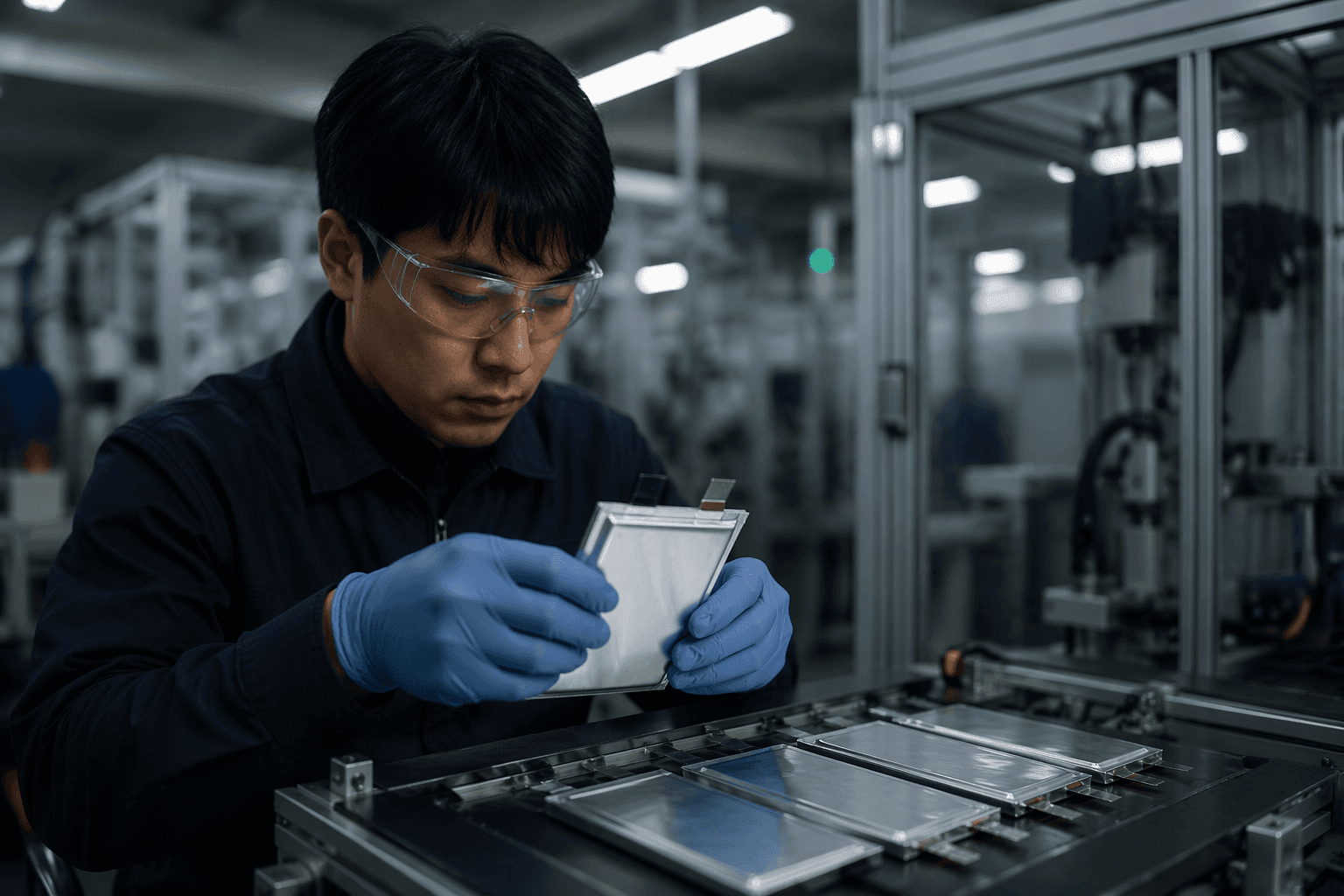
Solid-state batteries remain the industry’s favorite future promise, but the gap between a promising cell and a mass-produced one is still wide. The appeal is easy to grasp: replace the flammable liquid electrolyte inside today’s batteries with a solid one, and you could improve safety, raise energy density, and potentially unlock faster charging. But by 2026, that vision is still not commercially scalable, which is why gel-based and semi-solid approaches are drawing more attention as practical bridge technologies.
Why solid-state keeps missing the market
Rechargeable lithium-ion batteries have defined the modern portable-power era since Sony began selling the world’s first commercial cells in 1991. Solid-state batteries build on that legacy by swapping the liquid or gel polymer electrolyte for a solid electrolyte, a change that sounds straightforward on paper and remains stubbornly difficult in production. Recent reviews keep arriving at the same conclusion: the chemistry is promising, but the technology is still constrained by materials, interfaces, dendrite growth, and manufacturing challenges.
Those constraints matter because batteries are not judged on laboratory potential alone. To reach electric vehicles at scale, a cell has to work reliably across thousands of charge cycles, in heat and cold, at acceptable cost, and on production lines that can deliver consistent quality. Solid-state prototypes may point to better range, because higher energy density can store more power in the same space, and better safety, because less flammable electrolyte should reduce fire risk. But without scalable manufacturing, those gains stay trapped in demo packs and investor decks.
What the interface problem really means
One of the hardest issues is the interface between the solid electrolyte and the rest of the battery stack. A comprehensive review of solid-state technology has emphasized that the field still depends on advances in materials, architecture, and performance control, because each layer has to stay in contact without creating resistance or instability. In practical terms, that means a battery can look excellent in a lab and still underperform once engineers try to build enough of them to matter.
Dendrites are another major barrier. In lithium metal batteries, needle-like structures can form as lithium plates during charging, and a 2024 review highlighted how liquid electrolytes face dendrite growth and leakage problems. Solid-state designs are often promoted as a fix, but they do not automatically eliminate the issue, especially when the electrode and electrolyte are not perfectly matched. If those filaments penetrate the cell or create internal shorts, the result is exactly the kind of failure automakers are trying to avoid.
Why gel electrolytes may get there first
That is where gel polymer electrolytes and semi-solid-state batteries enter the picture. A gel polymer electrolyte keeps liquid components immobilized inside a solid matrix, which can preserve many of the advantages of liquid electrolytes while reducing leakage and easing some of the interfacial problems seen in all-solid-state systems. A 2024 review in the Royal Society of Chemistry described gel polymer electrolytes as significant for rechargeable batteries because they retain many liquid-electrolyte benefits while avoiding some all-solid-state interface issues.
A June 2024 summary described semi-solid-state batteries as a middle ground between conventional lithium-ion batteries and true solid-state cells, and that framing captures why the approach may be commercially easier. The chemistry is still new, but it fits more naturally into the manufacturing logic of existing battery plants than a fully solid architecture that demands entirely new materials control and tighter interface management. In market terms, that can translate into lower risk, faster qualification, and a clearer path to early consumer products.
What the timelines say about commercialization
The industry’s own timelines underline the gap between ambition and deployment. Toyota has said it expects all-solid-state battery deployment in battery electric vehicles between 2027 and 2028, a target that reflects real progress but also a long runway before scale. QuantumScape, meanwhile, says its next-generation batteries are designed for greater energy density, faster charging, and enhanced safety, but the company is still focused on scaling manufacturing rather than shipping mass-market vehicles.
That distinction is the heart of the commercialization problem. A chemistry can be good enough to attract partners and headlines, yet still not be good enough for a supply chain that has to deliver millions of identical cells at a cost automakers can live with. If manufacturing remains slow, expensive, or difficult to yield consistently, then range gains and charging-speed improvements never reach the showroom in meaningful volumes.
What not ready actually means for EV buyers and the market
For consumers, “not ready” does not mean the technology is fake. It means the trade-offs have not been solved well enough to support mass adoption, and the economics still favor less glamorous alternatives. Solid-state could eventually improve range, safety, and charging speed, but the current bottlenecks in materials, interfaces, dendrites, and production scale keep it from becoming a near-term standard.
Gel-based systems may look less revolutionary, yet they may deliver more practical value first. If a gel or semi-solid design can offer better safety and reduced leakage while fitting more cleanly into current manufacturing flows, it can move from prototype to product much faster. In battery markets, the first breakthrough that matters is often not the one with the biggest promise, but the one that can be built, priced, and shipped at scale.
This article was produced by Prism’s automated news system from verified source data, official records, and press releases, then run through automated quality and moderation checks before publishing. The system is built and supervised by the people who set the standards it runs under. Read our full AI policy.
Know something we missed? Have a correction or additional information?
Submit a Tip