Sotomayor apologizes after sharp public criticism of Kavanaugh’s immigration ruling
Sotomayor apologized after saying Kavanaugh’s immigration-stop reasoning showed he did not understand hourly workers, a rare public breach of Supreme Court collegiality.
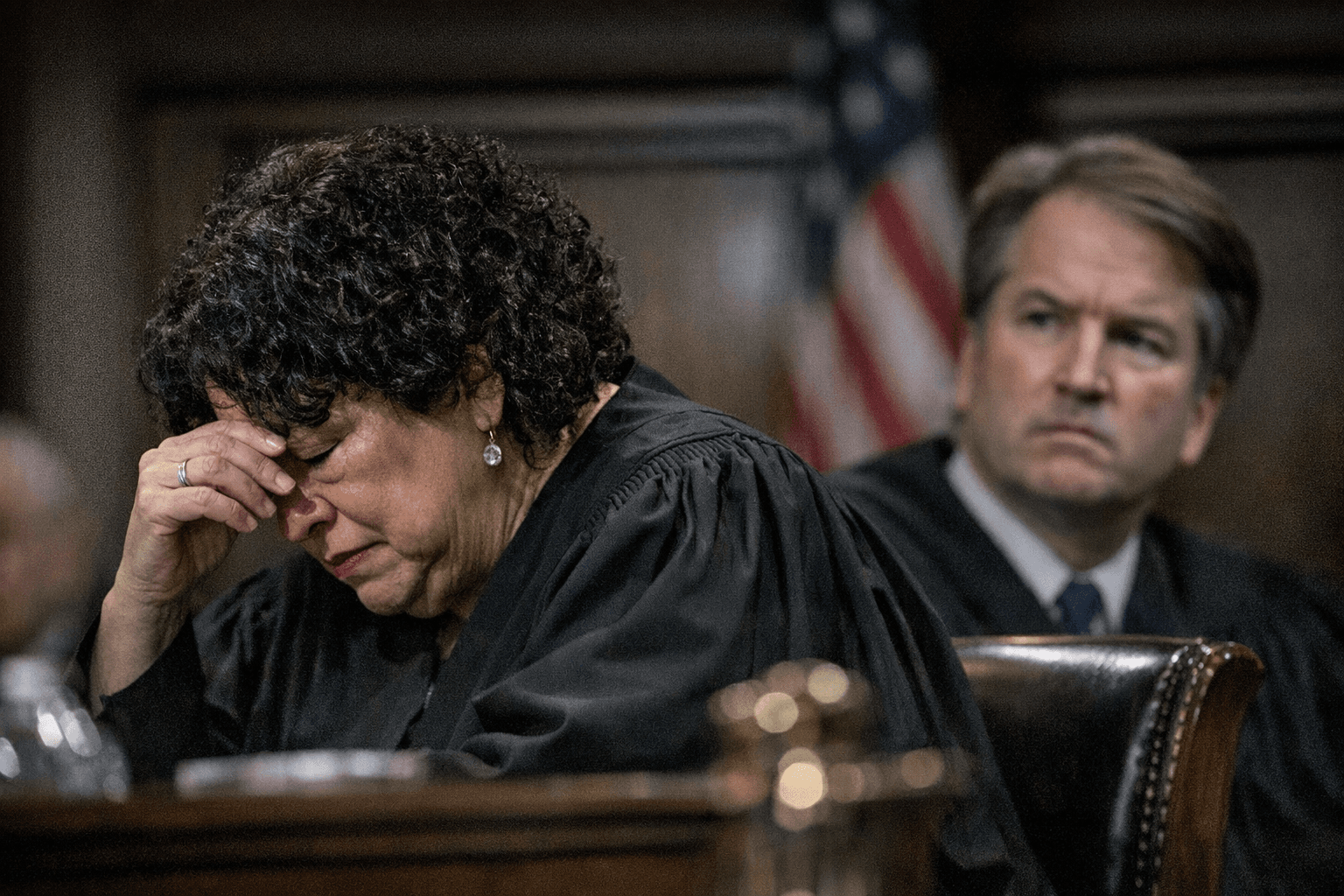
Sonia Sotomayor apologized after her sharp public criticism of Brett Kavanaugh’s immigration ruling drew immediate attention to a deeper question inside the Supreme Court: how far justices can go in public before disagreement starts to look like personal attack.
Speaking on April 7 at the University of Kansas School of Law in Lawrence, Kansas, Sotomayor targeted Kavanaugh’s concurrence in Noem v. Vasquez Perdomo, the Sept. 8, 2025 emergency order that paused lower-court limits on immigration stops in the Los Angeles area. The order let the Trump administration resume enforcement operations while litigation continued, giving federal agents wider room to operate even as the case moved through the courts.
Kavanaugh’s concurrence backed allowing immigration agents to consider factors including apparent ethnicity, language, location and type of work when making brief stops. Sotomayor, discussing the case before the law school audience, suggested that Kavanaugh did not understand the lives of hourly workers. That language made her remarks stand out well beyond the immigration debate itself, because sitting justices almost never criticize one another so directly in public.
The reaction reflected that institutional sensitivity. Multiple observers described the rebuke as extraordinary, not only because it came from one justice aimed at another, but because it collided with the court’s long-standing preference for internal disagreement handled behind closed doors. In an era when justices speak more openly at public events and in lectures, the episode showed how quickly candor from the bench can test the boundaries between legal critique, personal judgment and the court’s need to project legitimacy.
On April 15, Sotomayor backed away from the comments. She said her remarks were inappropriate and hurtful, and said she had apologized to Kavanaugh directly. The apology closed one chapter of the dispute, but not the larger one: the court’s immigration rulings continue to carry immediate consequences for enforcement in Los Angeles, while the justices themselves remain under pressure to show that sharp ideological divides do not become open personal warfare.
This article was produced by Prism’s automated news system from verified source data, official records, and press releases, then run through automated quality and moderation checks before publishing. The system is built and supervised by the people who set the standards it runs under. Read our full AI policy.
Did this article answer your question?

