Sourcing 2026 Jewelry Trends for Europe: Categories, Material Checks, Price Tiers
Sustainability and modularity are non-negotiable: buy solid-gold starter pieces and curated sculptural statements, map assortments to clear price tiers (entry <€10,000 vs high jewelry).
“Sustainability is no longer a trend; it’s a baseline expectation. Consumers are seeking meaning, versatility, and value in what they buy. Jewelry is becoming more personal, more adaptable, and more considered.” Idyl’s declaration is the clearest signal for buyers this season: 2026 is centered on pieces that can be lived in, reconfigured, and trusted to last. Idyl goes on to say, “This is why 2026 is the year modular fine jewelry takes center stage,” and their product language—“Our signature idyl Studs and Flat-Back Stud Earrings offer a premium take on everyday design. Made in solid gold and crafted to last, they’re your starting point for a refined stack that adapts as you do.”—maps directly to sourcing choices you should prioritize for the European market.
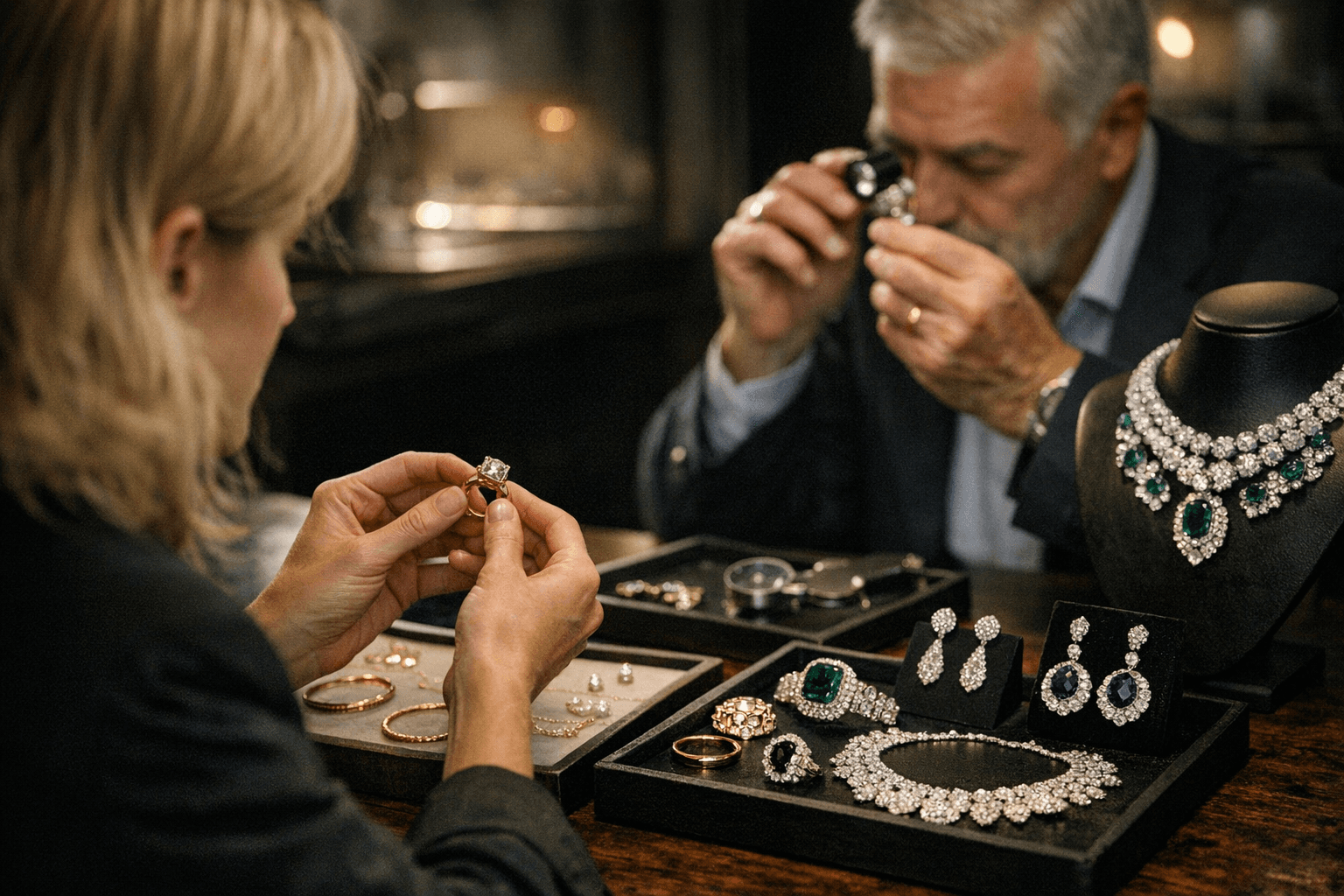
Market context and why assortment matters The macro picture is bifurcated. Bernstein analyst Luca Solca frames a “K-shaped economy, marked by widening wealth and income inequality,” and that split shows up in jewelry demand: entry-price pieces below the €10,000 threshold are proving more compelling at the lower end than handbags, while high jewelry continues to serve high-net-worth and ultra-high-net-worth clients. UBS reports the global number of millionaires rose by 4.6% year-on-year in 2024, which sustains appetite at the top. For merchants and buyers this means two clear plays—curated accessible-luxury assortments and a small-but-significant high-jewelry program. Babin’s merchandising logic is instructive: “The client overlap between maisons can reach 60% to 80%. Clients cannot attend everything, and they certainly won’t buy from everyone — so we have to be strategic,” says Babin. He adds a practical merchandising rule: “I prefer having a smaller selection with a higher conversion rate, versus a larger offer with an average conversion.”
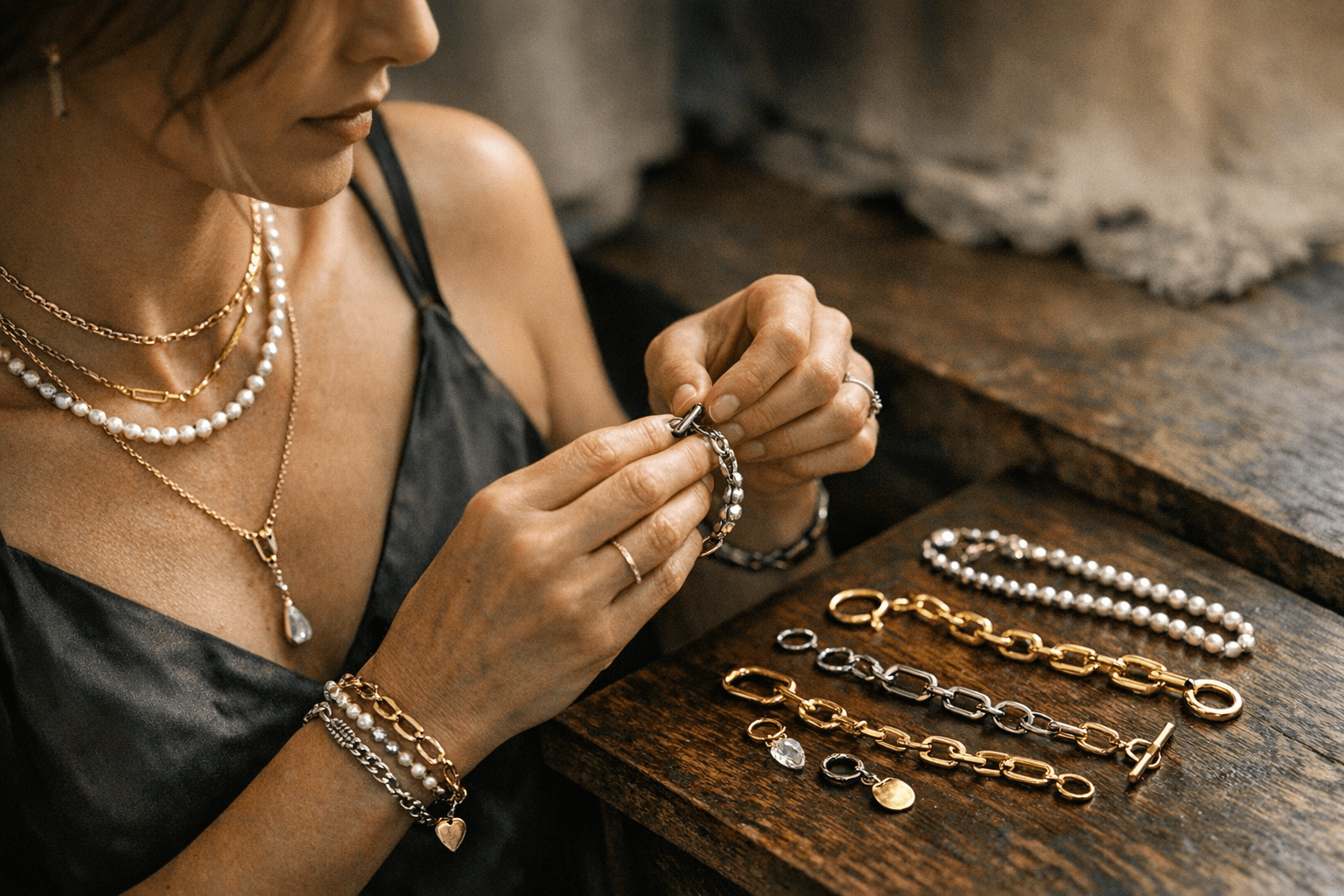
What to buy: trend categories for 2026 Europe Modular, buildable jewelry: Threads between Idyl, influencer commentary, and editorial runways converge here—studs that accept add-ons, flat-back studs, slide-on necklace charms, bracelet stacks and add-ons. Idyl explicitly positions solid-gold chains as “the perfect base for layering,” which makes these pieces ideal SKUs for repeat purchase behavior and personalization-led marketing.
Minimalist luxury and everyday fine: Ultra-fine studs, flat-back earrings, and delicate solid-gold chains will anchor many Europeans’ jewelry wardrobes. MarieClaire’s reporting on a shift toward “pieces with permanence” echoes this: “I think customers will be investing more in fine jewellery than demi-fine,” says Delius. Stocking fine starter pieces—14k or 18k solid-gold studs and thin chains—answers that demand.
Sculptural metalwork and bold metallics: Expect a parallel appetite for statement metals—chunky yellow-gold forms, Deco-inspired profiles, and Elsa Peretti–esque sculptural silver. Linda Cui Zhang of Nordstrom captures the styling: “Deco-inspired gold jewelry makes an impact and an elegant accent," advising that “From a brooch, chunky ring, or cuff, a bold gold piece adds warmth to looks.” These should be curated sparingly as outfit-making items.
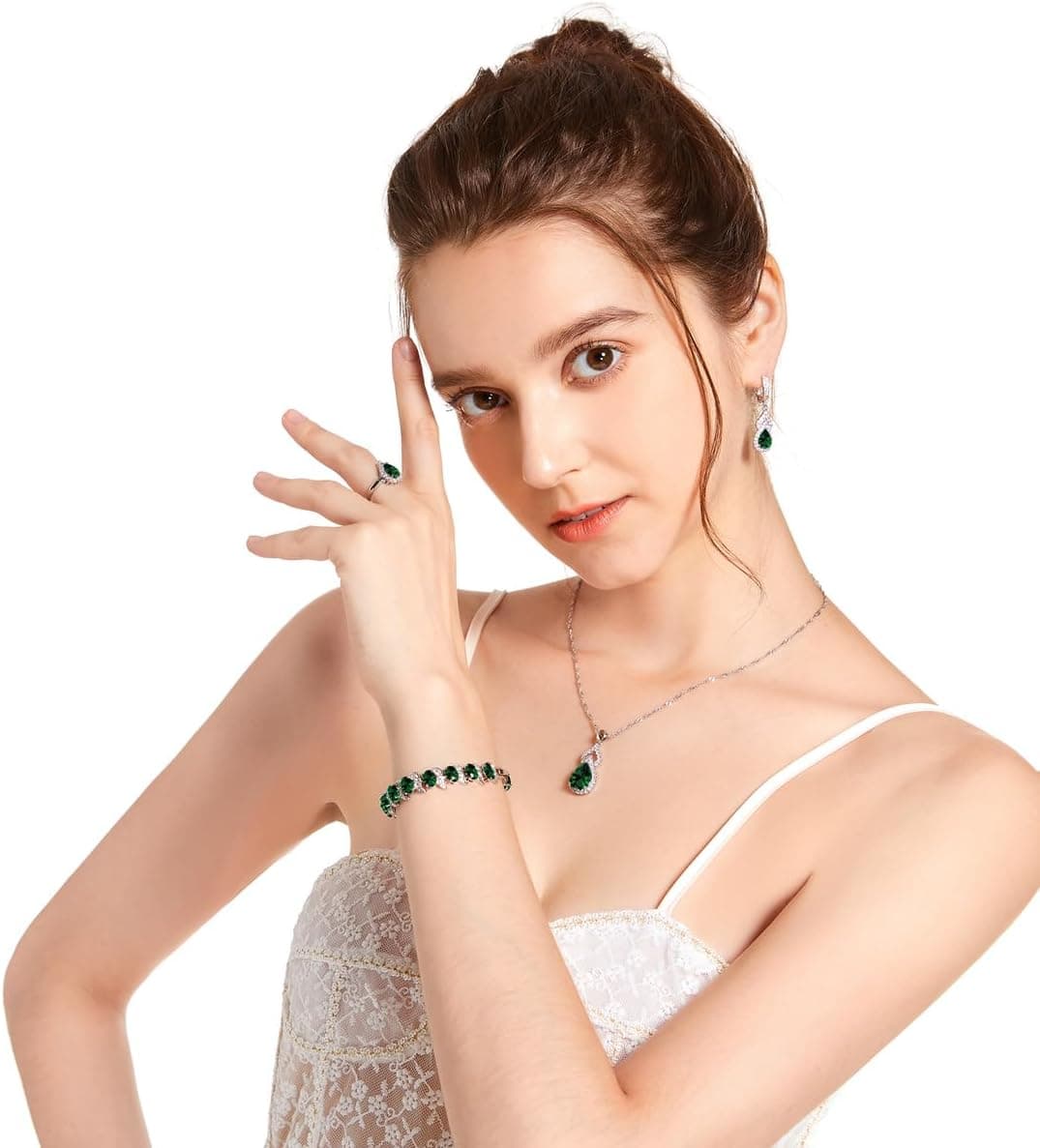
Color, gemstones and modern pearls: Candy-hued beads, vivid colored gemstones in fancy cuts, and modern pearl iterations are runway-validated trends—MarieClaire notes brands from Don’t Let Disco to Chanel and Saint Laurent participating. Position a handful of handcrafted, colorful pieces alongside neutral bases to give customers an easy mood switch.
Clear materials and accessible takes: Lucite, resin and “jelly” rings bring a playful, lower-cost line that complements fine pieces. Examples mentioned in editorial lists include Fry Powers’ Resin Crystal Necklace (Was $245) and Swarovski’s Lucent Crystal Octagon Hoop Earrings, which make strong trend-driven, margin-friendly categories.
Pinky and signet rings: Delius calls out growth in pinky ring sales—“I’m calling 2026 the year of the pinky ring, it’s where we are seeing growth in our sales.”—and artisan signet work like Jilian Maddin’s portrait-cut lab sapphire with a hand-carved swan underlay (Laura Kay’s purchase: “A portrait-cut lab sapphire set over a hand-carved swan underlay. The craftsmanship is extraordinary and has an edge I haven’t seen before.”) These are natural limited-edition or bespoke lifts for a curated assortment.
Price tiers and how to map SKUs Use the SmartBuy/Alibaba buying guide (published February 28, 2026) as your procurement framework: it’s a buyer-focused manual with clear sections on product categories, material checks, quality markers, and price tiers. Combine that structure with Vogue’s market framing: treat “entry-price” as items positioned below the €10,000 threshold for accessible-luxury shoppers, and allocate a separate high-jewelry pathway for HNW and UHNW clients. For the entry tier, prioritize modular gold starters, colorful gemstone demi-fine-to-fine pieces, and trend-forward resin or lucite items; for the high tier, plan bespoke pieces and a discreet events calendar modeled on Bvlgari’s approach—staged presentations and regional activations, with a focus on performance and client curation.
Sourcing, material checks and quality markers The SmartBuy/Alibaba guide explicitly lists “material checks” and “quality markers” as essential sections for buyers entering the European market. Buyers should use the guide to map categories to inspection priorities, and insist on supplier documentation when a brand claims sustainability or lab-grown provenance—Idyl’s framing is stark: “Sustainability is no longer a trend; it’s a baseline expectation.” Jessica Y. Flores’ content also flags the evolution of lab-grown gemstones and notes Angara’s sustainable diamonds in her sponsored coverage—her video disclosure reads: “[AD] This video is sponsored by #Angara. Explore their 2026 collection here: [Your Link] (Use code JESSICA12 for 12% OFF your purchase + FREE jewelry gift!).” Ask suppliers for provenance paperwork and clear product photography tied to SKUs; because the buying guide groups material checks and quality markers, map supplier responses back to those headings and demand testable, verifiable claims before buying.
Merchandising and go-to-market tactics Follow Babin’s playbook and curate smaller drops with higher conversion. Emphasize modularity in product copy—Idyl’s language around “pieces designed to build, stack, and evolve with you over time” is turnkey merchandising copy. For high-jewelry, replicate the Bvlgari model in miniature: staged viewings, client dinners, and regional activations; Vogue documents brands staging five to six major high jewelry events annually and even visiting “five or six cities within a single month” in China with day-long presentations and evening dinners for around 60 clients per city. For demand stimulation at accessible price points, use visual creators and transparent sponsored content—Jessica Y. Flores’ channel (displayed as 39100 subscribers, 150 views listed in description, and 17 likes on the post dated February 17, 2026) is an example of how sponsored, narrated trend content plus a promotional code can drive attention.
Practical assortment examples to stock Blend idyl’s modular gold starters (idyl Studs, Flat-Back Stud Earrings, Solid Gold Chains, Necklace Add-Ons, Bracelet Stacks and Bracelet Add-Ons) with trend-driven items from MarieClaire’s editorial list: Lié Studio’s Amelia Ring, Anthropologie’s Mod Chunky Necklace, Pandora’s Rippled Hoop Earrings, Jenny Bird’s Sundra Brooch, & Other Stories’ Wavy Cuff Bracelet, Luv Aj’s XL Chrome Orb Studs, Fry Powers’ Resin Crystal Necklace (Was $245), Swarovski Lucent Crystal offerings, and signet work from Jilian Maddin, Ferian and Seb Brown.
Final note Sourcing for Europe in 2026 requires a two-track mindset: stock solid-gold, modular starter pieces that meet the baseline expectation of sustainability, while curating fewer, higher-conversion sculptural statements for customers who want a single, decisive object. Use the SmartBuy/Alibaba buyer framework to categorize SKUs and to insist on material and quality evidence, and mirror industry behavior—smaller assortments, event-led high-jewelry activations, and transparent influencer partnerships—to translate trends into durable, ethical buying decisions.
Know something we missed? Have a correction or additional information?
Submit a Tip