South Africa rejects migrant deadline as anti-foreigner tensions rise
Protesters set 30 June as a deadline for undocumented migrants, but Pretoria says it is fake. In Durban, threats have already driven a Malawian mother of triplets to flee.
A self-appointed deadline for undocumented migrants to leave South Africa has exposed a dangerous gap between law and intimidation. Protesters have fixed 30 June 2026 as the day foreigners should be gone, but the government has rejected the ultimatum as unofficial and designed to spread panic.
The pressure has come from a widening anti-migrant campaign tied to the March and March group, ActionSA and other activists, whose rallies have carried the slogan “Mabahambe”, a Zulu phrase meaning “They must go”. That message has helped turn immigration into a national flashpoint, with protesters seeking to impose a timetable that the state itself has not declared.

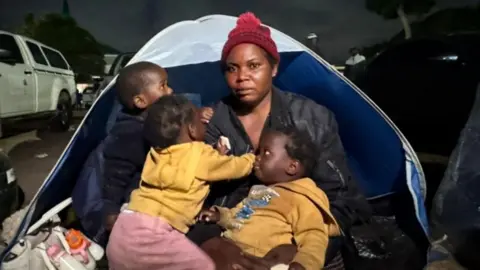
The human cost is already visible in Durban. Esnat Joseph, a 36-year-old Malawian mother of triplets, fled her home after a gang threatened her family, and thousands of foreign nationals, mainly Malawians, were reported gathering in an open field in KwaZulu-Natal out of fear of attacks. The scene has revived memories of past waves of xenophobic violence and underscored how quickly political agitation can spill into personal flight.
Officials have tried to draw a line between protest and policy. AFP fact-checking found that a graphic circulating in May 2026, which used South Africa’s coat of arms and Home Affairs contact details to announce the June 30 deadline, was fake and generated by AI. The government said the date was not an official state deadline and was intended to cause panic, while President Cyril Ramaphosa said on 16 June 2026 that migrants should not be scapegoated for South Africa’s economic problems. Justice and Constitutional Development Minister Mmamoloko Kubayi said migration is a global phenomenon and not unique to South Africa.
The political stakes are widening in Parliament and beyond. The Democratic Alliance has warned that failure to defuse the situation could invite xenophobic violence on the scale of 2008, when anti-foreigner attacks left deep scars across the country. The unrest has also crossed borders: Nigeria has been reported to be planning flights for thousands of citizens, while Mozambique has already bused out 545 nationals and prepared more evacuations.
South African authorities have held urgent security meetings and moved toward tougher action on illegal immigration, border security and corruption in the immigration system. The challenge now is whether Pretoria can protect rights and calm the streets, or whether vigilante pressure will keep setting the terms of the debate.
This article was produced by Prism’s automated news system from verified source data, official records, and press releases, then run through automated quality and moderation checks before publishing. The system is built and supervised by the people who set the standards it runs under. Read our full AI policy.
Did this article answer your question?


