South Asian Brides Redefine 2026 with Minimalism, Pastels, Sustainability
South Asian brides are swapping weighty finery for sleek silks, sculptural blouses, pastel‑metal palettes and heirloom‑minded sustainability that reshapes the bridal wardrobe.
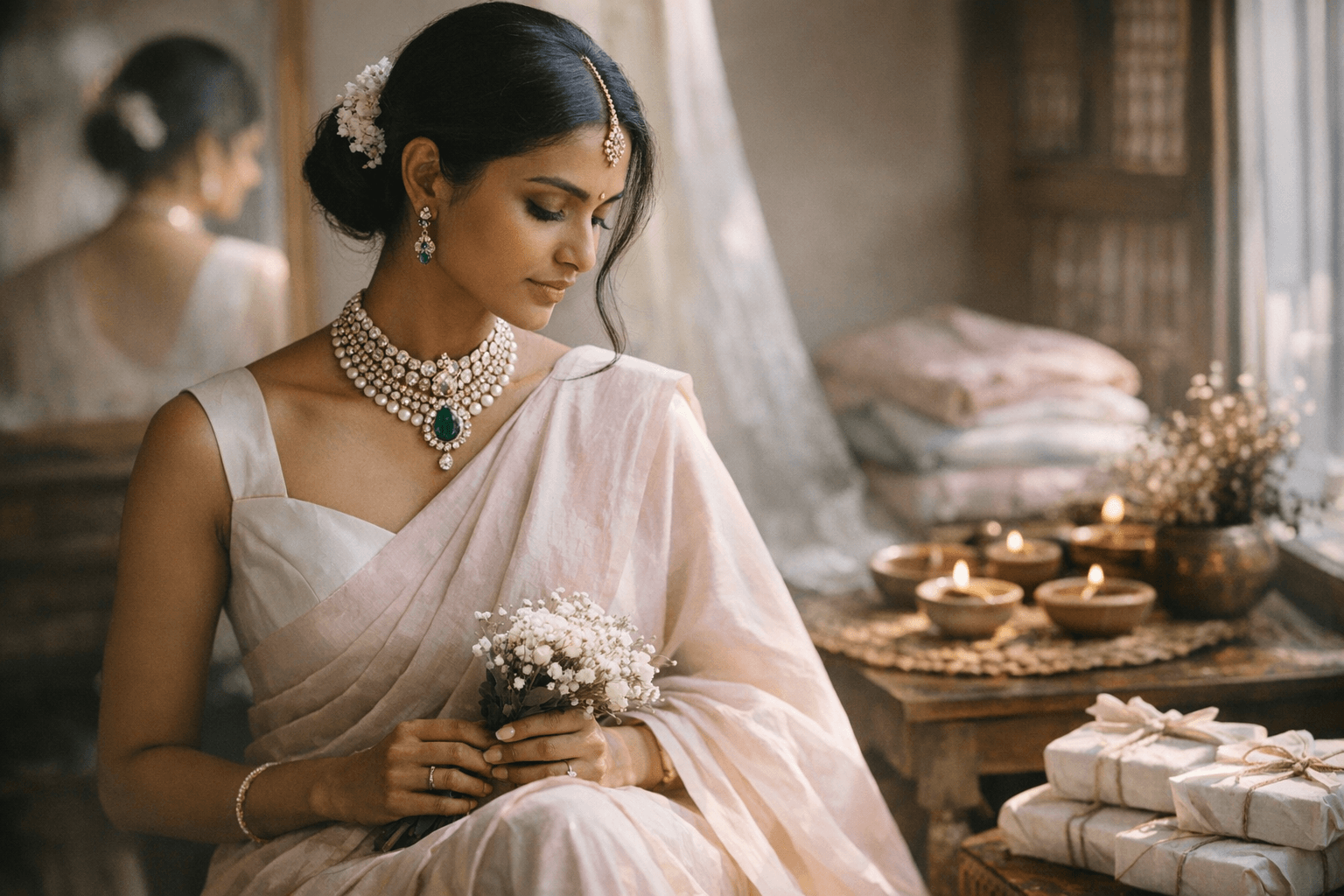
Even the house most associated with lavish red lehengas is showing up in surprising company: The One Event names Sabyasachi and Tarun Tahiliani among designers “embracing” a pared‑back aesthetic. A March 4, 2026 report lays out the blueprint—“lighter silhouettes (soft silks, organza, georgette),” “sculptural blouses (corset fits, curved necklines),” and “pre‑draped sarees for ease of movement”—and together these shifts add up to a new kind of bridal glamour that prioritizes ease, shape and story over sheer weight.
Minimalism and softer silhouettes “Gone are the days when heavy embroidery was the only way to make a statement. More brides are loving the beauty of simplicity, opting for sleek lehengas and sarees with delicate embellishments and soft drapes.” That line from The One Event captures a clear turn: lehengas are slimming down and sarees are being cut in softer fabrics—soft silks, organza and georgette—so the bride moves like herself rather than a museum piece. Designers long known for craftsmanship are threading minimalism into their vocabulary; The One Event explicitly lists Sabyasachi and Tarun Tahiliani as embracing this shift, proving that silhouette and restraint can feel as luxurious as heavy ornament. The practical payoff is immediate: lighter yardage, cleaner tailoring and garments that travel, dance and photograph with a modern, unforced elegance.
Sculptural tops and motion‑friendly drapes The body is getting equal billing. The March 4, 2026 summary calls out “sculptural blouses (corset fits, curved necklines)”—a silhouette that frames rather than buries the bride—while LondonRag notes Sabyasachi’s penchant for “fitted blouses” and “intricate drapes.” Expect defined waistlines, corsetry that reads more couture than constricting, and curved necklines that make jewelry choices deliberate rather than obligatory. At the same time, pre‑draped sarees are moving from bridal convenience to a style statement: the original notes “pre‑draped sarees for ease of movement,” and Studio Elite echoes that brides now “seek something comfortable, versatile and individual.” The result is a flattering, sculptural upper half paired with skirt or drape that lets you walk, spin and sit without apology.
Pastels, metallics and the new bridal finishes A subtle color story is replacing saturated tradition: the report highlights “pastel and metallic palettes (muted rose gold, cham”—the fragmentary note preserves one clear shade, “muted rose gold,” while The One Event lists the trend under “Pastel & Muted Tones.” Brides are softening the wedding spectrum with washed roses, dove greys and pale champagne‑leaning metallics that catch light without shouting. These finishes behave differently under lustered silks and translucent organza—the way a muted rose gold embroidery kisses a georgette dupatta is entirely distinct from the baroque gleam of heavy zari. Stylistically, the payoff is a bridal image that reads modern and editorial: delicate, layered and quietly expensive.
Sustainability, personalization and craft‑forward fusion “Eco‑conscious fashion is making waves in the wedding industry, and South Asian brides are totally on board,” The One Event declares, listing concrete moves—“repurposing heirloom sarees, choosing handcrafted fabrics, or supporting ethical designers like Raw Mango and Anita Dongre”—and concluding that “sustainable fashion is here to stay.” That same appetite for meaning fuels personalization: “Customization is everything! Brides are getting creative by adding personal touches to their outfits—think embroidered love notes, initials, or motifs that tell their story,” from a “saree border with a meaningful quote” to “a lehenga featuring special symbols.” At the craft level, Studio Elite Chicago positions itself “as the beacon for those who want a balance between traditional wear but with a modern touch,” preserving “200‑year‑old techniques of embroidery” such as mirror work and chikankari even as it adds 3D flowers, geometric embroidery and “unnatural proportion.s” LondonRag’s portrait of Sabyasachi—whose work is “known for their meticulous attention to detail” and whose “red bridal lehengas are highly coveted”—reminds us that artisanry and nuance remain central, whether a bride chooses pared‑back minimalism or an embroidered floral lehenga. The net effect: brides are marrying conscience, craft and personal narrative—opting for garments that can be worn again, passed down, or saved as a readable piece of their life.
Whether your wedding mood is a sleek silk slip with a sculptural corset top, a pastel lehenga dusted in muted rose gold, or an heirloom saree reimagined with handwork and initials stitched into the border, the through‑line is choice. “Whether it’s minimalist designs, eco‑friendly choices, or bold fusion looks, today’s brides are making traditions their own.”
Know something we missed? Have a correction or additional information?
Submit a Tip