South Carolina Democrat honors Black predecessors who shaped America after Reconstruction
Eight Black South Carolina congressmen were nearly erased from memory until Jim Clyburn’s office portraits led him to write their story. Their 95-year gap to his election still shocks visitors.
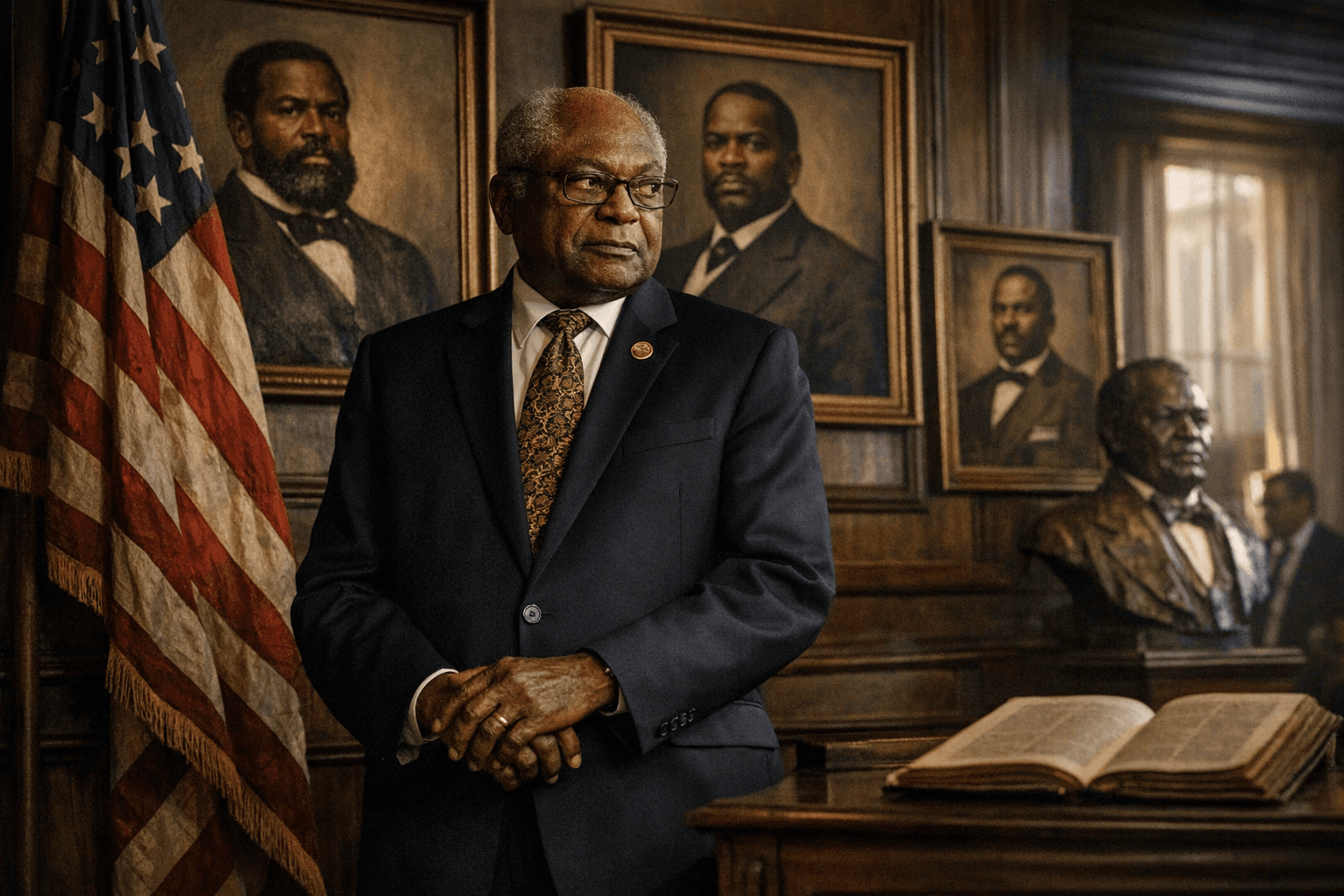
Photographs of eight Black South Carolina congressmen hung in Jim Clyburn’s Washington office for years before a visitor asked who they were. The question pushed Clyburn, the ninth Black man to represent South Carolina in the House, to turn the men into a book and to confront a gap that still stuns him: George Washington Murray left office in 1897, and Clyburn was first elected in 1992, 95 years later. Clyburn said people are often shocked to learn that South Carolina once had four Black members among its five House seats.
The book, The First Eight: A Personal History of the Pioneering Black Congressmen Who Shaped a Nation, begins with Joseph Rainey, the first Black member of the U.S. House, and moves through Robert De Large, Robert Elliott, Richard Cain, Alonzo Ransier, Robert Smalls, Thomas Miller and Murray. Clyburn has said these men all served during and after Reconstruction, a period he dates at about 13 years, when Black officeholders helped set the course of federal politics before white supremacist violence and federal retreat narrowed that opening.
The book took on new urgency after the Jan. 6, 2021, attack on the Capitol. Clyburn said the riot sent his mind back to the 1876 governor’s race in South Carolina, when the Red Shirts used violence and intimidation to keep Black men from voting, helping deliver Wade Hampton’s victory and the end of Reconstruction after Rutherford B. Hayes agreed to withdraw federal troops in 1877. “What I decided was, rather than just inform, it needed to be sort of constructive.”

The histories Clyburn recovered show how much was built before the modern civil-rights era and how thoroughly that lineage was later omitted. Robert Smalls, born into slavery in Beaufort, commandeered the Confederate transport Planter in 1862, carried his family to Union lines and later became the first African American captain in the U.S. Navy. George Washington Murray fought voter suppression and discriminatory redistricting. Their careers were not side notes to Reconstruction; they were part of the federal story, one that shaped democratic participation and still challenges the nation to remember who helped define it.
This article was produced by Prism’s automated news system from verified source data, official records, and press releases, then run through automated quality and moderation checks before publishing. The system is built and supervised by the people who set the standards it runs under. Read our full AI policy.
Did this article answer your question?

