South Korea and Japan pledge denuclearization push, revive rescue drills
Seoul and Tokyo moved defense ties further forward, pledging denuclearization cooperation and reviving joint rescue drills after a nine-year pause.

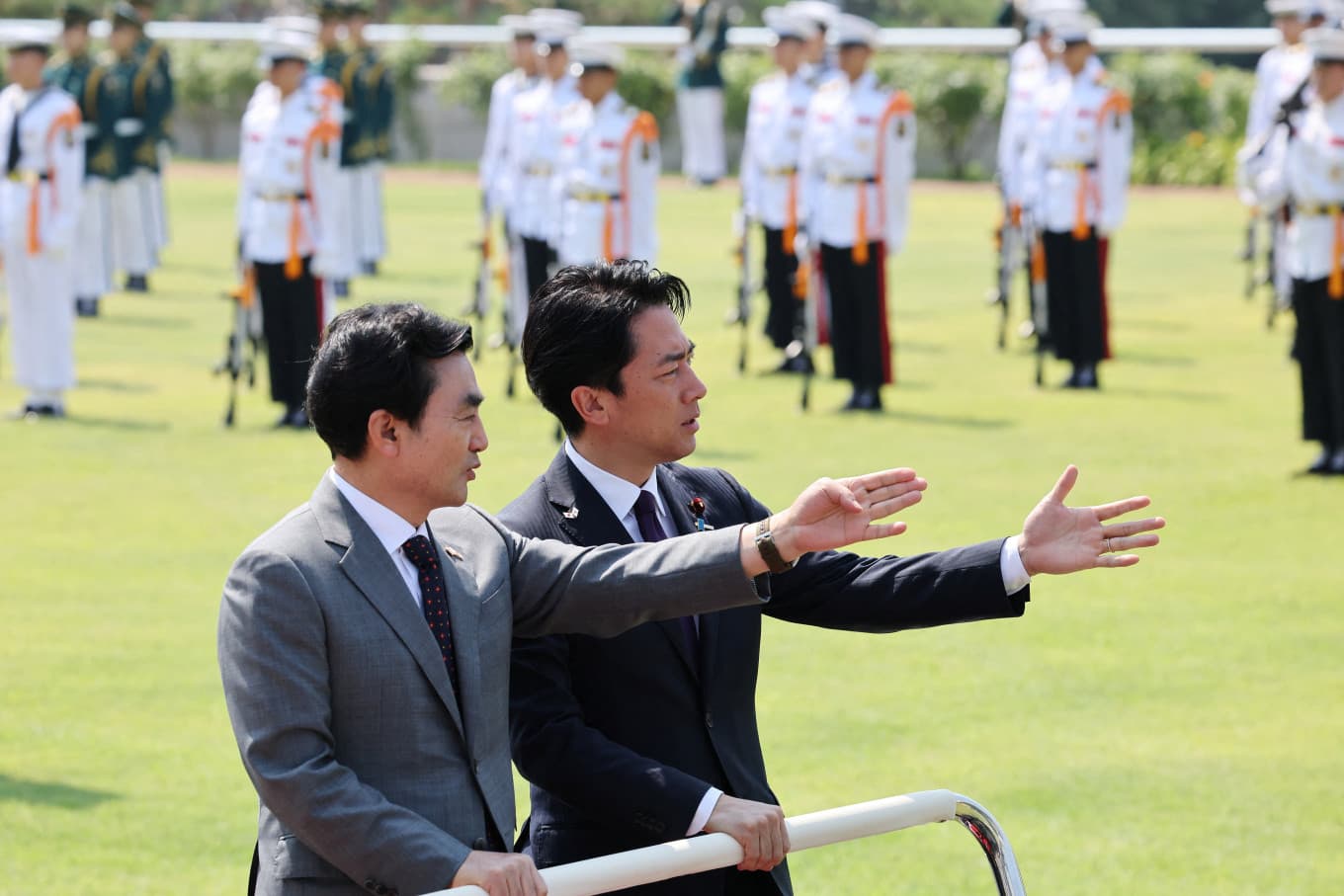
South Korea and Japan’s defense ministers met in Seoul on June 28 and pledged renewed cooperation on denuclearization of the Korean peninsula and efforts to rebuild military routines that had been frozen by years of mistrust. The sixth round of bilateral defense discussions brought South Korean Defense Minister Ahn Gyu-back and Japanese Defense Minister Shinjiro Koizumi together amid a grave security environment.
The meeting followed a joint maritime search-and-rescue exercise on June 7 in international waters southeast of Jeju Island, the first such drill between the two countries in nine years. That exercise brought together South Korea’s 4,900-ton ROKS Cheon Ja Bong landing ship, Japan’s 7,250-ton Aegis-equipped Kongo destroyer and a Japanese maritime patrol helicopter.
The two ministers agreed to continue efforts to deepen bilateral exchanges and cooperation in advanced science and technology, including artificial intelligence. They also agreed to keep exchanges going between the Black Eagles and Blue Impulse aerobatic teams. Japan’s Air Self-Defense Force refueled South Korea’s Black Eagles at Naha Air Base in Okinawa on January 28, after a similar request in 2025 was dropped amid tensions over flights near Dokdo and Takeshima.
Koizumi’s trip was the first bilateral defense visit from Japan to South Korea in 11 years, following Ahn’s January trip to Japan. The two countries’ leaders, Lee Jae Myung and Sanae Takaichi, met in Japan on January 13 and pledged to deepen security and economic cooperation.
Defense ties were badly damaged by the December 20, 2018 radar-lock dispute, when Japan accused a South Korean destroyer of directing fire-control radar at a Japanese patrol aircraft and Tokyo formally protested. A year later, the GSOMIA intelligence-sharing crisis erupted after Japan restricted exports of semiconductor materials and removed South Korea from its preferential trade list, deepening a dispute already tied to wartime forced labor rulings and colonial-era grievances. The June 28 talks did not make major headway on a Japan-proposed Acquisition and Cross-Servicing Agreement.
This article was produced by Prism’s automated news system from verified source data, official records, and press releases, then run through automated quality and moderation checks before publishing. The system is built and supervised by the people who set the standards it runs under. Read our full AI policy.
Did this article answer your question?