South Korea Exports Set for Strongest Growth in Nearly Five Years, Fueled by AI Chip Demand
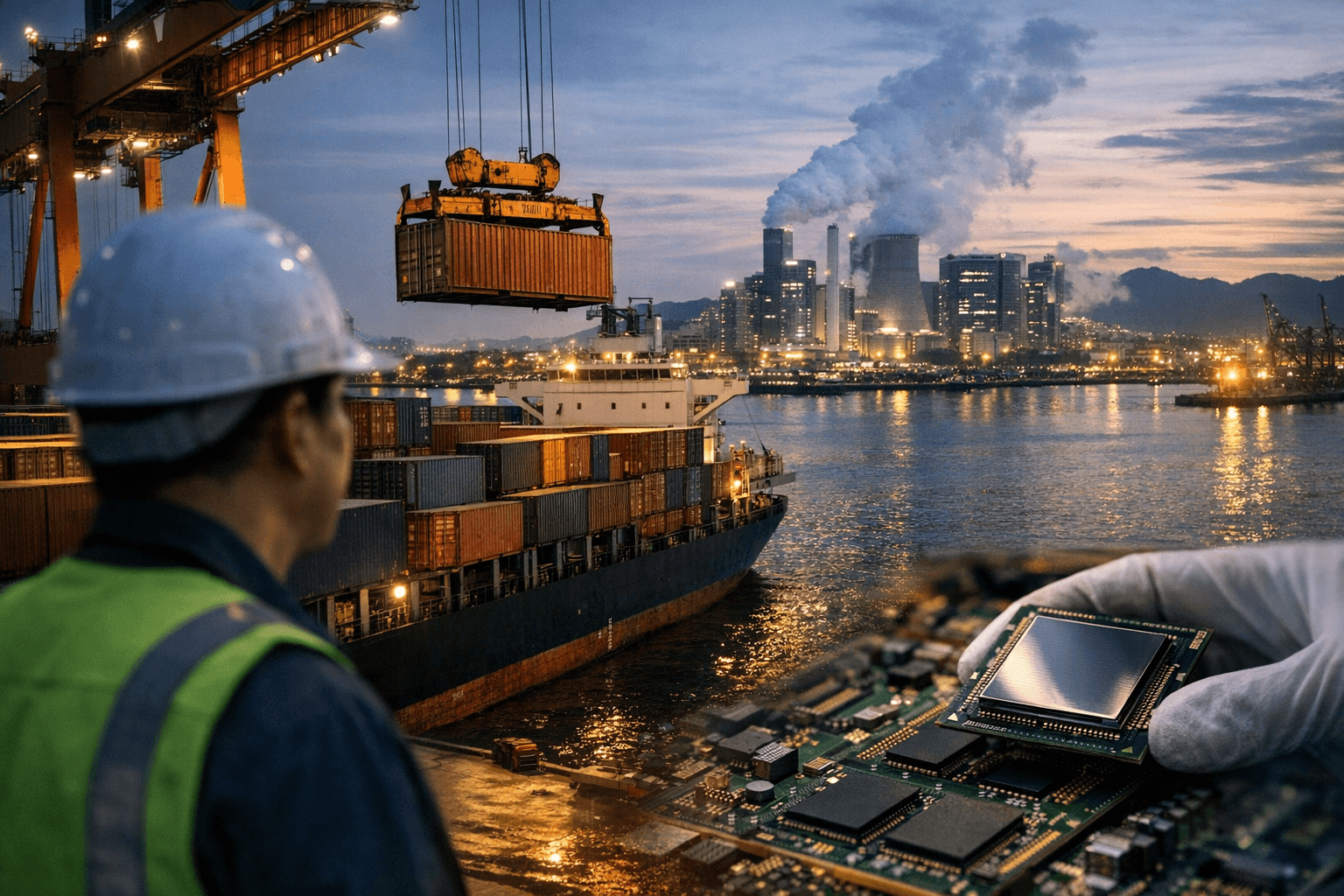
South Korea's March exports are forecast to post their strongest year-on-year gain in nearly five years, with semiconductor shipments to AI datacenters already up 134% in early customs data.

Semiconductor shipments destined for AI datacenters worldwide drove South Korea's exports toward their strongest growth rate in nearly five years in March, according to a Reuters poll of economists and analysts published Monday. The headline optimism carries a significant caveat: surging oil import costs tied to the conflict in the Middle East threaten to erode the trade gains before they reach the broader economy.
In the first 20 days of March, exports climbed 23.5%, led by a 134.1% surge in semiconductor shipments. Shipments to China rose 30.8%, while exports to the United States and the European Union grew 21.9% and 11.4%, respectively. The early customs figures, combined with robust overseas orders for chips and AI-related capital goods, underpinned the poll's unusually bullish read on overall export performance.
Stephen Lee, an analyst at Meritz Securities in Seoul, said "there is a high possibility of semiconductor export growth exceeding 100% throughout the first half," while noting that "there is still little momentum in autos and machinery, weighed by tariff effects." The two-speed nature of South Korea's export machine reflects a broader reality: the country's chipmakers are thriving precisely because global cloud providers and enterprise technology companies are scaling AI infrastructure at an accelerating pace, while traditional manufacturing sectors continue to face headwinds from trade policy uncertainty.
The import side of the ledger tells a more complicated story. South Korea imports 62% of its petroleum from inside the Strait of Hormuz, leaving it acutely exposed to the supply disruptions triggered by the Iran conflict. The Reuters poll flagged elevated import growth reflecting higher energy and commodity prices, which could compress the trade surplus even as export volumes climb. Rising import values of this type carry a secondary cost: they feed directly into domestic inflation and complicate monetary policy at a moment when the central bank had signaled it was done easing.
South Korea moved to address the energy price surge directly, with the presidential office confirming it had secured emergency crude oil imports of more than 6 million barrels from the United Arab Emirates as part of broader efforts to stabilize domestic fuel costs. The Bank of Korea raised its economic growth forecast for 2026 to 2.0% from 1.8%, citing the chip boom in exports, while signaling that policy would stay unchanged for the next six months.
The Reuters poll surveyed economists and analysts ahead of official customs data, which will provide the definitive read on March trade flows. If confirmed, the figures would mark a significant inflection point, validating the scale of AI-driven semiconductor demand filtering through to Asian manufacturers and exporters. For South Korea's chipmakers, the more pressing question will be whether current production capacity can keep pace with an order book that, by early data, shows no sign of slowing.
This article was produced by Prism’s automated news system from verified source data, official records, and press releases, then run through automated quality and moderation checks before publishing. The system is built and supervised by the people who set the standards it runs under. Read our full AI policy.
Did this article answer your question?

