South Korea halts KOSPI trading for third time this week
South Korea halted Kospi trading again after an 8.19% plunge, as another sidecar and leveraged chip bets intensified a tech selloff.
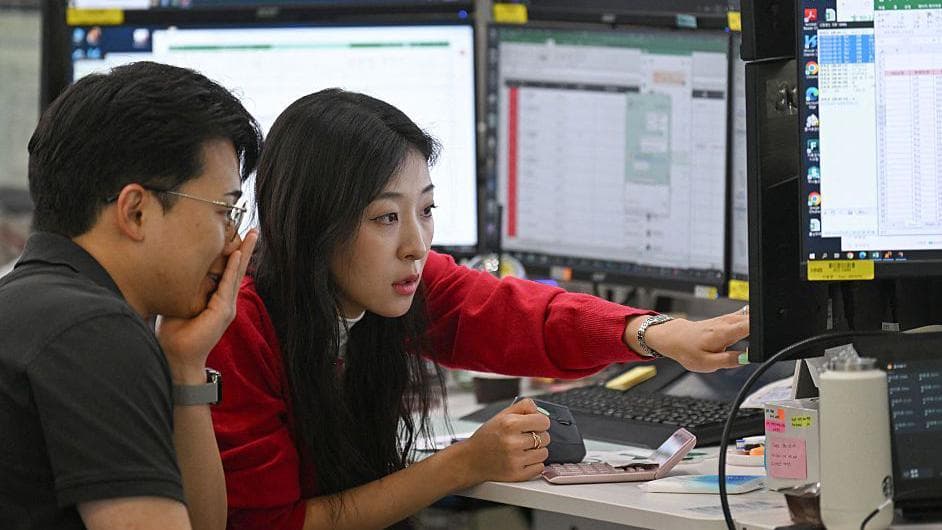
South Korea halted trading on the Kospi for 20 minutes after the benchmark tumbled 8.19% to 8,198.33 at 12:10 p.m. Friday, the latest sign that panic selling in the country’s biggest market was spilling beyond ordinary volatility. The pause came after the index stayed down more than 8% for one minute, forcing the Korea Exchange to activate its circuit-breaker safeguards once again.
The exchange also triggered a sell-side sidecar about an hour earlier, temporarily stopping program trading before the wider market halt. The repeated use of emergency controls has underscored how sharply sentiment has swung around South Korea’s tech-heavy market, where Samsung Electronics and SK Hynix have been the main drag on the benchmark.

Friday’s drop followed a bruising stretch for the Kospi. On June 23, the index fell 9.99%, its steepest decline in more than three months and its biggest daily plunge since March 4, closing at 8,203.84, down 910.71 points. Earlier, on June 8, the KOSPI’s circuit breaker was activated for the third time this year and the ninth time in the index’s history, a milestone that signaled how unusually unstable trading had become in Seoul.
Market reports linked the rout to regulatory warnings that the semiconductor rally had become overheated, as well as to leveraged exchange-traded funds tied to Samsung Electronics and SK Hynix that magnified swings in both directions. South Korea’s top financial regulator had already criticized those single-stock leveraged ETFs, arguing they enriched securities firms at retail investors’ expense. The pressure intensified as foreign investors unloaded 5 trillion won, or about $3.2 billion, of Kospi shares in one session during the selloff.

The damage did not stay inside South Korea. The slide fed into a broader rotation out of artificial intelligence and technology winners across Asia, and it reverberated in U.S. chip shares as investors reassessed how much of the sector’s rally had been built on momentum and leverage. For Seoul’s market, the repeated halts point to more than a correction in overheated AI names: they show how quickly concentrated positions in a handful of semiconductors can test the plumbing of a modern equity market.
This article was produced by Prism’s automated news system from verified source data, official records, and press releases, then run through automated quality and moderation checks before publishing. The system is built and supervised by the people who set the standards it runs under. Read our full AI policy.
Did this article answer your question?