South Korea inflation hits 22-month high, raising rate hike odds
South Korea’s inflation climbed to 2.6% in April, its highest in 22 months, adding pressure on families and reviving rate-hike bets.
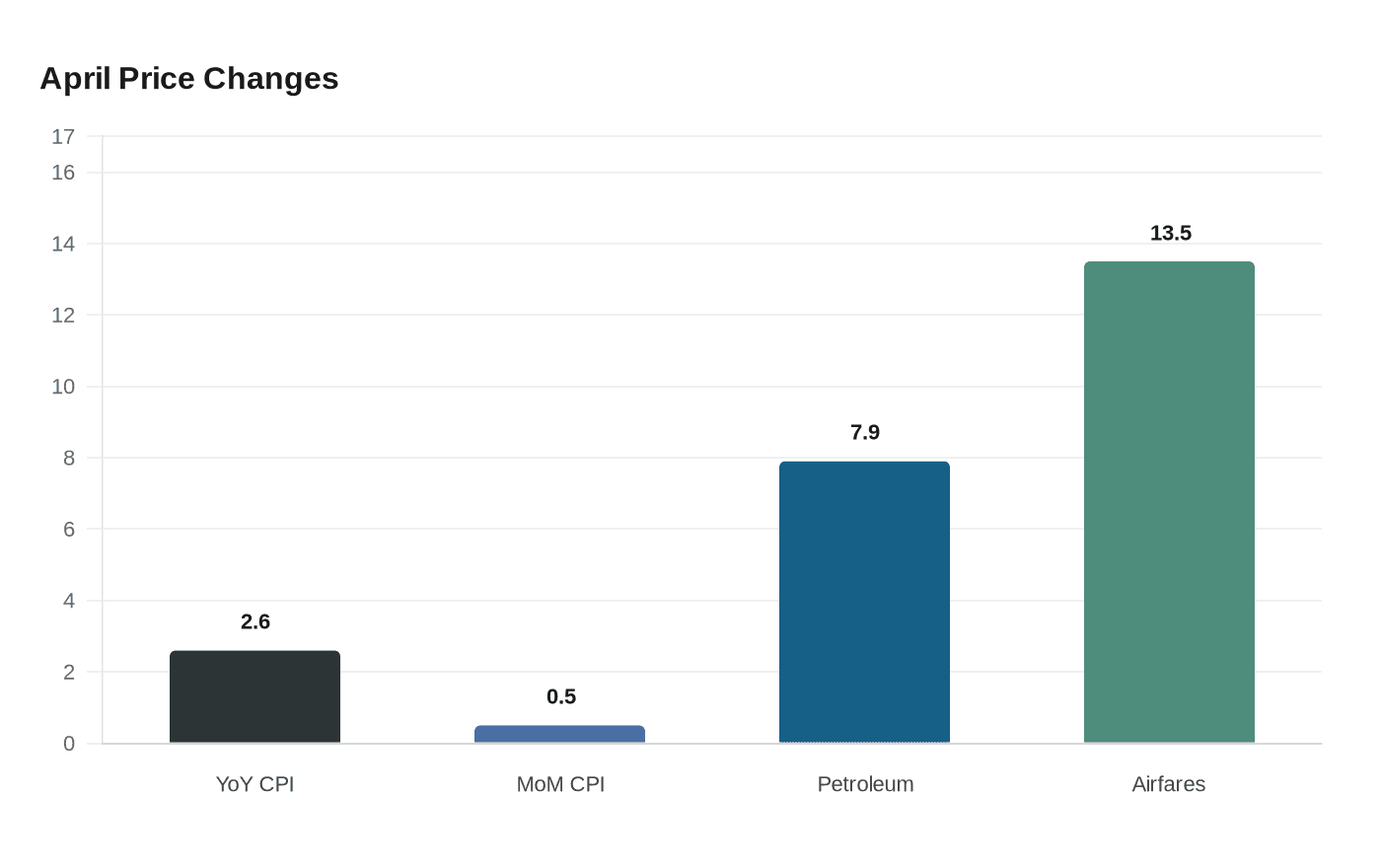
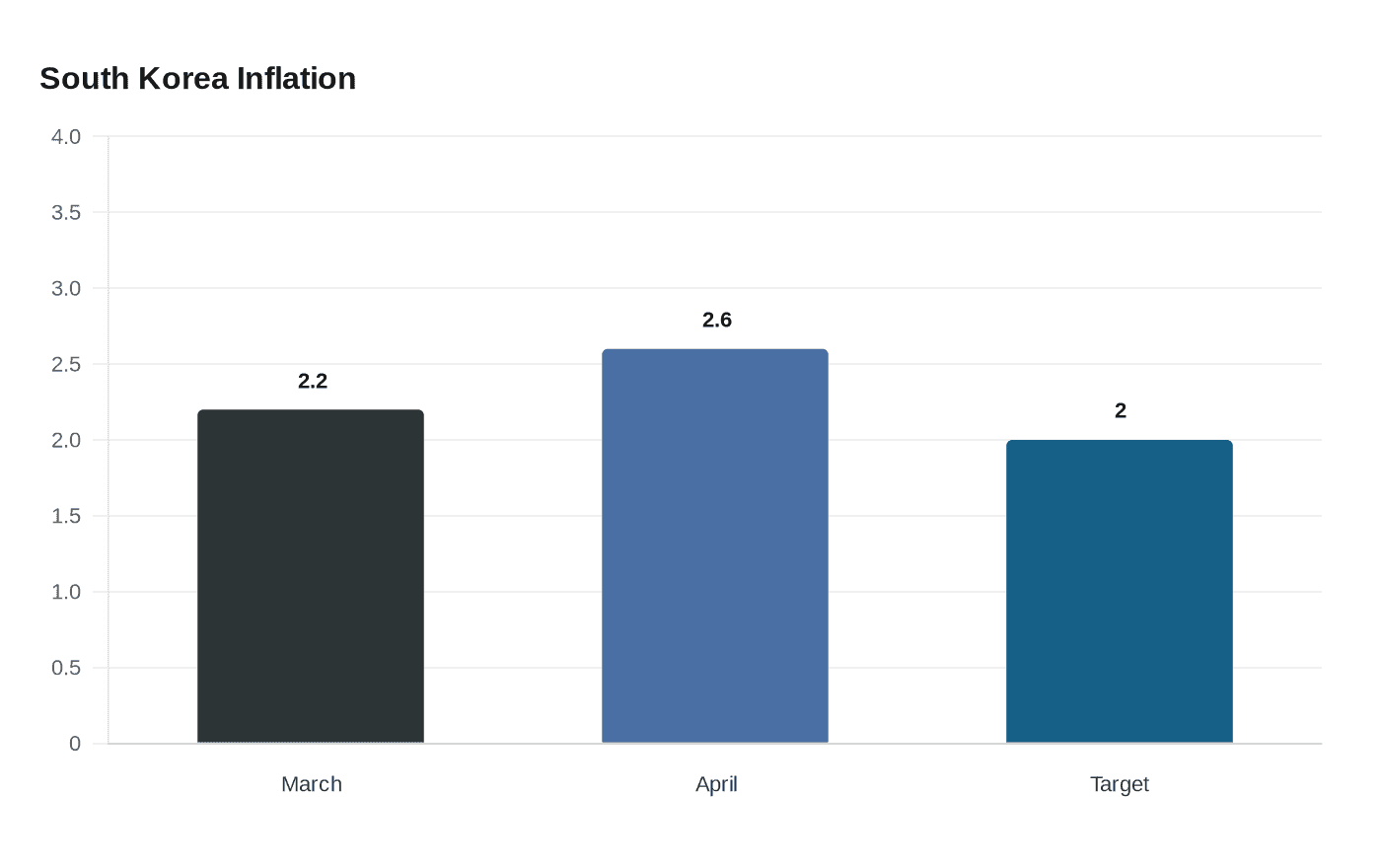
South Korean households felt the squeeze in April as consumer prices rose 2.6% from a year earlier, the sharpest increase since July 2024 and a sign that the Bank of Korea may have to consider tighter policy later in 2026. The reading, up from 2.2% in March, left inflation above the central bank’s 2% target and pointed to renewed pressure on transport, travel and everyday goods.
The monthly increase was 0.5%, driven by a 7.9% jump in petroleum-product prices and a 13.5% surge in international airfares. Those moves underscored how quickly imported energy costs can work their way through the economy, especially when oil prices are being pushed higher by conflict in the Middle East and when airlines, fuel suppliers and retailers pass those costs on to consumers.
The Bank of Korea has already shown it is uneasy about that backdrop. At its April 10 meeting, it left the base rate unchanged at 2.50%, saying uncertainty around the Middle East war was adding upside inflation pressure even as it increased downside risks to growth and kept financial and foreign-exchange markets volatile. The central bank’s April economic outlook also said South Korea’s economy was likely to grow more slowly than previously expected because the war’s supply shock would weigh on activity, even with a robust semiconductor cycle and a supplementary budget supporting demand.
That is the policy dilemma now confronting officials in Seoul. Headline inflation is still manageable by historic standards, but the combination of higher fuel costs and pricier air travel risks broadening into services inflation. Chun Kyu-yeon of Hana Securities said fuel caps are limiting gasoline-price increases, but the rise in prices is likely to continue for now because service inflation could also pick up.
Markets moved quickly to that message. The policy-sensitive three-year treasury yield touched as high as 3.675%, its highest level since November 2023, according to one market report, while another source put the yield at 3.60% on May 4. That kind of move suggests investors are already weighing the possibility that the central bank could revisit rate hikes in the second half of the year if inflation keeps climbing.
After the April inflation release, the Bank of Korea said inflation would be higher in May and pledged to watch the trend closely as the Middle East situation remains unsettled. For South Korea, an export-dependent economy trying to keep growth intact while keeping prices under control, the latest reading sharpened a familiar trade-off: easier policy can support activity, but it also risks letting imported inflation spread further through the economy.
This article was produced by Prism’s automated news system from verified source data, official records, and press releases, then run through automated quality and moderation checks before publishing. The system is built and supervised by the people who set the standards it runs under. Read our full AI policy.
Did this article answer your question?