South Korea mobilizes ₩100 trillion stabilization program amid Middle East shock
President Lee orders rapid activation of a roughly ₩100 trillion safety net to steady markets; regulators and banks are on round-the-clock alert.
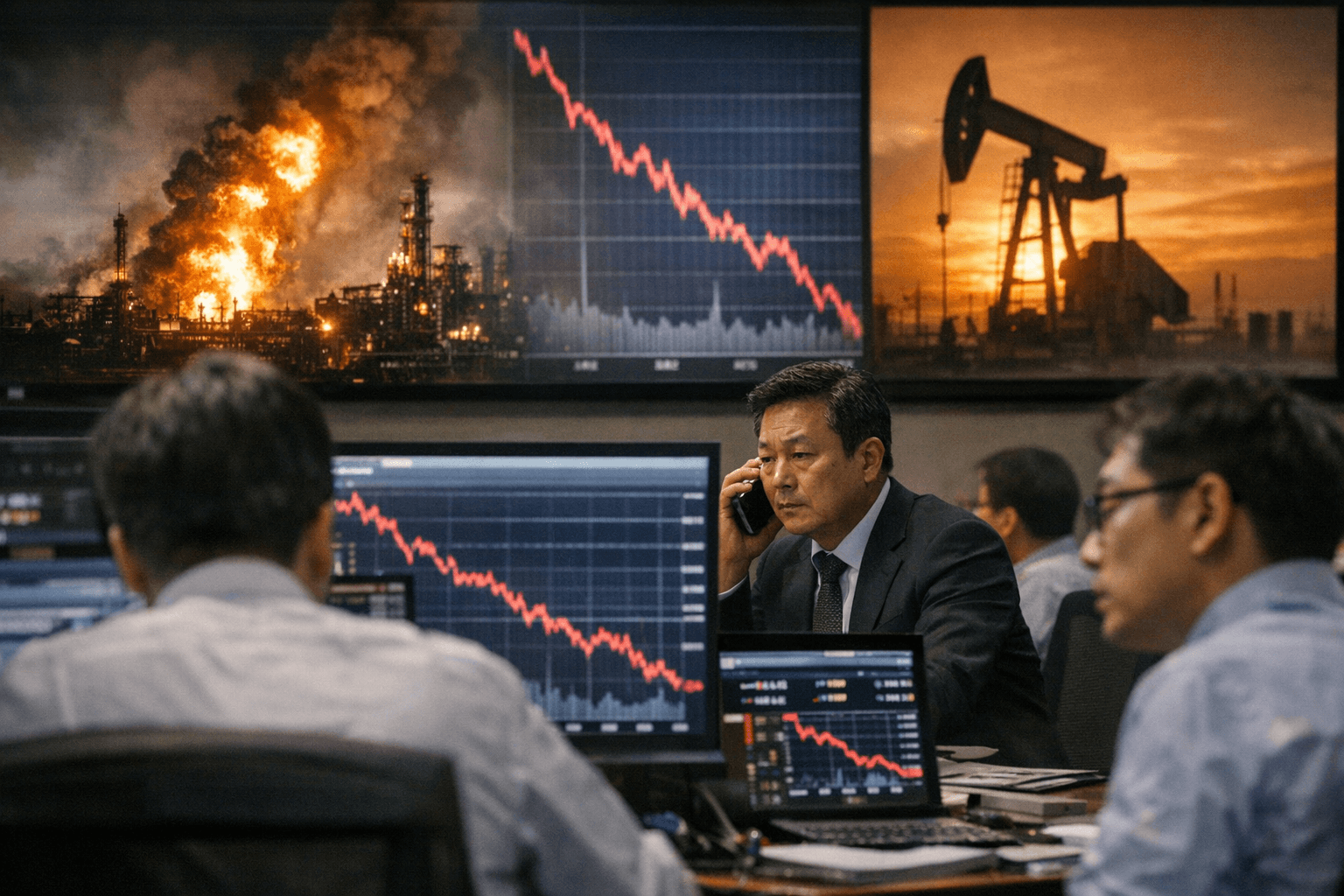
“Policy efforts should be accelerated to stabilise capital markets and improve their structure. He ordered the swift execution of a 100 trillion won market stabilisation program to pre-empt funding market instability.” President Lee Jae‑myung’s instruction on March 5 set South Korea into emergency posture as global volatility from the Middle East intensified.
Financial regulators immediately activated an emergency financial markets team, headed by the Financial Services Commission secretary general and including the Ministry of Finance and Economy, the Bank of Korea and the Financial Supervisory Service, to monitor domestic and global market trends around the clock. The move follows a string of emergency meetings earlier in the week as regional tensions escalated after US and Israeli strikes on Iran, a development regulators said could spill over into the real economy.
Officials describe the program consistently as about ₩100 trillion, roughly US$68–75 billion by government conversion ranges cited in reporting, although sources differ on the precise allocation. Seoul Economic Daily and other outlets cite a 40 trillion won bond market stabilization fund as a core piece. Reporting aggregated by Bloomingbit puts up to 37.6 trillion won toward bond and short-term funding stabilization, broken down as a 20 trillion won bond-market fund plus a 10 trillion won corporate bond and commercial paper purchase program, and identifies up to 60.9 trillion won available for soft-landing measures in real estate project financing.
Stock-market defense is also on the table. Some reports say authorities would consider activating a roughly 10 trillion won stock stabilization fund; Bloomingbit cites 10.7 trillion won and notes the fund has been maintained since March 2020. Financial officials stopped short of automatic deployment, stressing the decision will depend on market moves. “The KOSPI is still above 5,000,” a Financial Services Commission official said, adding that “(whether to activate the stock stabilization fund) requires close monitoring of market trends.” Another source put the choice plainly: “We will decide whether to deploy the stock stabilization fund depending on index levels.”
Regulators and banks are coordinating on contingency measures while ruling out some steps. Bloomingbit reported authorities are not considering a temporary ban on short selling, citing concerns about Korea’s standing with the MSCI Developed Markets Index. Major banks have moved to operational readiness. Hana Financial Group’s chairman Ham Young‑joo said, “Hana will mobilize all its capabilities to help Korean residents and companies affected by the unexpected geopolitical turmoil regain stability as quickly as possible.” Shinhan Financial Group has raised its internal crisis posture to “caution,” instituted weekly monitoring and said it had identified no direct damage at the time of reporting.
Analysts and officials point to several channels of risk: rising oil prices, surging bond yields, tightened corporate funding conditions and potential capital outflows that could pressure the won and equity markets. The scale of the program reflects those concerns and the authorities’ preference to use balance-sheet tools, bond purchases, CP intervention and targeted PF support, rather than market-structure bans.
Reporting contains some discrepancies that bear confirmation: most outlets name Lee Eok‑won as FSC chairman, while one names Kim Byung‑hwan; bond‑fund figures vary between 37.6 trillion won and 40 trillion won; and the size and history of the stock stabilization fund is reported as both 10.0 trillion won and 10.7 trillion won with different deployment histories. For now, Seoul’s message is clear: a roughly ₩100 trillion firewall is on standby, regulators are watching markets 24/7 and they are prepared to deploy large-scale support to shield Korea from the fallout of the Middle East shock.
This article was produced by Prism’s automated news system from verified source data, official records, and press releases, then run through automated quality and moderation checks before publishing. The system is built and supervised by the people who set the standards it runs under. Read our full AI policy.
Did this article answer your question?