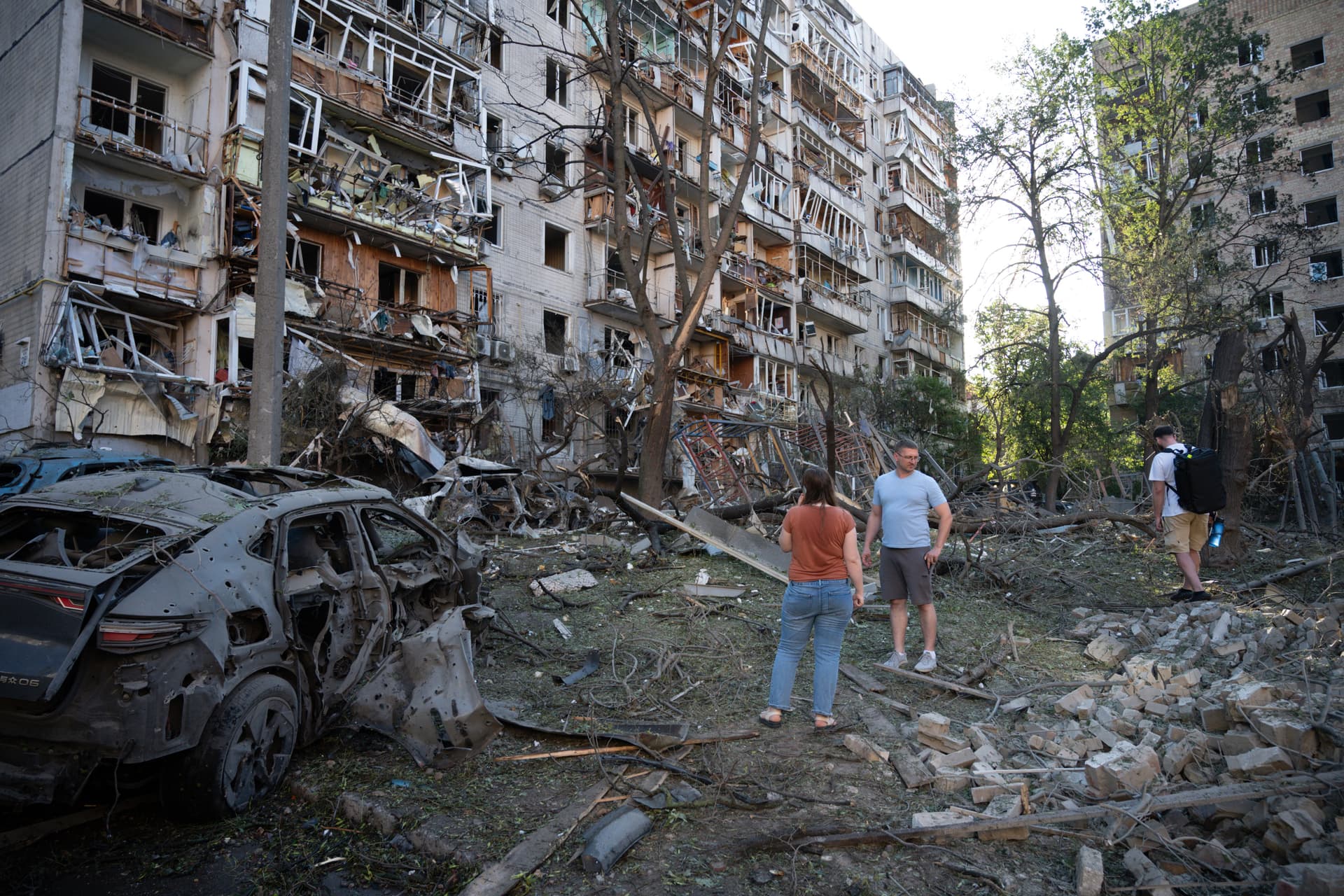
South Korea, Vietnam Sign 12 Deals as Lee Seeks Broader Ties
Lee Jae Myung sealed 12 deals in Hanoi, pushing ties with Vietnam into energy security, nuclear power and infrastructure as both sides hedge in a volatile region.
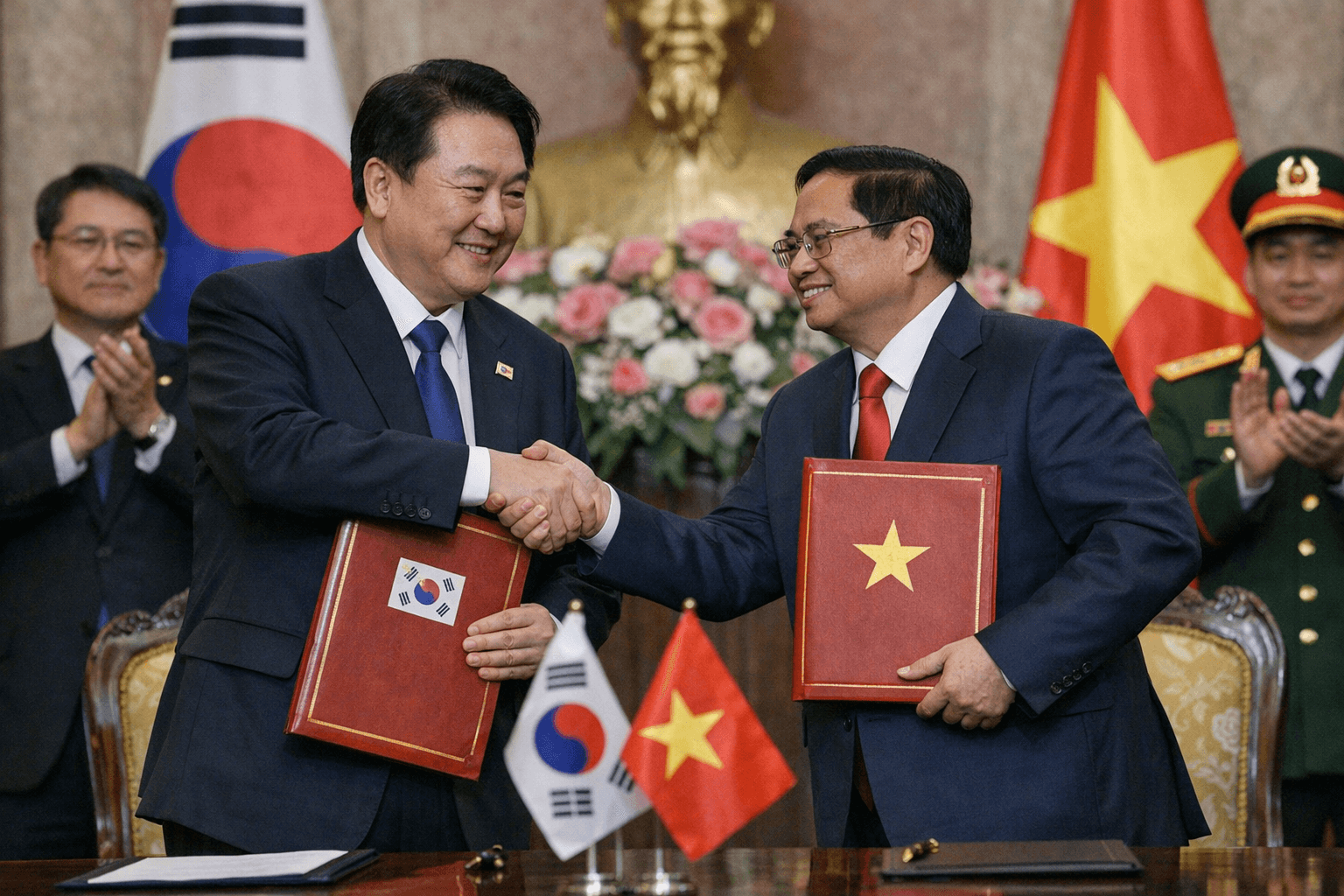
South Korea used Lee Jae Myung’s visit to Hanoi to press for a relationship with Vietnam that reaches far beyond trade. The two governments signed 12 memorandums of understanding covering nuclear power, electricity and infrastructure, a package aimed at turning a fast-growing commercial partnership into a more strategic economic and security alignment.
Lee, on his first state visit to Vietnam as president, met To Lam in Hanoi during a four-day trip that ran from April 21 to 24. He urged cooperation that would extend beyond trade and investment into energy security and infrastructure, while also stressing science and technology and describing the areas of cooperation as “future-oriented and strategic.” The message was clear: Seoul wants Vietnam to be not just a manufacturing base, but a long-term partner in industrial policy and regional resilience.
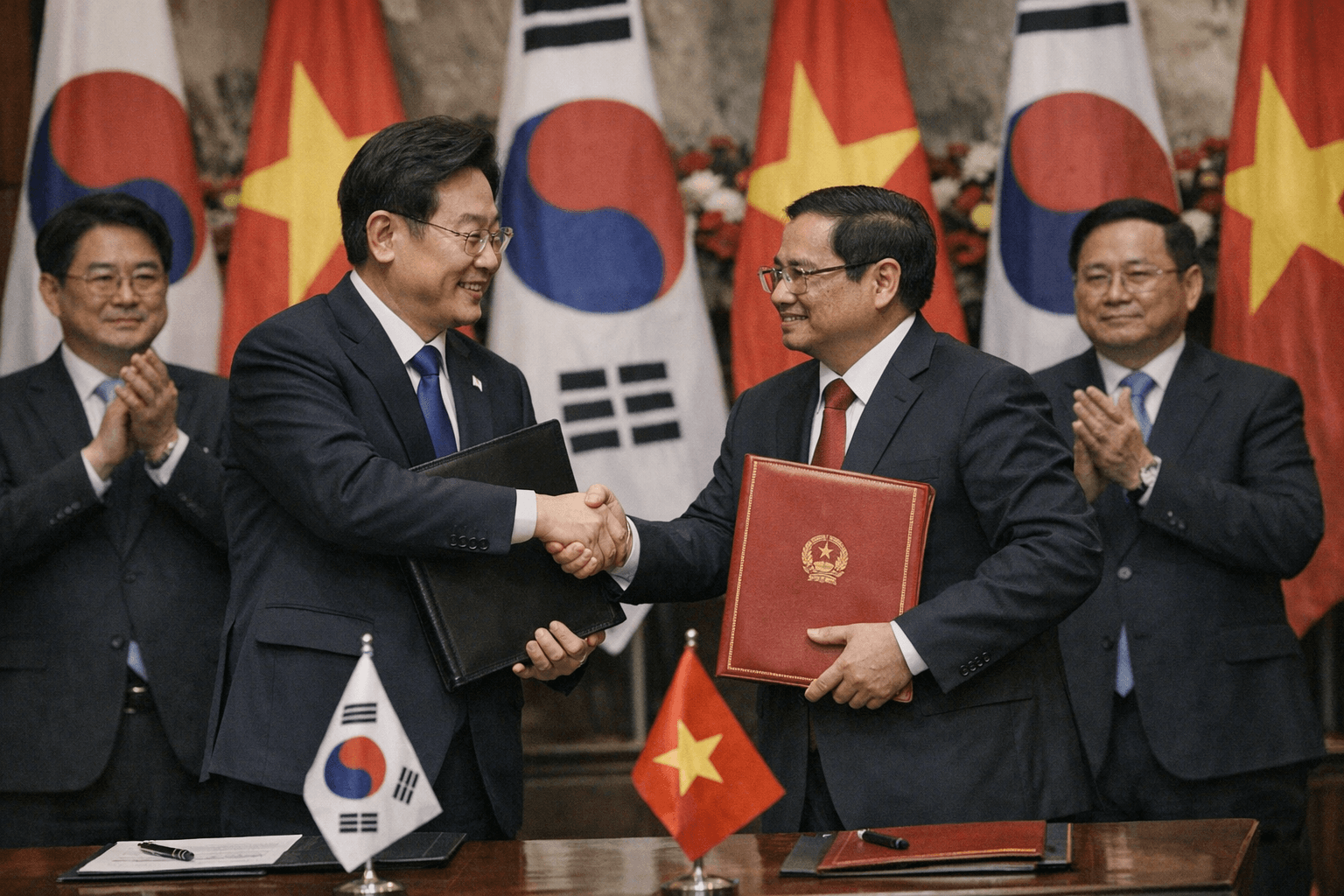
The timing matters. Across Asia, governments are rethinking supply chains, energy planning and capital allocation as global trade turmoil, higher fuel costs and intensifying competition with China reshape economic strategy. In that environment, agreements on electricity and nuclear power are more than diplomatic symbolism. They point to a deeper effort to secure reliable energy for factories, strengthen infrastructure links and lock in institutional cooperation that can support years of investment.
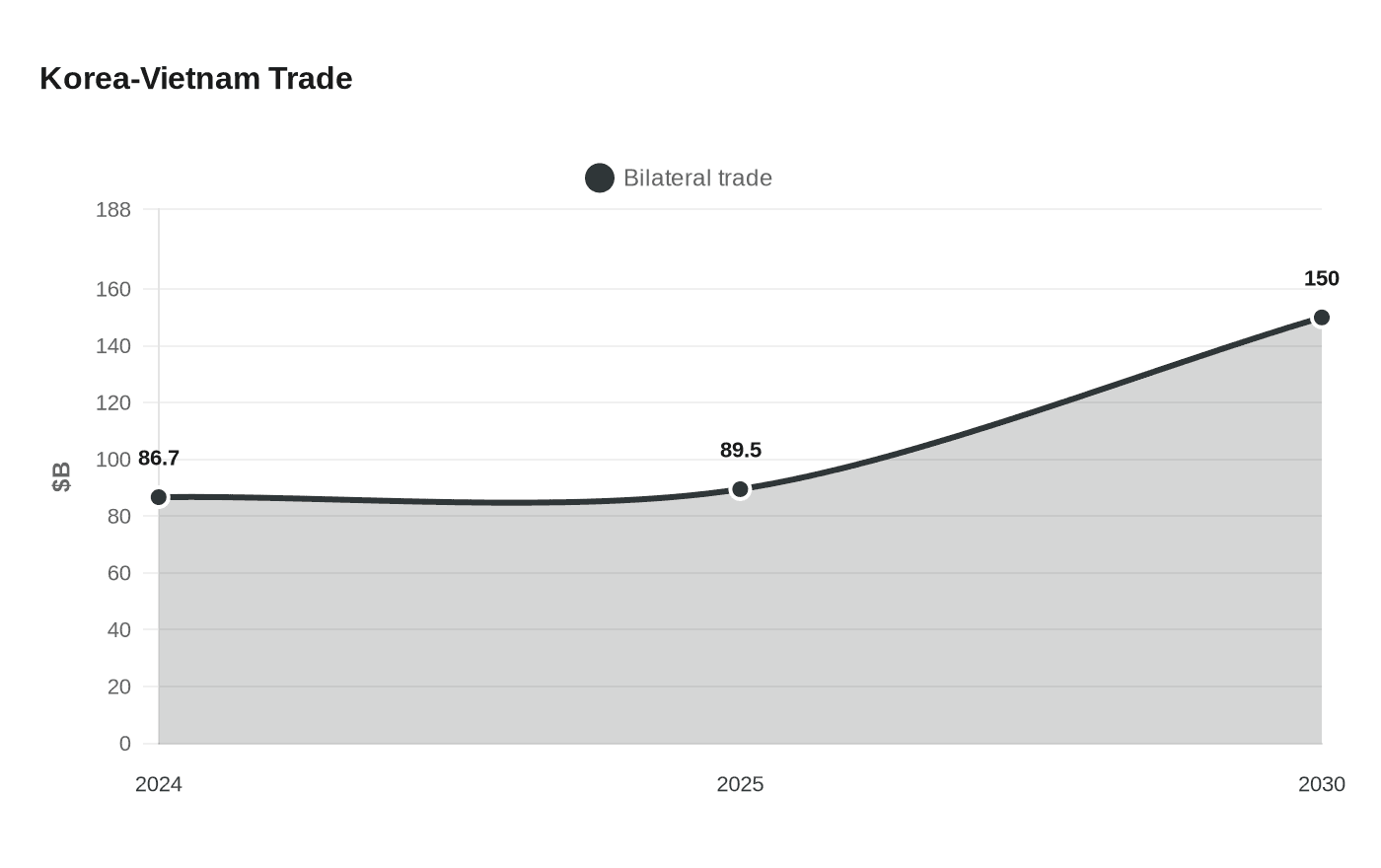
Vietnam has become central to that strategy. South Korea remained Vietnam’s leading investment partner, its second-largest source of official development assistance and its third-largest trade partner. Bilateral trade reached $89.5 billion in 2025, up 9.6% from a year earlier, after an estimated $86.7 billion in 2024. The two sides have set a goal of reaching $150 billion in trade by 2030, a target that depends on more than the usual exchange of consumer goods and components.
The investment footprint is already deep. Vietnamese reporting said South Korean investors had 10,203 registered projects in Vietnam with about $94 billion in capital as of May 2025. One report said the nuclear agreement was viewed as an early step toward Vietnam’s plan to build four new nuclear reactors by 2035, underscoring how the talks reached into the most capital-intensive parts of the economy.
For Seoul, the visit showed a broader regional calculus. By widening ties with Hanoi into energy, high-tech and infrastructure, South Korea signaled that it intends to compete for influence in Southeast Asia not just through exports, but through the systems that power growth itself.
This article was produced by Prism’s automated news system from verified source data, official records, and press releases, then run through automated quality and moderation checks before publishing. The system is built and supervised by the people who set the standards it runs under. Read our full AI policy.
Did this article answer your question?