South Korea votes in local elections seen as test for Lee Jae Myung
South Koreans cast ballots in a record-turnout local vote that doubles as the first nationwide test of Lee Jae Myung’s presidency.

South Koreans voted in local elections that are being treated as the first hard measurement of President Lee Jae Myung’s governing mandate, with early results expected to shape the political mood even if they do not immediately change policy.
The ballot marked the ninth nationwide simultaneous local election, a quadrennial vote the National Election Commission says comes every four years. It was the first nationwide election since Lee’s snap presidential victory last year, giving a routine local contest unusual national weight.
Voters chose 4,227 regional posts, including 16 metropolitan mayors and governors, 227 heads of basic local governments and 16 education superintendents. The election was held alongside 14 National Assembly by-elections, a slate Yonhap described as the largest since democratization, adding to the sense that the June 3 vote was a temperature check on the country’s political direction.
Turnout pointed to unusually high interest. The National Election Commission said 44,649,908 people were eligible to vote, and early voting reached a record 23.51 percent, with 10,498,411 ballots cast. That surpassed the previous local-election early-voting high of 20.62 percent in 2022.
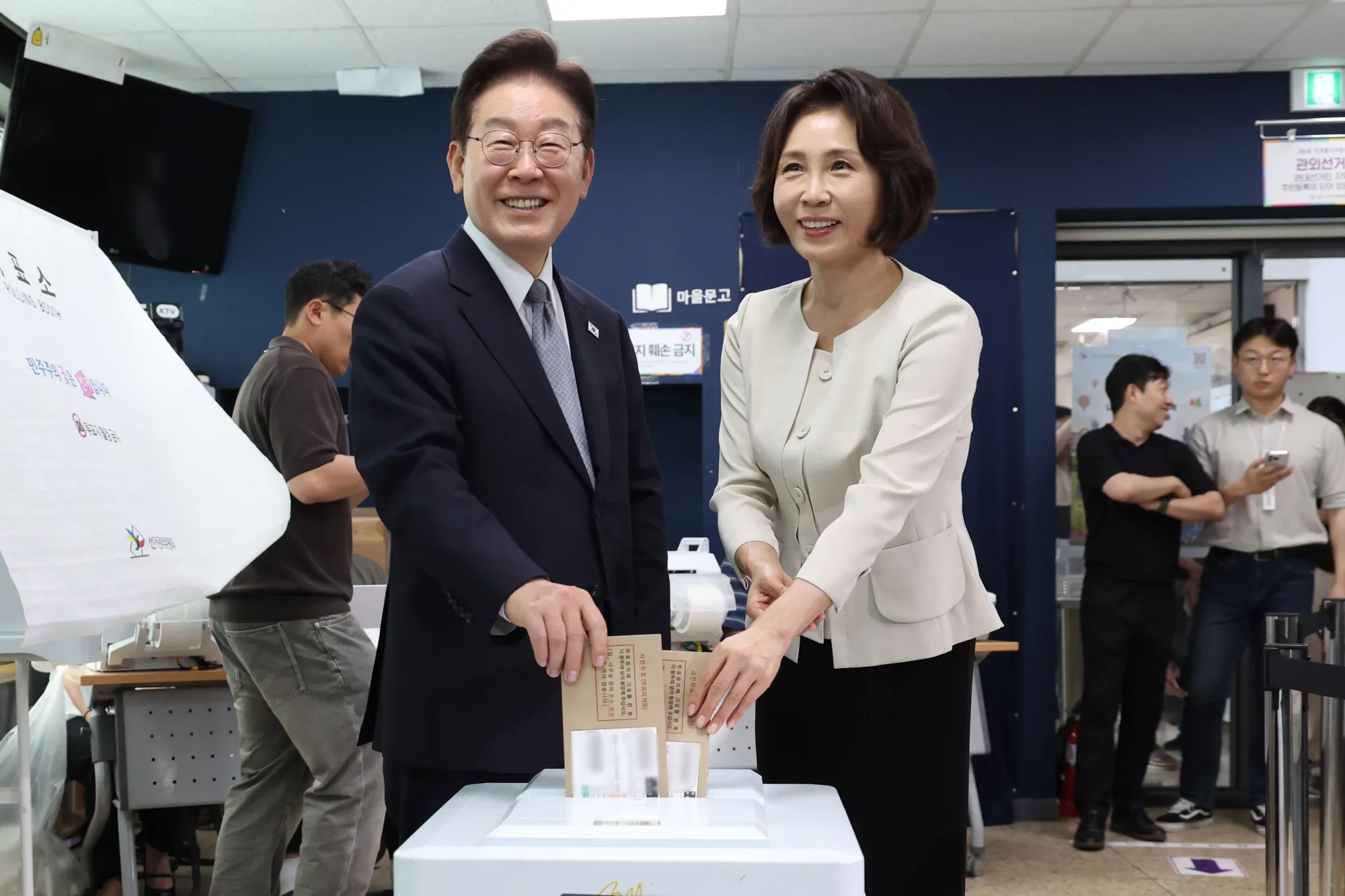
The result was being watched most closely in Seoul and Busan, which analysts and polls have treated as bellwethers for whether Lee’s Democratic Party can claim a decisive win. Gallup Korea analyst Heo Jin-jae said the central question was not simply how many races the Democratic Party won, but by how much, with a landslide judged in part by victories in the two biggest political test cases.
Lee entered the vote with several political strengths. He has scored well with voters on pocketbook concerns, corporate-governance reform and a stock rally that has pushed the KOSPI to repeated records, even as his government has used spending to blunt high energy prices. But critics have accused his administration of failing to ease housing pressure and of using the courts and parliament to shield allies from criminal cases.

The stakes were equally high for the opposition. The conservative People Power Party remained weakened by former President Yoon Suk Yeol’s failed martial-law bid in 2024 and the political fallout that followed, leaving the local elections as a chance to show it could recover. A strong Democratic Party performance would strengthen Lee’s hand to keep pushing pro-market reforms and a more conciliatory line toward North Korea, while a weaker showing would narrow the sense of momentum around a president still early in his term.
This article was produced by Prism’s automated news system from verified source data, official records, and press releases, then run through automated quality and moderation checks before publishing. The system is built and supervised by the people who set the standards it runs under. Read our full AI policy.
Did this article answer your question?


