South Korea's Parliament Backs $350 Billion U.S. Investment With Near-Unanimous Vote
Seoul's National Assembly passed sweeping legislation to deploy $350 billion into American industries, creating a state-backed corporation to manage the historic pledge.
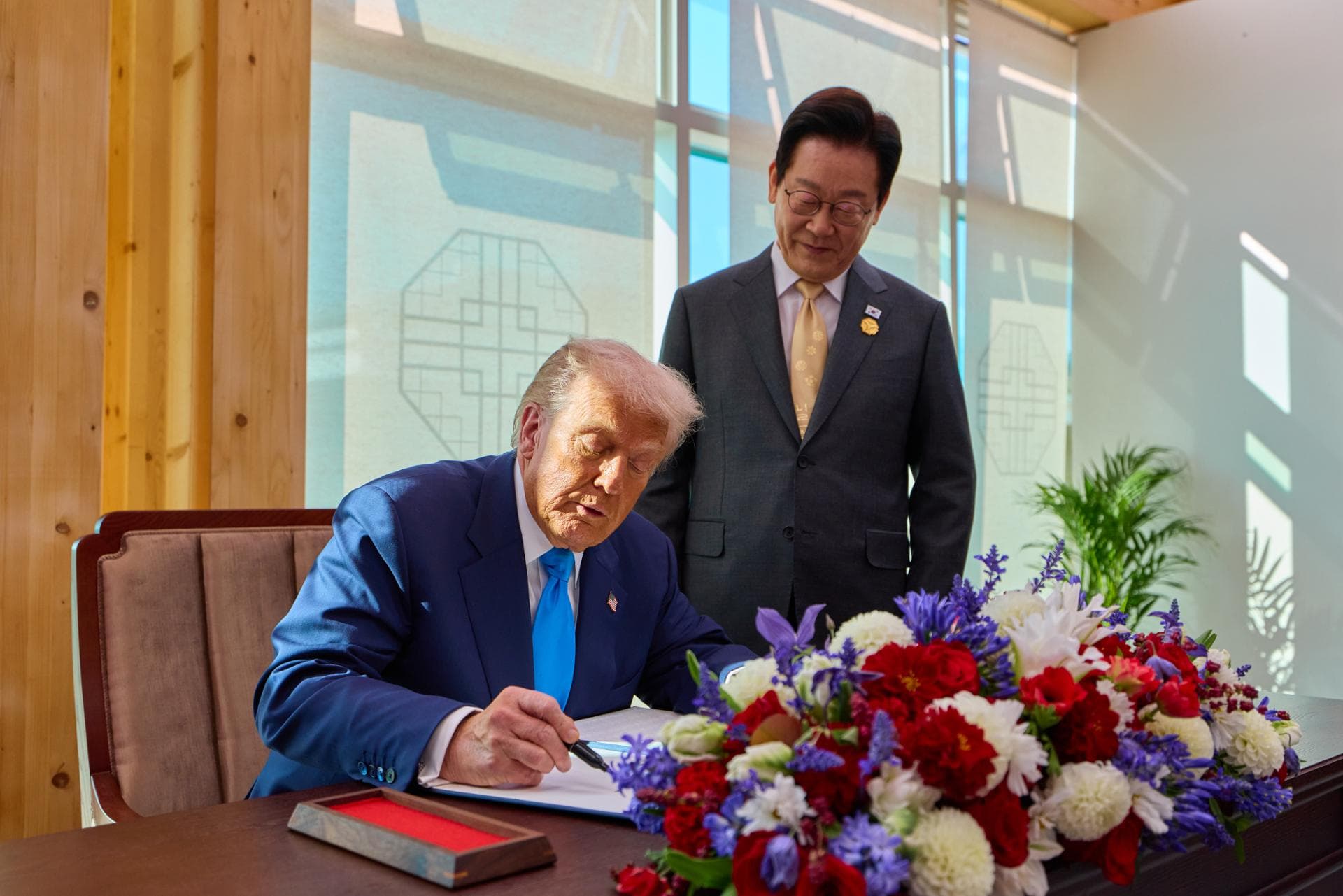
South Korea's National Assembly passed special legislation Wednesday to implement a $350 billion investment pledge to the United States, creating a state-backed corporation to manage the funds and establishing a legal framework for one of the largest bilateral economic commitments in recent memory.
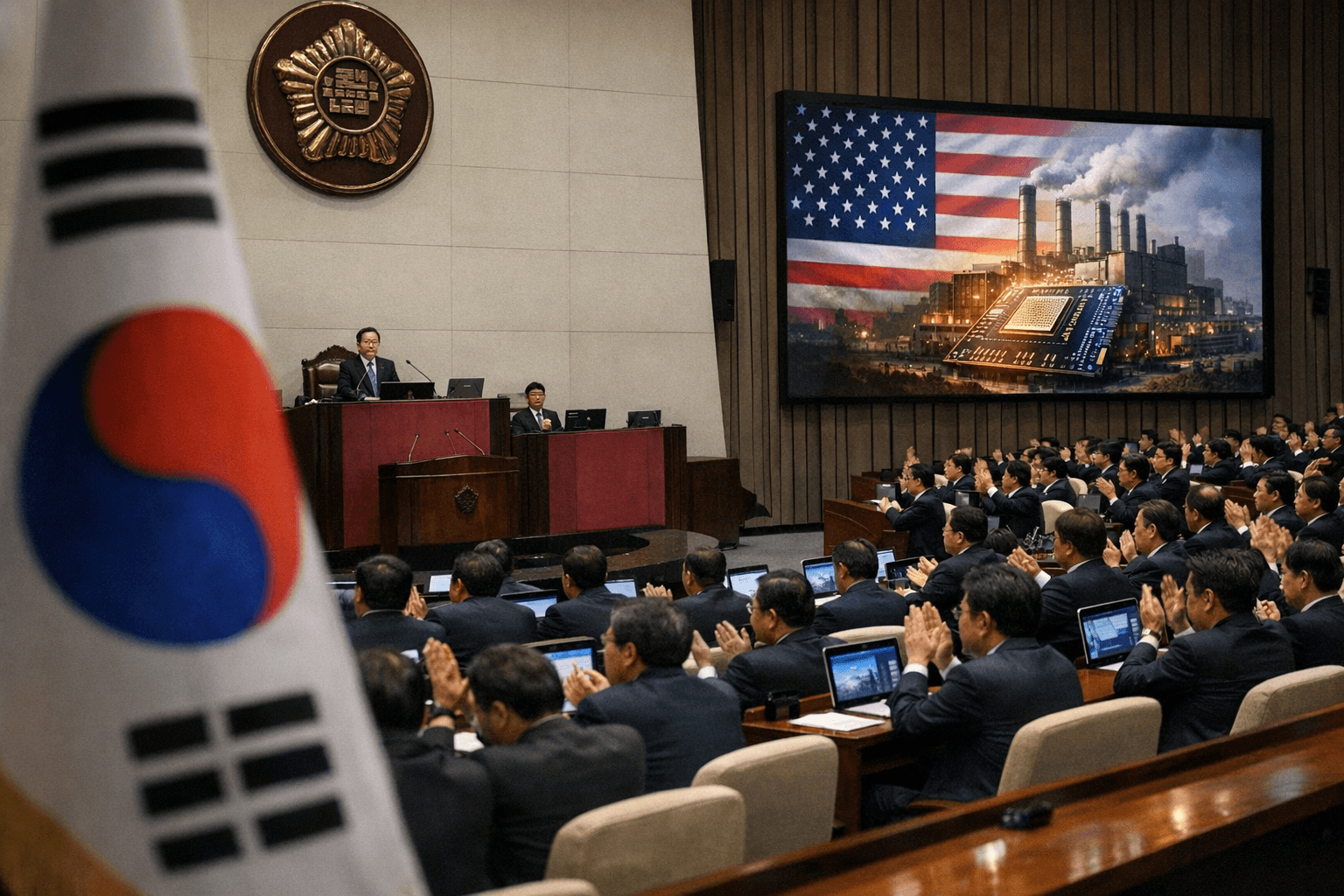
The vote was nearly unanimous: 226 lawmakers in favor, 8 opposed, with 8 abstentions among the 242 who participated in the plenary session. The bill, submitted in November, had faced resistance in the months since, but Wednesday's result reflected a rare convergence of political will.
Assembly Speaker Woo Won-shik framed the outcome in explicitly national terms. "Amid a very serious trade environment, the Assembly passed the law in mutual agreement between opposing parties," he said. "It is meaningful that we confirmed that no bipartisan disagreement or political disputes can be prioritized over national interest."
The law implements a memorandum of understanding signed last November under which Seoul agreed to direct $200 billion into U.S. strategic industries and $150 billion into shipbuilding cooperation, in exchange for more favorable tariff terms from Washington. The urgency was sharpened in late January when President Donald Trump threatened to raise tariffs on South Korean goods from 15 percent to 25 percent, citing legislative delays in Seoul.
At the center of the new law is the Korea-U.S. Strategic Investment Corporation, a public entity capitalized at 2 trillion won, roughly $1.4 billion, that will oversee project selection and fund deployment. A strategic investment fund will operate alongside the corporation. The law is expected to come into force within three months.
Priority sectors named in the legislation include shipbuilding, semiconductors, pharmaceuticals, critical minerals, energy, artificial intelligence and quantum computing. Additional sectors can be incorporated by presidential decree.
The governance structure is elaborately bilateral. South Korea's Industry Minister will lead a joint Korea-U.S. committee to assess proposed projects. A separate Finance Minister-led committee will determine whether to advance them to a U.S. panel headed by the Secretary of Commerce. That U.S. panel can also originate project proposals.
A central commercial discipline runs through the law: investments must meet a standard of "commercial feasibility," meaning they must generate sufficient cash flow to cover principal and interest over their lifespan. Exceptions are permitted where national security or supply chain stability are at stake, but only with approval from relevant South Korean parliamentary committees.
Some lawmakers opposed the bill ahead of the vote, expressing frustration over Trump's new trade investigations and the potential fallout from the ongoing conflict in the Middle East, which has raised global energy security concerns and rattled financial markets. South Korea's KOSPI index has fallen by a record 12 percent as the Iran crisis has deepened, exposing the country's vulnerability as an export-dependent, fuel-importing economy.
South Korean ship orders have surged in recent months as U.S. port fees on Chinese-built vessels have redirected commercial business toward Korean yards, adding strategic weight to the $150 billion shipbuilding allocation at the heart of the agreement.
The law's passage closes the legislative chapter of a diplomatic arrangement Seoul struck under considerable duress. Whether Washington honors its end of the tariff bargain now moves from Seoul's assembly floor to a joint committee table in which the U.S. Commerce Secretary holds decisive influence.
This article was produced by Prism’s automated news system from verified source data, official records, and press releases, then run through automated quality and moderation checks before publishing. The system is built and supervised by the people who set the standards it runs under. Read our full AI policy.
Did this article answer your question?