Southeast Asia Accelerates Nuclear Push as Iran War Disrupts Energy Supplies
The Philippines built a nuclear plant in the 1970s and never switched it on. Now, with Brent crude surpassing $100 a barrel, five Southeast Asian nations are racing to go atomic for the first time.
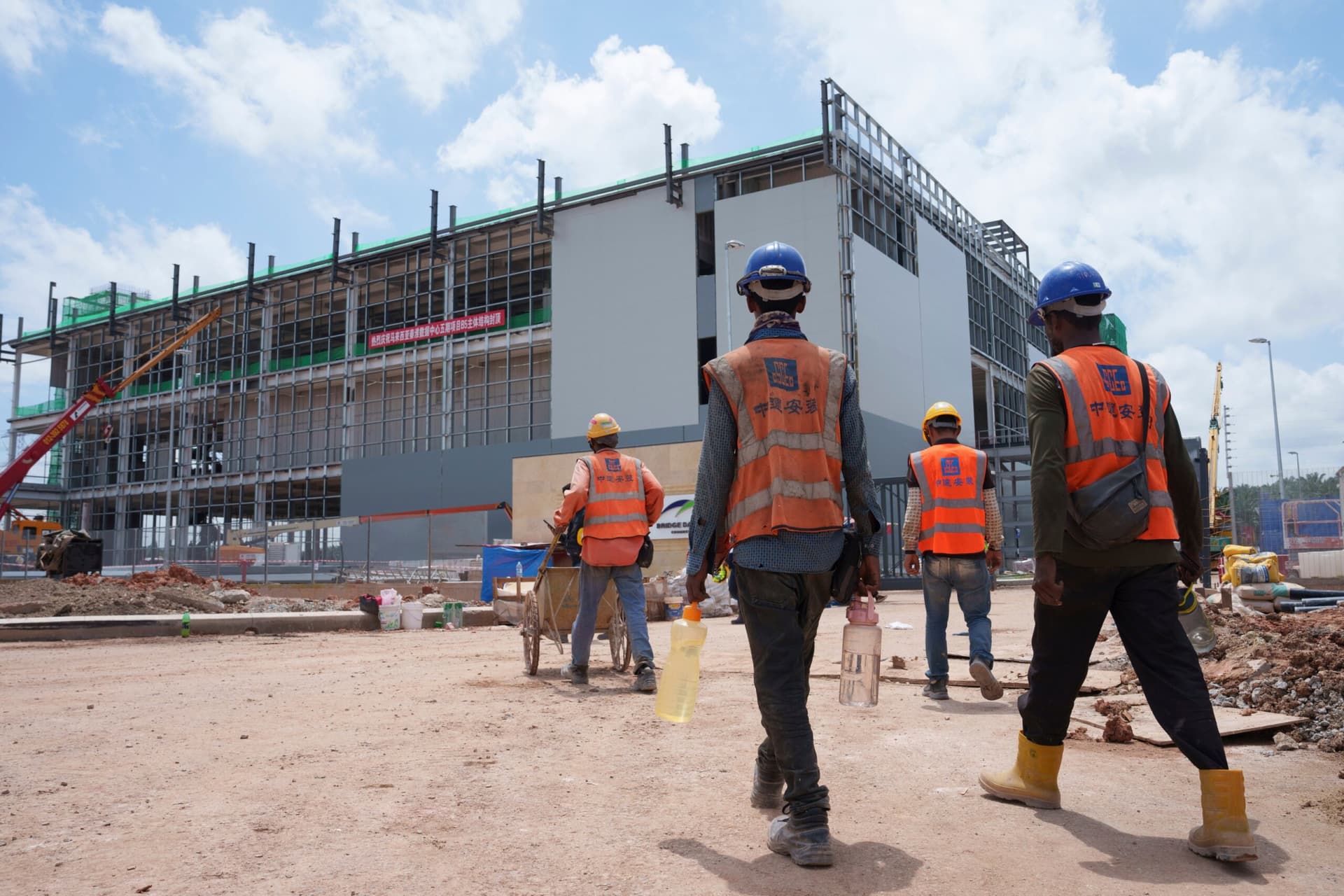
Alvie Asuncion-Astronomo of the Philippine Nuclear Research Institute is candid about what nuclear power will cost her country at the outset: "We are not anticipating that nuclear electricity will be cheap." But in the long term, she says, it will improve the Philippines' energy reliability, security, independence, and eventually its costs. That calculation has been forced into sharp focus by a war the Philippines can ill afford.
The surge in crude oil prices caused by the escalating conflict has raised the motivation for countries to speed up their nuclear efforts, said Asuncion-Astronomo. Brent crude oil prices surpassed $100 per barrel on March 8, 2026, for the first time in four years, rising to $126 per barrel at its peak. For the Philippines, the exposure is acute: no Southeast Asian nation has engaged with atomic energy more than the Philippines, which built a nuclear power plant in the 1970s that it never turned on. A new atomic energy regulatory authority launched last year and the country set a 2032 target, approving a roadmap for potential investors in February.
Southeast Asia has never produced a single watt of nuclear energy, despite long-held atomic ambitions. But that may soon change as pressure mounts to reduce emissions that contribute to climate change, while meeting growing power needs. Five of the 11 members of the Association of Southeast Asian Nations, Indonesia, Malaysia, Thailand, Vietnam and the Philippines, are chasing nuclear. Several Southeast Asian nations are reviving mothballed nuclear plans and setting ambitious targets, and nearly half of the region could, if they pursue those goals, have nuclear energy in the 2030s.
The conflict triggering this acceleration began on February 28, 2026. The closure of the Strait of Hormuz followed the outbreak of military conflict with Iran. A complete cessation of oil exports from the Gulf region amounts to removing close to 20 percent of global oil supplies from the market, about 80 percent of which is shipped to Asia. The International Energy Agency called it the "greatest global energy and food security challenge in history."
The immediate country-level fallout has been severe. Thailand set a target last year of adding 600 megawatts of nuclear generating capacity by 2037, with officials from Thailand's Electricity Generating Authority calling nuclear a "promising solution" to supplying enough affordable, clean electricity to meet rising demand. Bangkok also moved fast on short-term reserves: Thailand suspended exports of crude oil and petroleum products to safeguard its oil supply. Indonesia, meanwhile, has two state-owned tankers stranded in the Strait of Hormuz and has announced it will increase oil imports from the United States to compensate for lost Gulf supplies. The ING financial group flagged the Philippines as among the most vulnerable of all, given that it imports more than 90 percent of its oil from the Gulf and does not subsidize fuel the way many of its neighbors do.
Vietnam and Russia advanced a nuclear power deal this week as the region's energy security concerns worsened. Vietnam is building two nuclear plants backed by the Russian state corporation Rosatom, which Prime Minister Pham Minh Chinh called "nationally significant, strategic projects." Cambodia's latest national strategy signaled an openness to nuclear, and even the tiny oil and gas sultanate of Brunei told the International Atomic Energy Agency that it is "carefully exploring nuclear energy."
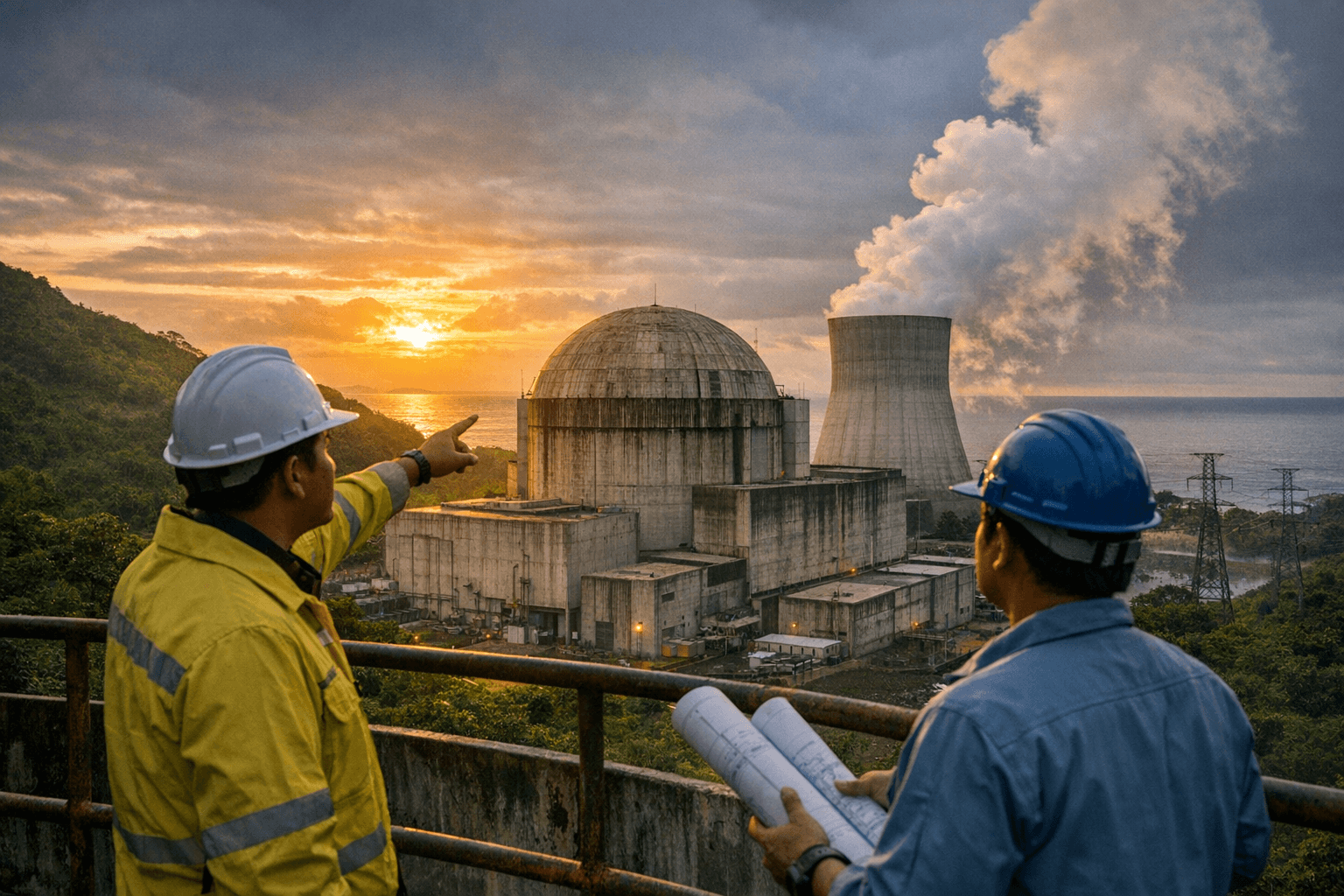
The AI data center boom is compounding the urgency. The AI-focused data centers contributing to Southeast Asia's growing energy demand are large windowless buildings filled with rows of computers; a standard AI data center consumes as much electricity as 100,000 households, the IEA says. Southeast Asia will account for a quarter of growth in global energy demand by 2035, according to the IEA, driven in part by more than 2,000 data centers across Indonesia, Malaysia, Singapore, Thailand, Vietnam and the Philippines, according to the think tank Ember.
"There is a more serious, new and growing momentum for the development of nuclear energy in Southeast Asia," said King Lee of the World Nuclear Association. Nearly 40 nations, including the United States, Japan, South Korea and China, have joined a global push to triple installed nuclear energy capacity by 2050, and Southeast Asia will account for nearly a fourth of the 157 gigawatts expected from "newcomer nuclear nations" by mid-century.
The macroeconomic stakes extend well beyond the region. IMF managing director Kristalina Georgieva has warned that a 10 percent increase in energy prices sustained over a year would increase global inflation by 40 basis points and slow global economic growth. Following the closure of the Strait of Hormuz on March 4, oil and LNG exports were stranded, causing Brent crude to surge past $120 per barrel and forcing QatarEnergy to declare force majeure on all exports. An Iranian attack that took out 17 percent of Qatar's liquefied natural gas export capacity could take three to five years to be fully repaired, QatarEnergy's CEO told Reuters.
On the diplomatic front, ASEAN foreign ministers issued a joint statement on March 4 calling for an immediate ceasefire following the U.S.-Israeli strikes and the killing of Supreme Leader Ayatollah Ali Khamenei, urging all parties to respect international law and protect civilians. Indonesian President Prabowo Subianto offered within hours of the first strikes to travel to Tehran and "conduct mediation," though the Iranian ambassador in Jakarta questioned the impact of the gesture. Foreign Minister Sugiono subsequently said Indonesia is now reconsidering its participation in the U.S.-led Board of Peace, the body tasked with managing the rebuilding of Gaza.
The conflict has echoed the 1970s energy crisis through acute supply shortages, currency volatility, inflation and heightened risks of stagflation and recession. For Southeast Asia, a region that has spent decades debating nuclear power without ever generating a single atomic watt, the war has compressed that debate into something resembling a deadline.
This article was produced by Prism’s automated news system from verified source data, official records, and press releases, then run through automated quality and moderation checks before publishing. The system is built and supervised by the people who set the standards it runs under. Read our full AI policy.
Did this article answer your question?