SpaceX set to launch final ViaSat-3 satellite on Falcon Heavy Monday
SpaceX’s rare Falcon Heavy return carried Viasat’s final ViaSat-3 satellite, a mission aimed at expanding Asia-Pacific bandwidth and signaling demand for heavy-lift launches.
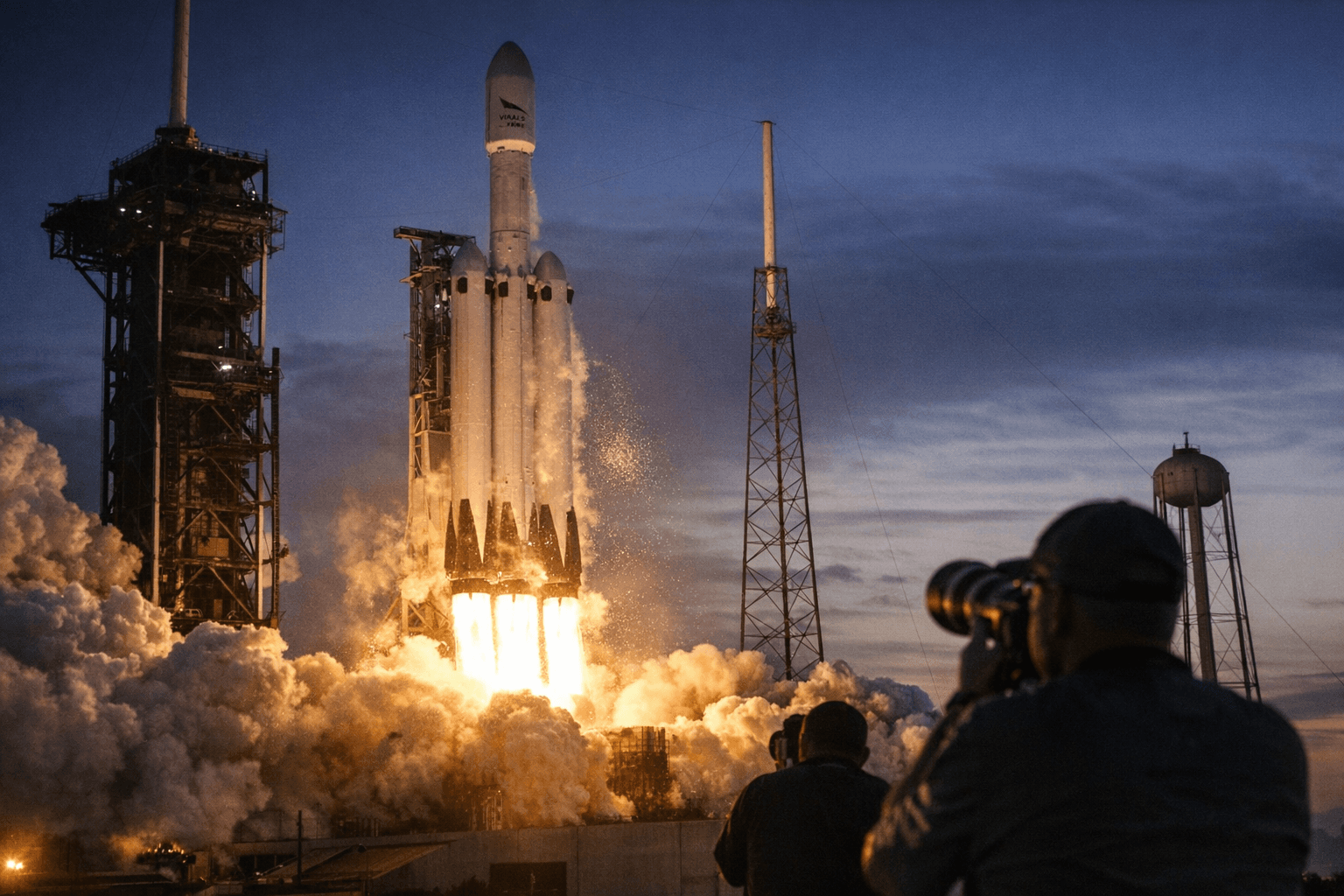
SpaceX’s Falcon Heavy returned to the pad with a mission that says as much about the launch market as it does about one satellite. The rocket was tasked with carrying ViaSat-3 F3, the final spacecraft in Viasat’s three-satellite broadband constellation, a payload built to extend coverage across the Asia-Pacific region and add more than 1 Tbps of throughput to the company’s network.
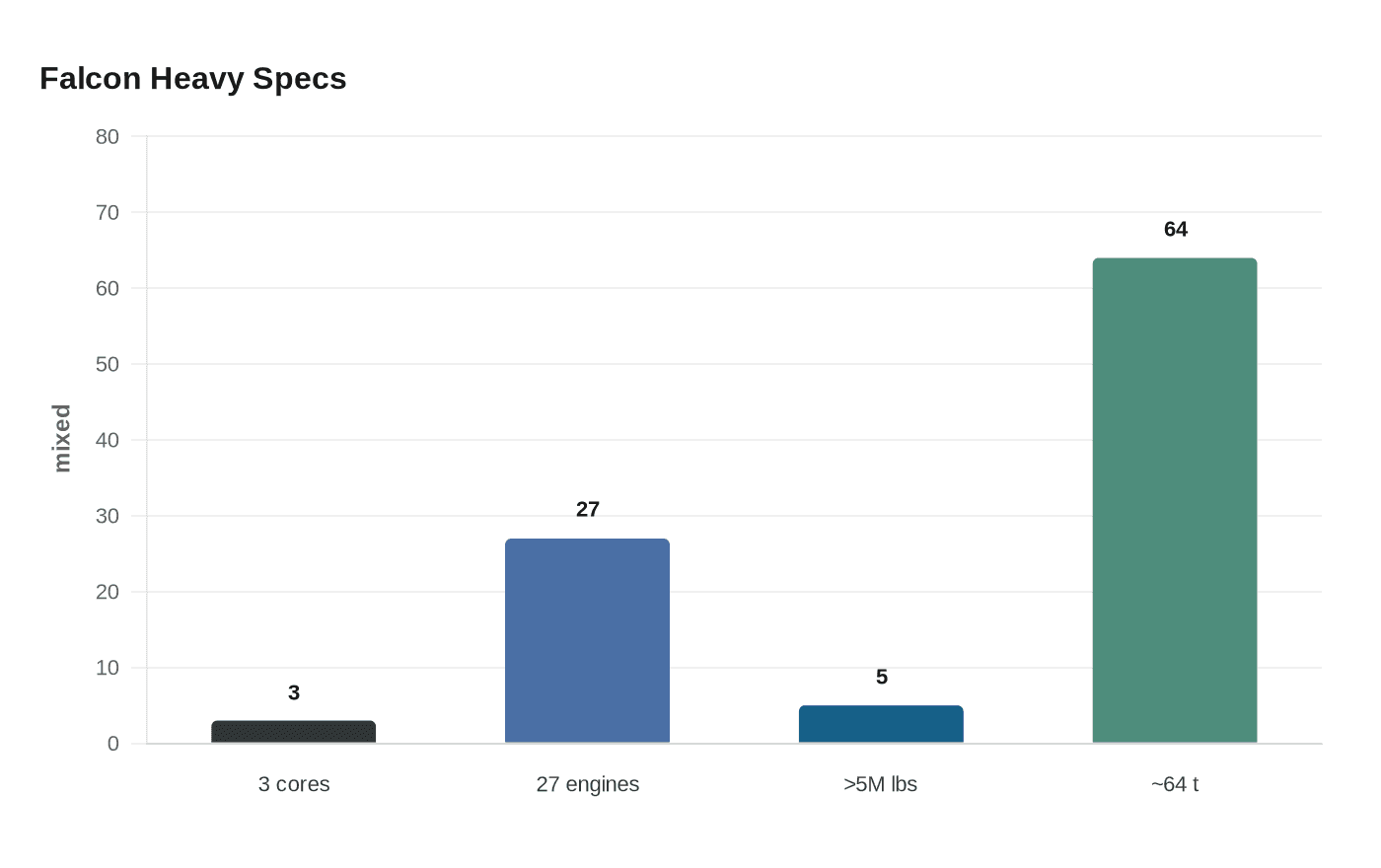
SpaceX was targeting Launch Complex 39A at NASA’s Kennedy Space Center for an 85-minute window opening at 10:21 a.m. ET. The company said the flight would be the first Falcon Heavy launch in more than 18 months, a notable gap for a vehicle reserved for missions that need extra lift and performance. SpaceX said the rocket is built from three reusable Falcon 9 cores with 27 Merlin engines producing more than 5 million pounds of thrust at liftoff, and it can carry nearly 64 metric tons to orbit.
The mission profile also underscored how SpaceX sells reliability and reuse as part of its value proposition. After stage separation, the two side boosters were planned to land at Landing Zones 2 and 40 at Cape Canaveral Space Force Station. That kind of recovery has become central to SpaceX’s operating model, especially on flights where performance demands are high and hardware is meant to be turned around for future use.
For Viasat, the launch closed the book on a constellation designed to support high-capacity satellite internet in some of the world’s busiest travel and shipping corridors. The company said ViaSat-3 F3 was expected to spend several months traveling to geostationary orbit, complete in-orbit testing, and enter service by late summer 2026. Viasat chairman and chief executive Mark Dankberg said the mission would substantially increase capacity for customers operating in APAC while delivering better bandwidth economics.
The timing added another layer of significance for Florida’s Space Coast. A separate United Launch Alliance Atlas V launch was also scheduled later the same day from Cape Canaveral Space Force Station, creating a rare doubleheader that increased the likelihood of traffic, larger crowds, and wider public attention around the corridor between Kennedy Space Center and Cape Canaveral.
SpaceX said a live webcast was set to begin about 15 minutes before liftoff, giving viewers a close look at a flight that carries both commercial and strategic weight. A successful Falcon Heavy mission would reinforce SpaceX’s position in the heavy-lift market at a moment when high-capacity communications satellites and national-security-adjacent launch demand continue to shape the U.S. launch agenda.
This article was produced by Prism’s automated news system from verified source data, official records, and press releases, then run through automated quality and moderation checks before publishing. The system is built and supervised by the people who set the standards it runs under. Read our full AI policy.
Did this article answer your question?