SpaceX's Starship nails mostly successful 13th test flight
SpaceX’s 397-foot Starship pulled off a hard booster splashdown and a clean sub-orbital hop, inching NASA’s Moon lander plan closer to reality.
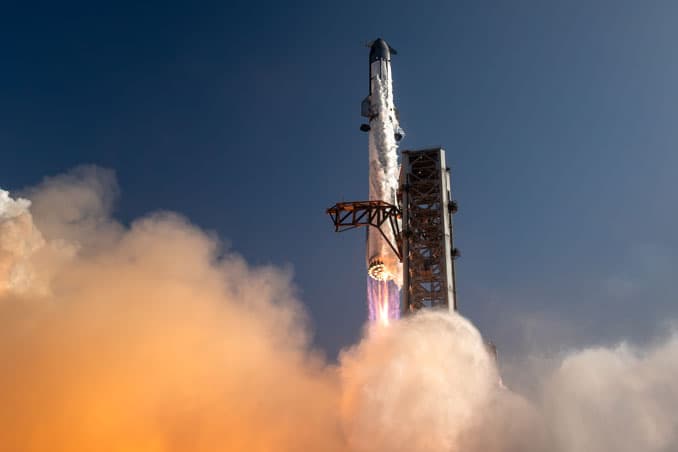
SpaceX’s 13th Super Heavy-Starship rocket ended with a hard booster splashdown off the Texas Gulf Coast and a successful sub-orbital hop to the Indian Ocean, a result that showed real progress in a program still being measured flight by flight.
The 397-foot vehicle, powered by 33 methane-fueled Raptor engines, lifted off from southern Texas after SpaceX worked through a 90-minute launch window that opened at 5:45 p.m. CT on Thursday, July 23. The company had already scrubbed a July 16 attempt after an apparent engine issue, then faced weather complications tied to Tropical Storm Bertha before getting the rocket back on track.
The flight carries weight well beyond the test range. NASA’s Human Landing System program ties Starship directly to Artemis lunar-landing plans, and NASA selected SpaceX’s Starship Human Landing System for Artemis III. That makes each trial an operational proof point for the agency’s Moon-to-Mars strategy, not just a private-sector spectacle in Texas.
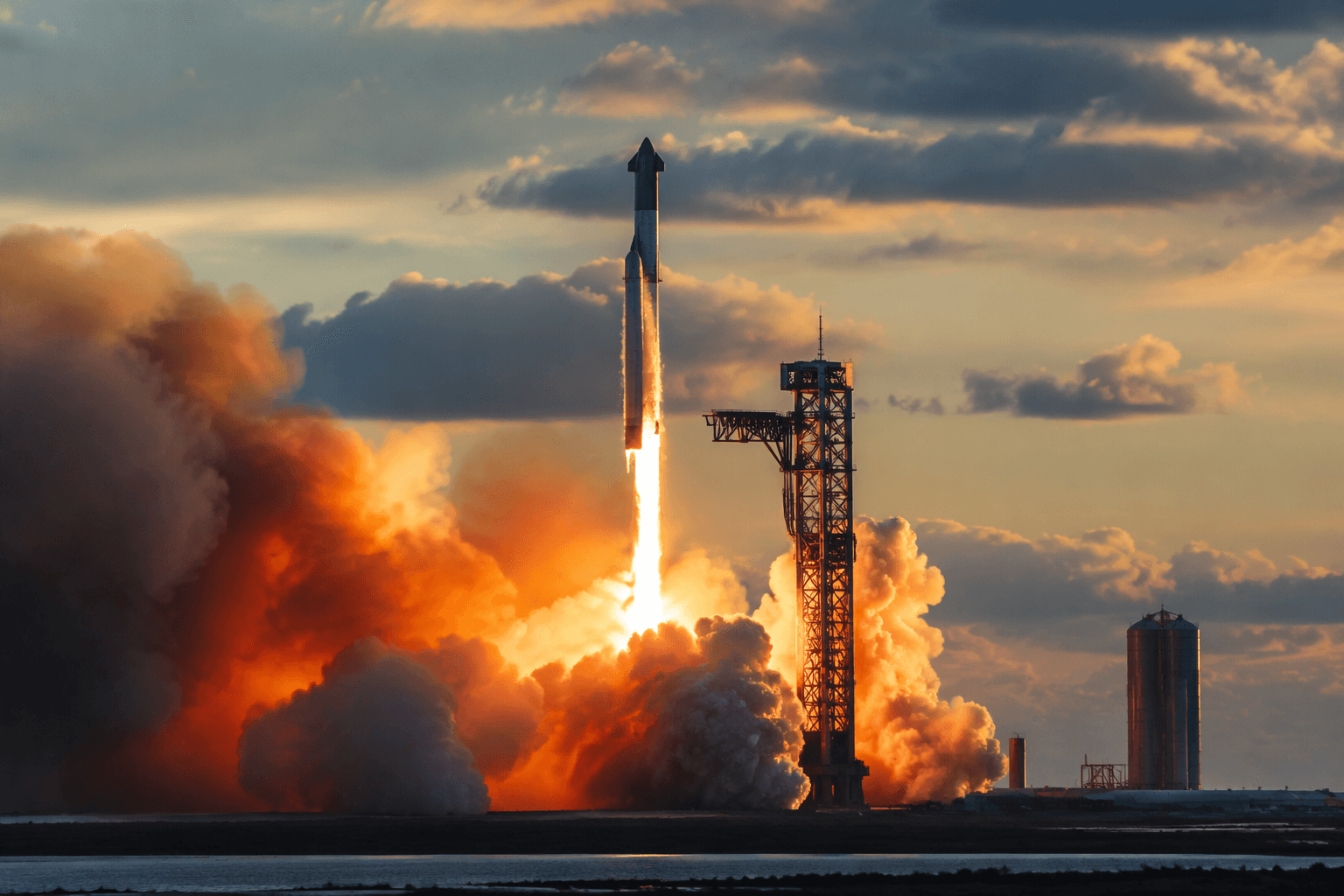
SpaceX said Flight 13 was expected to be the second launch of a third-generation Starship, and the mission was also expected to debut Starlink Version 3 satellites. Those ambitions help explain why the rocket’s controlled behavior mattered so much: the booster reached its target splashdown, even if the landing was described as hard, and the upper stage completed its sub-orbital hop without losing the mission’s core shape.
That is the real test SpaceX faces now. The company has shown it can keep pushing a giant, complex rocket through rapid-development milestones, but the road from test success to routine heavy-lift reliability remains long. NASA needs a lunar lander it can build schedules around. The broader U.S. space sector needs launch capacity that is not defined by engine troubles, weather delays and repeated retries.
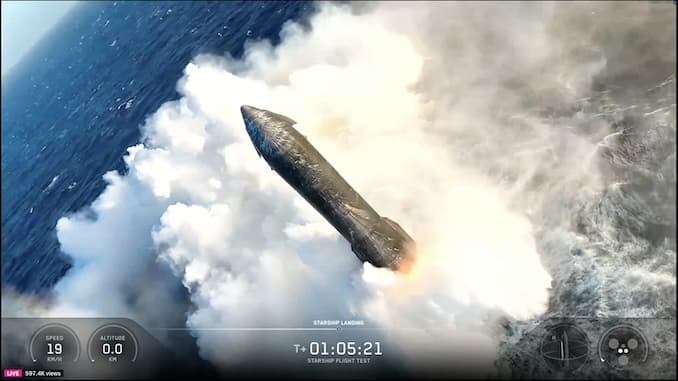
Flight 13 did not settle every question around Starship, but it did narrow the gap between experimental hardware and a vehicle that can begin to look operational. SpaceX is still setting the pace, and the next flights will determine whether that pace turns into dependable capacity for NASA’s Artemis timeline and the country’s larger launch needs.
This article was produced by Prism’s automated news system from verified source data, official records, and press releases, then run through automated quality and moderation checks before publishing. The system is built and supervised by the people who set the standards it runs under. Read our full AI policy.
Did this article answer your question?