Spain bars U.S. from using Rota and Morón bases, prompting U.S. aircraft redeployment
Madrid denied U.S. use of Rota and Morón for strikes on Iran; FlightRadar24 data show 15 aircraft left and at least seven landed in Germany, raising diplomatic and public-health concerns.
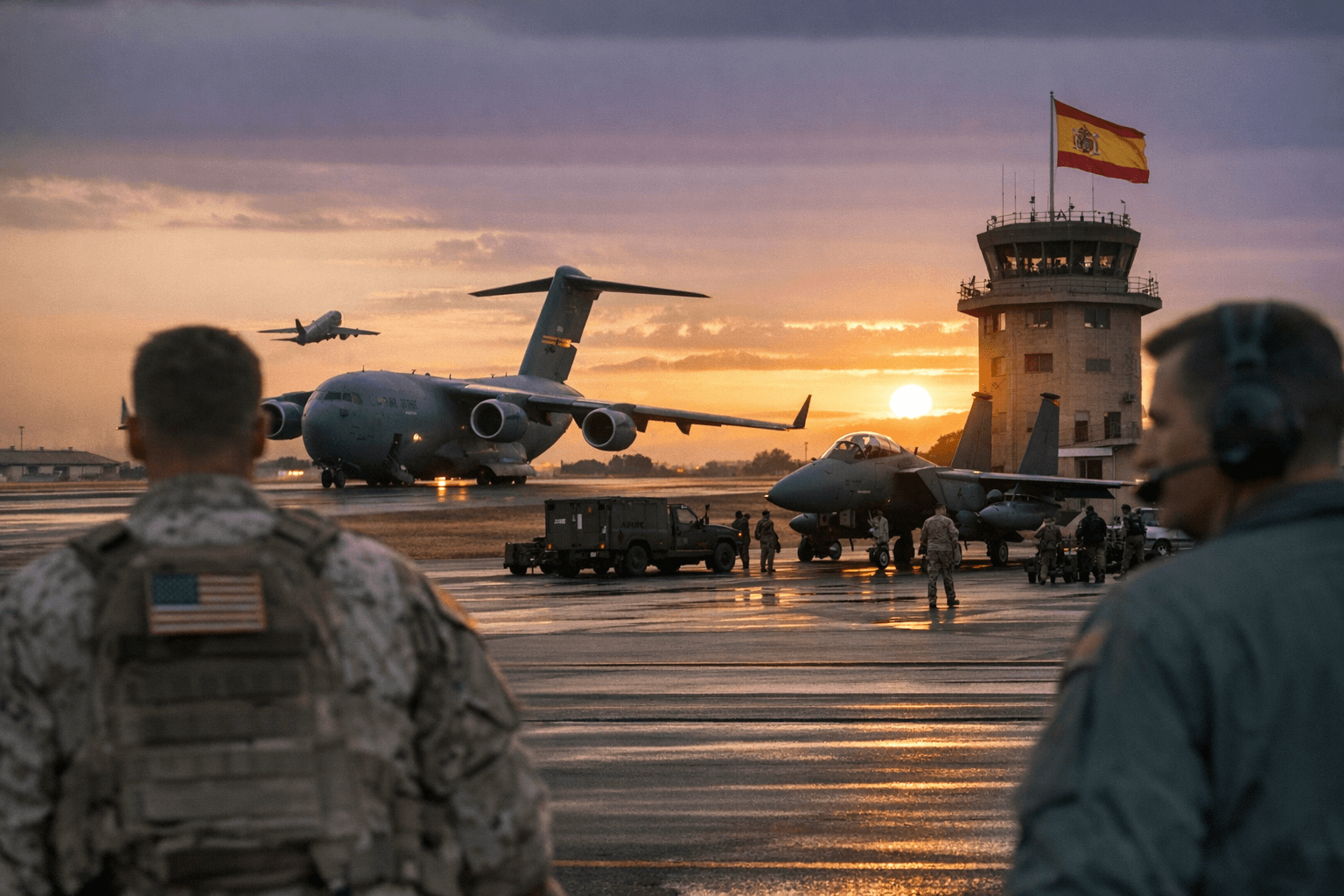
Spain’s government said it would not permit the United States to use the jointly operated Rota and Morón military bases for strikes on Iran, and FlightRadar24 maps cited by Reuters show 15 U.S. aircraft departing those southern Spanish bases, with at least seven of those planes landing at Ramstein in Germany. Izvestia, citing El País, reported separately that the Pentagon withdrew 12 KC-135 tanker aircraft, while Spain’s defense minister confirmed the departing planes were “mostly refueling aircraft, including the Boeing KC-135 Stratotanker” and that they were “permanently based in Spain.”
The decision crystallizes a sharp diplomatic rebuke from Madrid. Prime Minister Pedro Sánchez “explicitly condemned the US and Israel’s ‘unilateral military action’ against Iran, warning that it is contributing to ‘a more hostile and uncertain international order,’” The Guardian reported. Foreign Minister José Manuel Albares framed the move as a legal and political boundary: “Spanish bases are not being used for this operation and will not be used for anything that is not provided for in the agreement with the United States, nor for anything that is not in accordance with the United Nations Charter,” he said. Albares added that “the voice of Europe now must be the voice of balance and moderation, aimed at de‑escalation and returning to the negotiating table,” according to Izvestia.
Madrid’s instruction, reported across multiple outlets on March 2, 2026, underscores Spanish sovereignty over facilities jointly managed with Washington and signals a willingness to diverge from allied partners. The Guardian and other reports portray Spain as an outlier amid statements from the United Kingdom, France and Germany that they would consider steps “to defend our interests and those of our allies in the region,” including “enabling necessary and proportionate defensive action to destroy Iran’s capability to fire missiles and drones at their source.”
Spanish officials also warned of practical risks from further escalation. Anadolu Agency quoted Albares saying the unfolding conflict could have “unpredictable consequences,” including disruption in the Strait of Hormuz and “rising oil prices.” Those economic shifts carry immediate public-health and equity implications. Higher fuel costs and supply-chain interruptions can delay shipments of medicines, increase operating expenses for ambulances and home care, and raise grocery and heating bills for low-income households. Communities already facing health disparities, older adults on fixed incomes, immigrants, and residents of remote coastal towns that rely on fuel-dependent transport, would likely feel those pressures first.
Public-health systems depend on reliable logistics and affordable energy. If tanker and cargo routes are rerouted or slowed, hospitals may need contingency plans for pharmaceutical deliveries and oxygen supplies, and health agencies may face budget strain from higher transport and energy bills. Spain’s ban therefore has consequences beyond diplomacy and logistics; it has the potential to affect daily access to care and the cost of essential services, particularly for vulnerable populations.
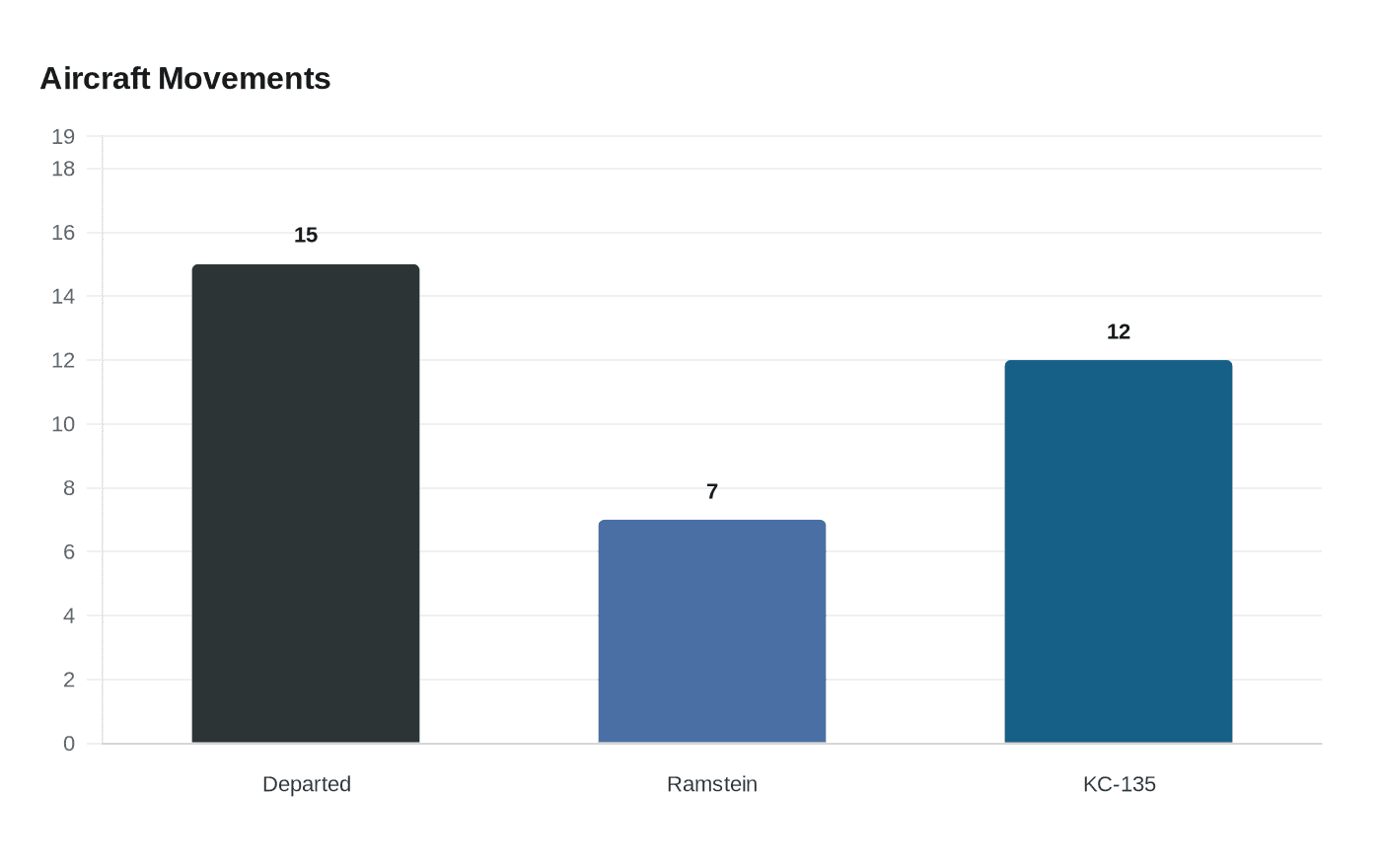
The government framed its refusal as a legal safeguard and a call for de-escalation; Albares warned that actions taken outside collective agreement risked unpredictable fallout. Flight-tracking data and differing tallies of aircraft movements, 15 departures in FlightRadar24 data versus 12 KC-135s reported by El País and Izvestia, should be read as contemporaneous snapshots attributed to their respective sources. For Madrid, the decision marks a clear line: Spanish sovereign territory will not be used for strikes it views as extralegal, a stance that could deepen strains with Washington while sending ripple effects through logistics, markets and public health preparedness.
Know something we missed? Have a correction or additional information?
Submit a Tip