Spain mobilizes heavy machinery after deadly Adamuz high-speed crash
Rescuers used cranes to lift wreckage after a collision that killed at least 41 people, raising urgent safety and regulatory questions for Spain's high-speed rail network.
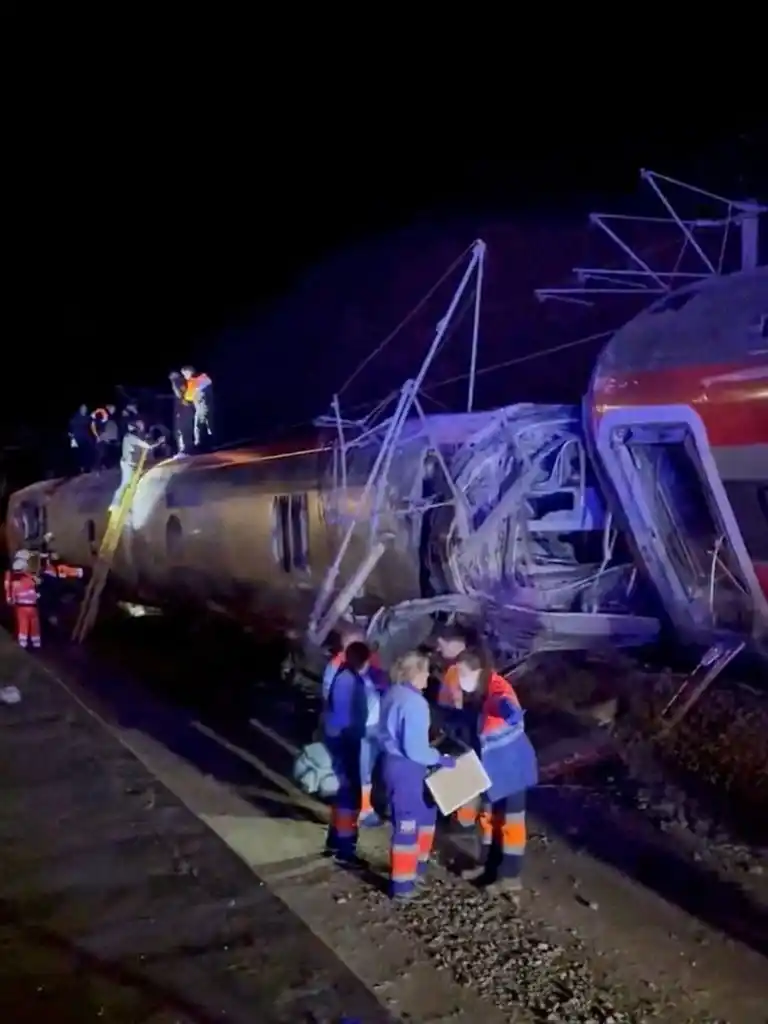
Rescuers deployed cranes, earth-moving equipment and heavy levelling machines to reach twisted carriages after two high-speed trains collided near Adamuz in Córdoba province, leaving at least 41 people dead and scores injured. Authorities said operations on Jan. 20 focused on lifting the worst-damaged carriages to recover bodies and to allow investigators full access to the wreckage.
The collision involved a derailed Iryo train and an oncoming Alvia service on a straight stretch of track roughly 360 km south of Madrid. Initial reporting and on-site investigators indicate one train derailed and was struck by the other at high speed, with one outlet reporting an impact at about 200 km/h. Rescue teams found sections plunged down a roughly four-metre embankment, and difficult terrain slowed the delivery and positioning of cranes needed to lift crushed cars and retrieve victims.
Police had received 43 missing-person reports that officials said broadly matched the provisional death toll; around 300 passengers were believed to have been aboard the two services combined. Twelve people remained in intensive care as of the latest operational update. Among the dead were a Spanish National Police officer and the 27-year-old driver of one Alvia train; one family reported a sole survivor, a six-year-old girl now in the care of her grandmother. Interior Ministry authorities said rescuers had seen several bodies still trapped in the wreck late on Jan. 19.
Investigators and technicians working at the scene identified a faulty rail joint as a possible factor in the derailment, a source briefed on the early probe said. Officials cautioned that the cause will only be confirmed after full technical analysis and the complete lifting and examination of the derailed carriages. Judicial and technical inquiries were under way, and regional emergency teams coordinated the complex recovery in terrain that emergency coordinators described as constraining.

The government declared three days of national mourning and sent senior officials to oversee operations; the King and Queen visited the site. The scale of the tragedy has intensified scrutiny of maintenance regimes, track inspection protocols and the oversight of a mixed public-private high-speed network in Spain. The collision ranks among the deadliest incidents on Europe's high-speed lines, underscoring the outsized human and economic costs when catastrophic failures occur.
Beyond the immediate humanitarian response, the crash has immediate market and policy implications. Operators involved face potential legal claims, compensation costs, and repair bills, while insurers will confront a complex set of claims related to rolling stock, infrastructure and third-party liability. Private operators such as Iryo and companies supplying track maintenance could face intensified regulatory inspections, potential fines and increased compliance costs. Investor and consumer confidence in high-speed rail services may be shaken in the near term, with implications for demand and for ongoing expansions where public authorities share oversight with private firms.
Longer term, the accident is likely to trigger legislative and regulatory reviews of inspection standards, rail-joint technology and emergency access planning for rural and embankment-prone routes. As Spain and other European countries pursue greater rail capacity and private participation, policymakers will confront pressure to tighten safety rules and to accelerate infrastructure resilience measures to prevent similarly catastrophic outcomes. The final casualty tally and the technical report on the rail joint will be pivotal for shaping that response.
This article was produced by Prism’s automated news system from verified source data, official records, and press releases, then run through automated quality and moderation checks before publishing. The system is built and supervised by the people who set the standards it runs under. Read our full AI policy.
Did this article answer your question?


