Spain’s migrant regularisation draws more than 1 million applicants
Spain’s regularisation drew more than 1 million applications, far above the 500,000 officials expected. The rush now tests how fast permits can be issued.

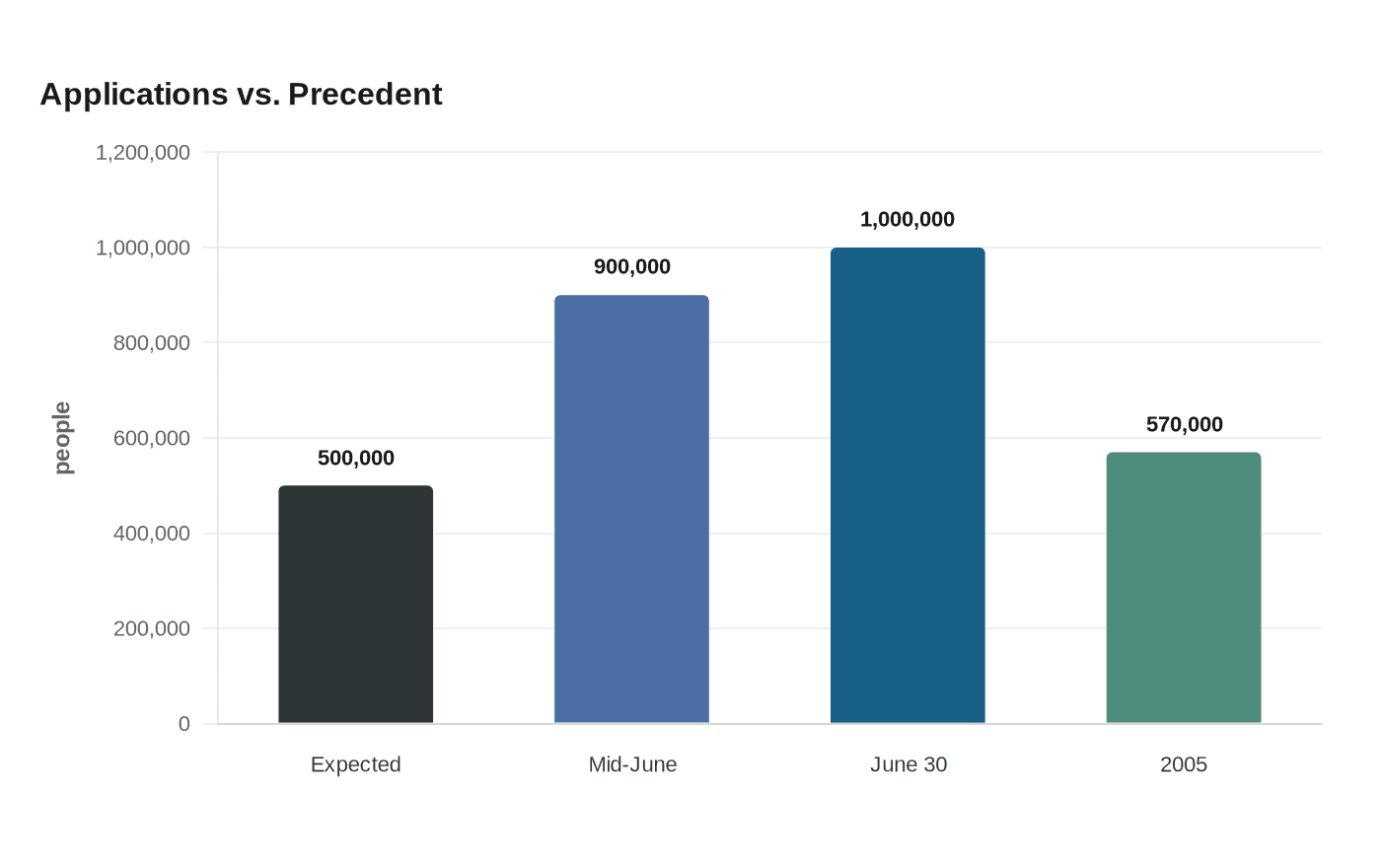
Spain said more than 1 million undocumented migrants had applied for legal status by the June 30 deadline, more than double the 500,000 applications the government first expected. The surge turned an extraordinary regularisation into a national test of whether paperwork can move quickly enough to convert legal limbo into stable jobs, taxes and residence rights.
The Council of Ministers authorised urgent processing of the royal decree on January 27, 2026, and the measure took effect on April 15 when it was published in the Official State Gazette. To qualify, applicants had to be adults, have been in Spain before January 1, 2026, prove at least five months of continuous residence and show no criminal record. Successful applicants receive a renewable one-year residence and work permit, along with a Social Security number.

By mid-June, Spanish authorities said about 900,000 people had already applied, a pace that signaled how many migrants were waiting for a legal route into the formal economy. Migration Minister Elma Saiz has framed the policy as a response to labour shortages and demographic ageing, with the government also linking it to the need to support the welfare state and pensions.
The campaign behind the measure began as a 2024 citizen-led proposal that gathered more than 700,000 signatures and won backing from around 900 non-governmental organisations, including the Roman Catholic Church, as well as business associations and trade unions. Migrant-rights groups, churches and NGOs urged people to apply before the deadline as the final days approached.
The regularisation is Spain’s seventh in the past 40 years, but the scale of the current round has raised the stakes for Pedro Sánchez’s government and for the offices that must process the claims. In 2005, the Socialist government of José Luis Rodríguez Zapatero regularised more than 570,000 undocumented migrants, a precedent now surpassed in volume before a single application has been fully worked through.
The opposition, led by Alberto Núñez Feijóo, has accused Sánchez of using the move to deflect attention from other problems. For the government, the real test begins after filing: how quickly Spain can turn more than 1 million applications into legal stability, and whether that stability reduces exploitation in the labour market or gets trapped in administrative delay.
This article was produced by Prism’s automated news system from verified source data, official records, and press releases, then run through automated quality and moderation checks before publishing. The system is built and supervised by the people who set the standards it runs under. Read our full AI policy.
Did this article answer your question?