Spirit Airlines union demands job protections in proposed U.S. bailout
Spirit’s union demanded a bailout with no furloughs or layoffs as Washington weighed $500 million in rescue financing and warrants for 90% of the airline’s equity.
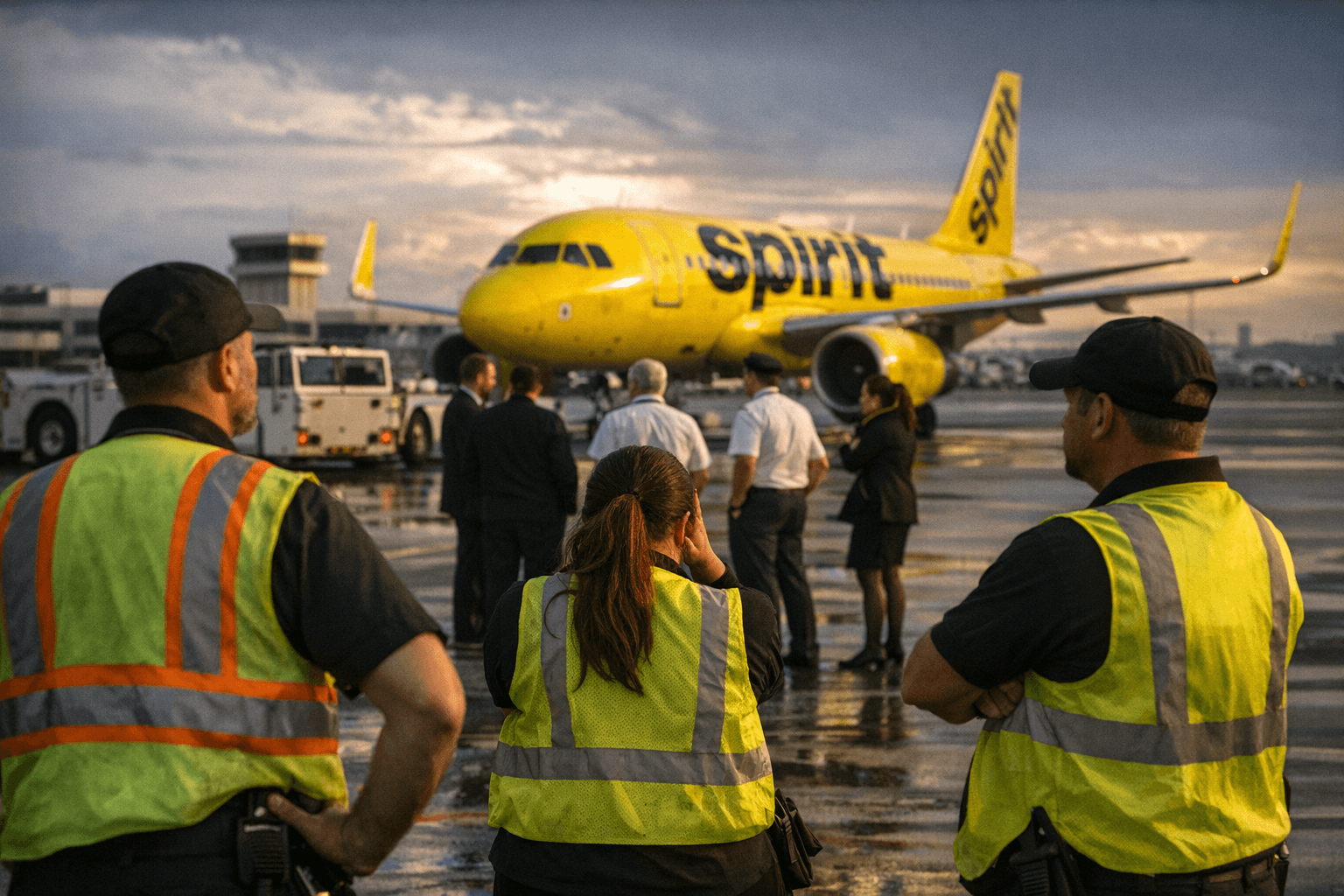
Spirit Airlines workers were pressing Washington to make any rescue protect jobs first, as the bankrupt carrier faced a cash deadline and a federal offer that could hand the government a claim on most of its equity. The International Association of Machinists and Aerospace Workers, which represents ramp-service employees, said any bailout had to include no furloughs, no layoffs and no burden shifting onto workers.
The stakes were immediate. Spirit’s outside lawyer, Marshall Huebner, said the company needed new financing or access to $240 million of its own funds by the end of next week. He warned that liquidation would wipe out more than 17,000 jobs and trigger billions of dollars in claims, underscoring how quickly the airline’s margin for error had disappeared after its second Chapter 11 filing in a year on August 29, 2025.
The proposed federal rescue under review would include $500 million in financing and warrants equal to 90% of Spirit’s equity, a structure that would put creditors and the government at the center of any reorganization. Major creditors were reviewing the term sheet, and the Trump administration was weighing whether to use the Defense Production Act as the legal basis for intervention, an unusual step for an airline bailout and a sign of how aggressively Washington was considering support.
The union’s argument reached beyond Spirit’s balance sheet. It pointed to pandemic-era airline rescue programs that came with restrictions on executive compensation, stock buybacks and dividends, and it is now pushing for similar conditions to keep public money from flowing first to investors or management while workers absorb the damage. Spirit’s financial stress worsened after a sharp rise in jet fuel prices in April 2026, making the low-cost carrier even more vulnerable as competitive pressure continued to squeeze margins.
The broader policy fight has widened beyond Spirit itself. The U.S. Department of Transportation has discussed contingency planning with major airlines in case Spirit liquidates, reflecting concern about spillover effects for passengers and routes if the carrier collapses. Senator Ted Cruz called the bailout a “terrible idea” on April 22, exposing the political risk around a rescue that could save an airline but still leave workers, creditors and taxpayers fighting over who gets protected first.
This article was produced by Prism’s automated news system from verified source data, official records, and press releases, then run through automated quality and moderation checks before publishing. The system is built and supervised by the people who set the standards it runs under. Read our full AI policy.
Did this article answer your question?

