Stanley Tucci explores Italy, discovering food’s deeper cultural stories
Tucci’s return turns regional pasta into a map of identity, showing how Italy uses food to preserve memory, ritual and local meaning.
Food as identity, not decoration
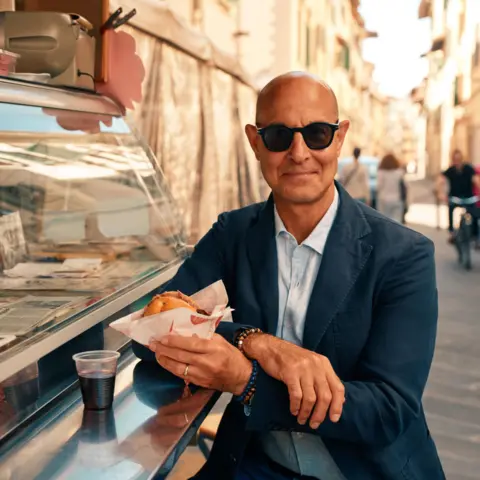
Stanley Tucci’s return to Italy is framed as a culinary journey, but the sharper story is cultural: food is the language through which regions explain themselves. The new season premieres on National Geographic on May 11 and streams May 12 on Disney+ and Hulu, sending Tucci through Naples and Campania, Sicily, Le Marche, Sardinia and Veneto as he traces how landscape, history and habit shape what ends up on the table. ABC’s launch note says the shared meal remains “the ultimate expression” of Italy’s people, which is exactly why the series lands as more than travel television.
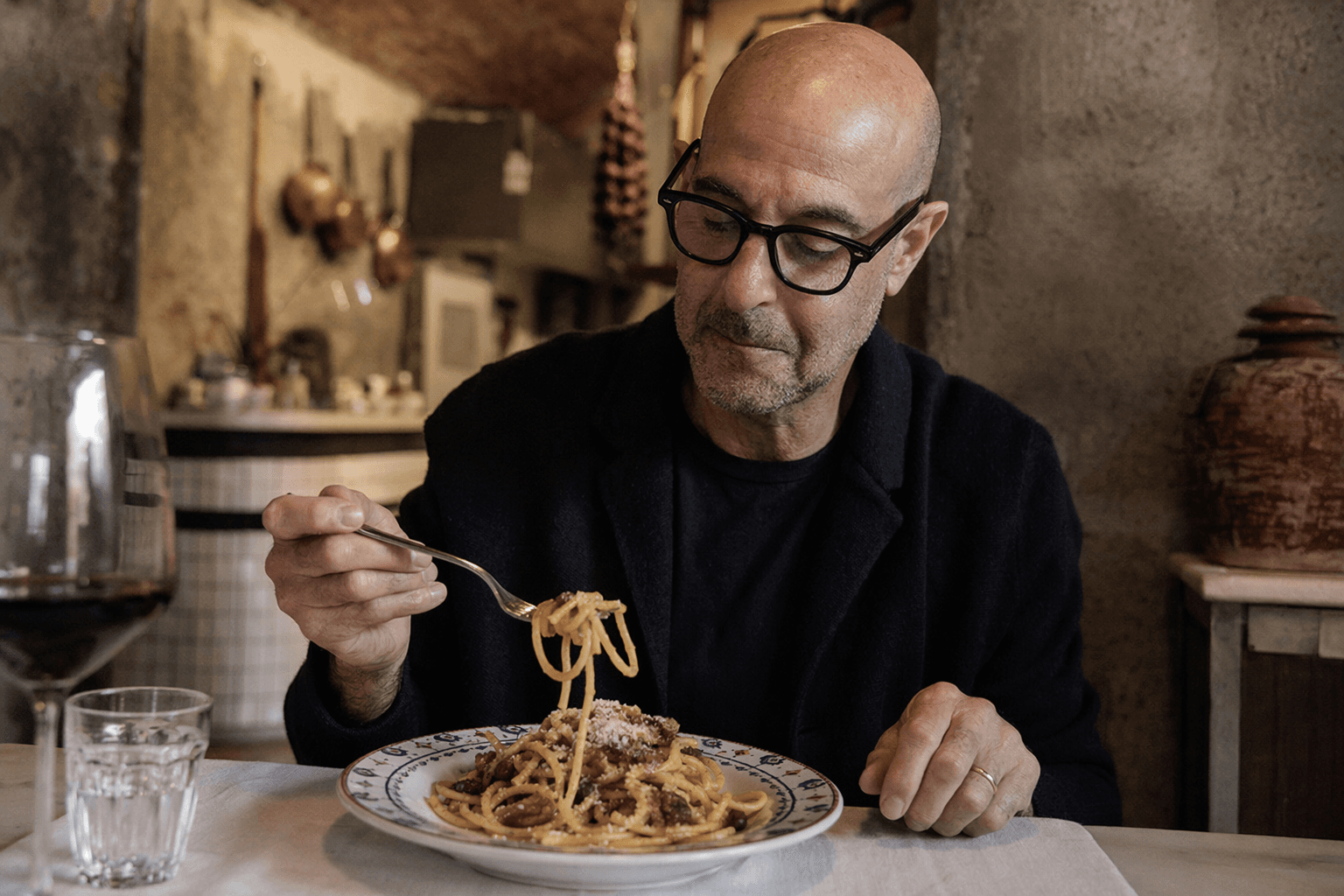
Tucci has always treated eating as anthropology rather than novelty, and this season doubles down on that idea. Disney+ describes the show’s core premise bluntly: in Italy, the shape of a pasta and the sauce served with it can signal identity and separate one region from the next. That principle drives the season’s route, from a once-forgotten grape in Campania to the long-running argument over tiramisu’s origins in Veneto, and from Sardinia’s food-longevity connection to Sicily’s multicultural food history. Tucci’s own framing is even sharper: “In Italy, food is never just food. It’s memory, identity and, sometimes, a full-blown argument.”
What makes the season feel especially timely is the way it highlights overlooked places rather than the usual postcard circuit. Le Marche, described by ABC as a lesser-known destination Tucci has never featured before, has culinary traditions that have largely escaped international tourists. That matters because the series is not just celebrating dishes; it is showing how cuisine becomes regional branding, local pride and, in many cases, an economic defense against being flattened into a generic “Italian” experience. Sicily’s multicultural layers, Naples’s food history and Sardinia’s longevity traditions all point to the same idea: a place protects itself by protecting its recipes.
The American contrast is stark. The U.S. food system has spent decades moving toward convenience, and the USDA says the shift has been powered by more two-earner households, more affordable fast-food outlets, more advertising by large chains and smaller household sizes. In 2024, food-away-from-home spending reached 58.9 percent of total food expenditures, or $1.52 trillion, while food-at-home spending was $1.06 trillion. That is not just a consumer preference story; it is an economic structure that rewards speed, packaging and scale over ritual, regional specificity and the social time required to cook.
The time data tells the same story. The Bureau of Labor Statistics says Americans spent an average of 0.67 hours a day on food preparation and cleanup in 2024, and 63.1 percent of people engaged in it on an average day. That is enough time to keep a kitchen functioning, but not enough to make cooking a dominant social institution. In a country where dinner is often compressed between work, commuting and screens, the meal increasingly becomes a logistics problem instead of a communal event. Tucci’s Italy pushes against that logic by insisting that eating is not simply consumption, it is belonging.
The health data shows the cost of that shift. The CDC found that during August 2021 to August 2023, ultra-processed foods accounted for 55.0 percent of total calories consumed by Americans age 1 and older, including 61.9 percent for youth ages 1 to 18 and 53.0 percent for adults. The most common calorie sources included sandwiches, sweet bakery products, savory snacks and sweetened beverages. The FDA goes further, saying it is estimated that 70 percent of the U.S. food supply is made up of foods commonly considered ultra-processed, and that children get over 60 percent of their calories from them. That is a public-health challenge, but it is also a cultural one: when food is engineered for speed and shelf life, it loses some of its power to anchor community.

Policy is starting to catch up with that reality. The FDA and USDA are extending the comment period for their joint request for information on ultra-processed foods until October 23 as they try to develop a uniform definition, and the FDA says it partnered with the NIH in May 2025 to examine how UPFs may affect health. That kind of definitional work sounds technical, but it could shape labeling, procurement, reformulation and public nutrition programs. Once regulators decide what counts as ultra-processed, manufacturers, retailers and public institutions will have to respond to a category that has already become central to the debate over obesity, type 2 diabetes, cardiovascular disease and certain cancers.
Seen through that lens, Tucci in Italy is not nostalgia for old-world dining. It is a reminder that food systems always express values, whether the value is speed, price, identity or care. Italy’s regional cuisines preserve memory by keeping meals tied to land and local knowledge; America’s industrial food economy has made calories abundant, but often at the expense of meaning, routine and shared time. Tucci’s central argument is simple enough to fit on a plate and large enough to shape policy: food can either fragment people into consumers, or bring them back to one another. As he puts it, “food doesn’t do that; it brings them together.”
This article was produced by Prism’s automated news system from verified source data, official records, and press releases, then run through automated quality and moderation checks before publishing. The system is built and supervised by the people who set the standards it runs under. Read our full AI policy.
Did this article answer your question?