Starmer holds private talks with Streeting ahead of King’s Speech
Starmer’s 16-minute meeting with Wes Streeting overshadowed a King’s Speech meant to unveil more than 35 bills and reset a battered government.

Sir Keir Starmer’s private talks with Wes Streeting became the real Westminster drama as the government prepared for the King’s Speech, a day meant to showcase authority but instead defined by questions about Labour’s grip on power.
Streeting, seen by many in Labour as a possible leadership rival, entered 10 Downing Street at about 8.29am and left roughly 16 minutes later. The brevity of the encounter, and the insistence that it stay private, turned a routine morning conversation into a signal of the pressure now bearing down on the prime minister before King Charles III was due to set out the government’s agenda in the House of Lords at about 11.30am.
The State Opening of Parliament and the 2026 King’s Speech were scheduled for Wednesday 13 May, with the speech written by the government to outline its legislative and policy programme for the new parliamentary session. This year’s address was expected to unveil more than 35 bills and draft bills, covering everything from economic growth, trade and an EU partnership to justice, home affairs, education, technology, energy security, health, housing, transport and foreign affairs. House of Lords debates on the speech were set to run for five days between 14 and 21 May.
But the ceremonial backdrop could not disguise the political strain. Reports said four government ministers had resigned, nearly 90 Labour MPs had called for Starmer to quit, and trade unions had withdrawn support. Other coverage put the number urging him out at at least 80, while more than 100 MPs warned against a leadership contest. The immediate trigger was Labour’s poor local election results, which have hardened criticism inside the party and intensified speculation over Starmer’s authority.
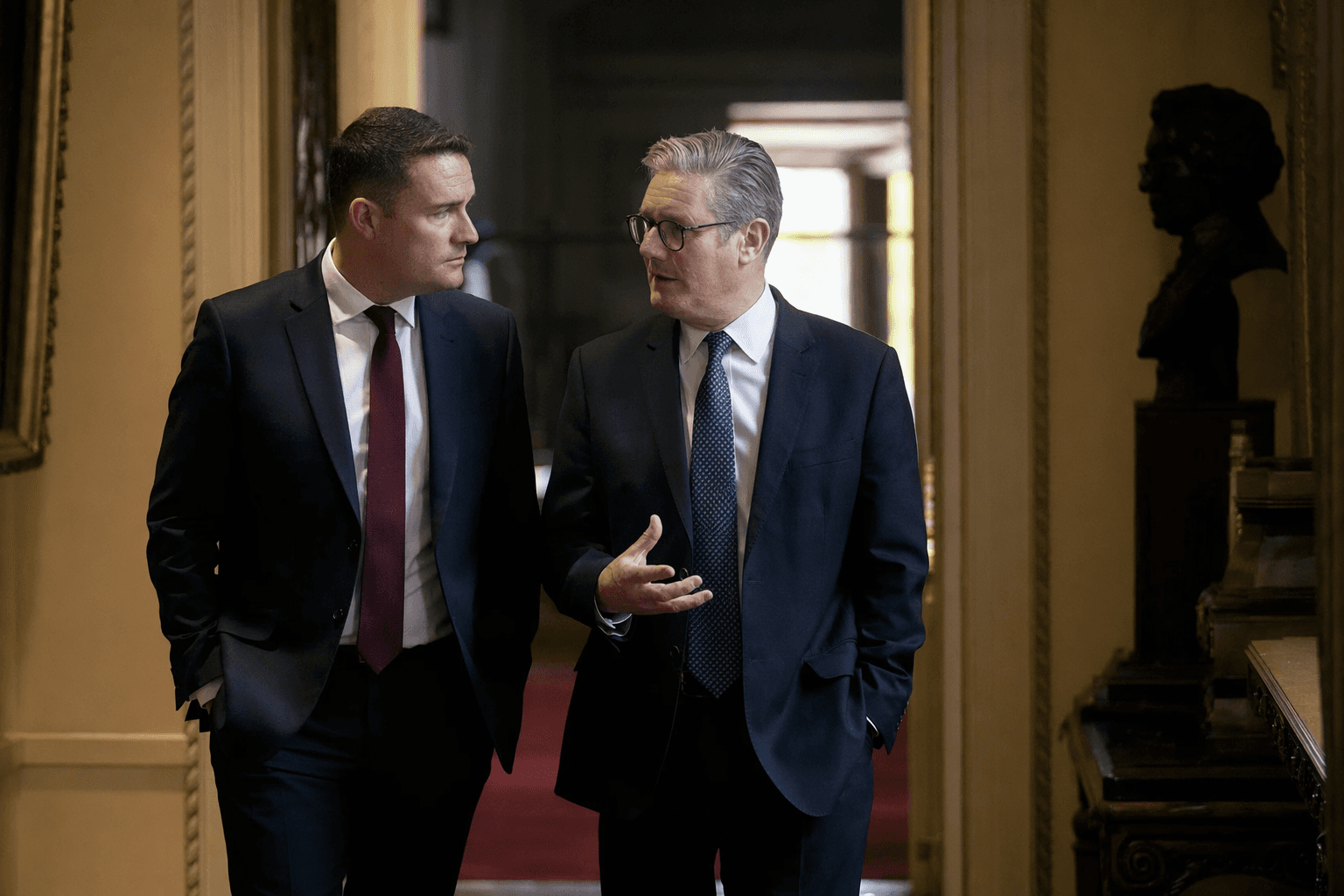
The contrast matters because the King’s Speech is normally the government’s biggest set-piece moment, the constitutional theatre where a ministry resets the agenda and demonstrates discipline. Instead, the brief side meeting with Streeting, and the manoeuvring around it, exposed how much of the government’s real story is now being written away from the gilded chamber in the Lords.
The State Opening still brought the familiar machinery of power into view. Parliament was prorogued before the new session and would resume once the monarch left, while traffic around Whitehall and Parliament Square was restricted for the day. Yet the most revealing movement in Westminster came not from the procession or the speech itself, but from the hurried 16 minutes Starmer spent with one of his most talked-about colleagues.
This article was produced by Prism’s automated news system from verified source data, official records, and press releases, then run through automated quality and moderation checks before publishing. The system is built and supervised by the people who set the standards it runs under. Read our full AI policy.
Did this article answer your question?

