Trump administration loans 53.3 million barrels from oil reserve
Gasoline hit $4.511 a gallon as Trump tapped 53.3 million barrels from the reserve, betting market calm will matter as much as actual relief.
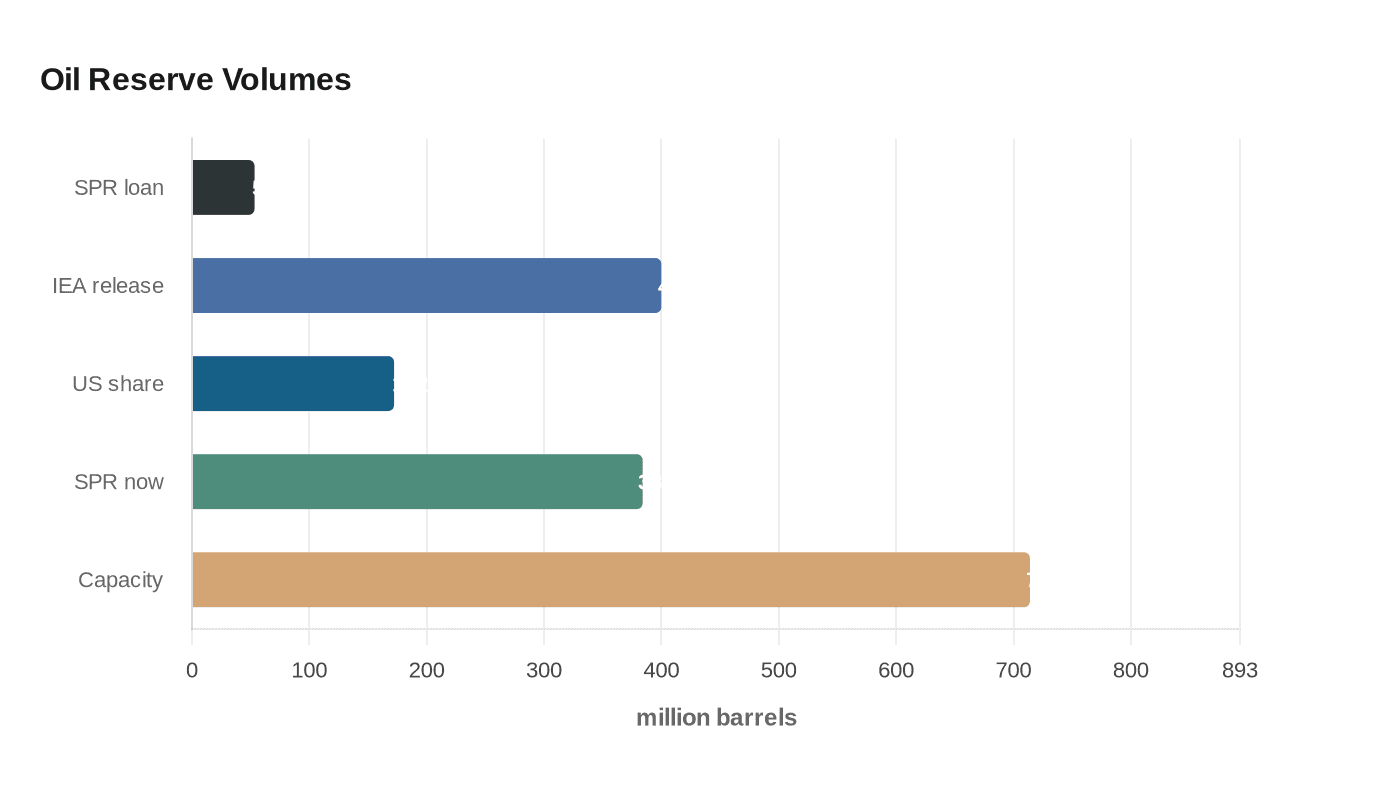
The Trump administration bet that 53.3 million barrels from the Strategic Petroleum Reserve would do more than refill tanks: it would calm a market jolted by the U.S.-Israeli war with Iran and the squeeze on oil moving through the Strait of Hormuz. The immediate question was whether the loan would ease fuel costs at the pump or mainly send a signal that Washington was prepared to lean on emergency stockpiles again.
The answer depended in part on how much crude actually disappeared from the market. The International Energy Agency said member countries unanimously agreed on March 11, 2026, to make 400 million barrels of emergency stocks available, calling it the largest coordinated release in its history. The agency later said the U.S. share was 172.2 million barrels. It also said flows through Hormuz had fallen to less than 10% of pre-conflict levels, after the strait had carried about 20 million barrels a day of crude oil and refined products in 2025.
The pressure on consumers was already visible in gasoline data. AAA put the national average at $4.511 a gallon on May 13, up from $4.125 a month earlier and $3.157 a year earlier. For the administration, that kind of jump raised the stakes far beyond energy policy. Higher fuel prices can feed broader inflation, squeeze household budgets and hand political damage to incumbents heading into the 2026 election cycle.
The Department of Energy said the oil would be repaid in crude, and that the premium on the loans could reach 24% to keep the plan cost-neutral for taxpayers. Another estimate put the premium closer to 28%, or 15.1 million barrels on the 53.3 million-barrel loan, depending on final contract terms. Nine companies, including Exxon Mobil, Trafigura and Marathon Petroleum, took the award.
The move also showed how much room the United States still has, and how much it has already used. The reserve now holds roughly 384 million barrels, less than the world uses in four days, even though the SPR has an authorized capacity of 714 million barrels. It sits at four Gulf Coast sites in Texas and Louisiana, including Bryan Mound, Big Hill, West Hackberry and Bayou Choctaw, and is linked to 24 Gulf Coast refineries and six more in Michigan, Ohio and Kentucky.
The administration has used the reserve before as a market backstop, but each draw leaves less insurance for a bigger shock. In this case, the SPR was asked to do both jobs at once: soften prices now and preserve enough crude for the next emergency.
This article was produced by Prism’s automated news system from verified source data, official records, and press releases, then run through automated quality and moderation checks before publishing. The system is built and supervised by the people who set the standards it runs under. Read our full AI policy.
Did this article answer your question?

