Starmer rejects US Iran blockade role as Hungary ousts Orbán
Britain refused to join Donald Trump’s Iran blockade while Péter Magyar’s Tisza party toppled Viktor Orbán, signaling allied recalibration from the Gulf to Budapest.
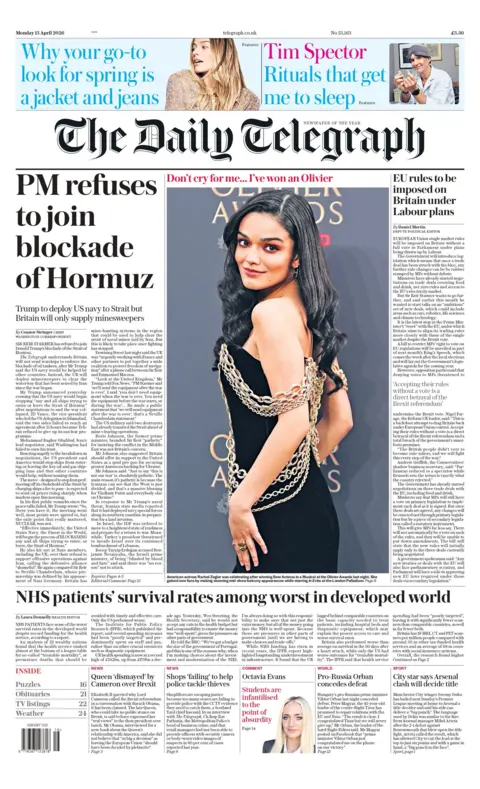
Britain declined to join the US blockade of the Strait of Hormuz, choosing minesweepers over warships as Washington tightened pressure on Iran after collapsed peace talks in Pakistan. The move matters because the strait is one of the world’s most critical oil and gas chokepoints, and any disruption there quickly ripples through energy markets and allied diplomacy.
Reports said the UK government would not send ships to enforce the blockade of oil tankers. Instead, British forces were expected to deploy minesweepers to help clear the waterway, a narrower role that keeps London aligned with maritime security without signing on to a full US confrontation. US Central Command said it would not impede freedom of navigation for vessels transiting the Strait of Hormuz to and from non-Iranian ports, underscoring the tension between coercion and keeping global shipping moving.
The dispute also reached into British domestic politics. Yvette Cooper has recently argued that shipping through the Strait of Hormuz must remain toll-free, and she linked the crisis to higher fuel, food and mortgage costs in Britain. That warning reflects how a clash in the Gulf can quickly become a cost-of-living problem at home, especially when energy transport is at stake.
At the same time, a different kind of political rupture unfolded in Hungary. Péter Magyar’s Tisza party defeated Viktor Orbán after 16 years in power, with early reports saying Tisza was on course for a supermajority in the 199-seat parliament. Orbán conceded defeat on Sunday night after what he called a “painful” election result, closing a long era in which Fidesz dominated Hungarian politics.

Turnout reached a record 77.8 percent, the highest ever recorded in a Hungarian election, giving the result added weight beyond a routine change of government. Magyar said Hungary would once again be a strong ally of the European Union and NATO, a statement likely to be read in Brussels and Washington as a promise of sharper alignment after years of friction over rule of law, foreign policy and democratic standards.
Taken together, the two headlines capture a wider shift among Western allies under pressure from conflict and populism. In London, Starmer’s refusal to join a US blockade signals caution about being pulled into another escalation in the Middle East. In Budapest, Orbán’s removal shows voters can still overturn entrenched power, and that European governments are being pushed to recast their alliances in real time.
This article was produced by Prism’s automated news system from verified source data, official records, and press releases, then run through automated quality and moderation checks before publishing. The system is built and supervised by the people who set the standards it runs under. Read our full AI policy.
Did this article answer your question?