Starmer’s defiant speech defuses immediate Labour leadership challenge
Starmer’s pledge to “not walk away” cooled an immediate coup bid, but 40 Labour MPs still wanted him out after the local election rout.

Keir Starmer’s vow not to walk away bought him time, but it did not restore authority. The prime minister’s make-or-break speech was enough to blunt an immediate leadership challenge after Labour’s heavy local election losses, yet the wider question inside the party remained unchanged: whether Starmer had merely delayed the reckoning.
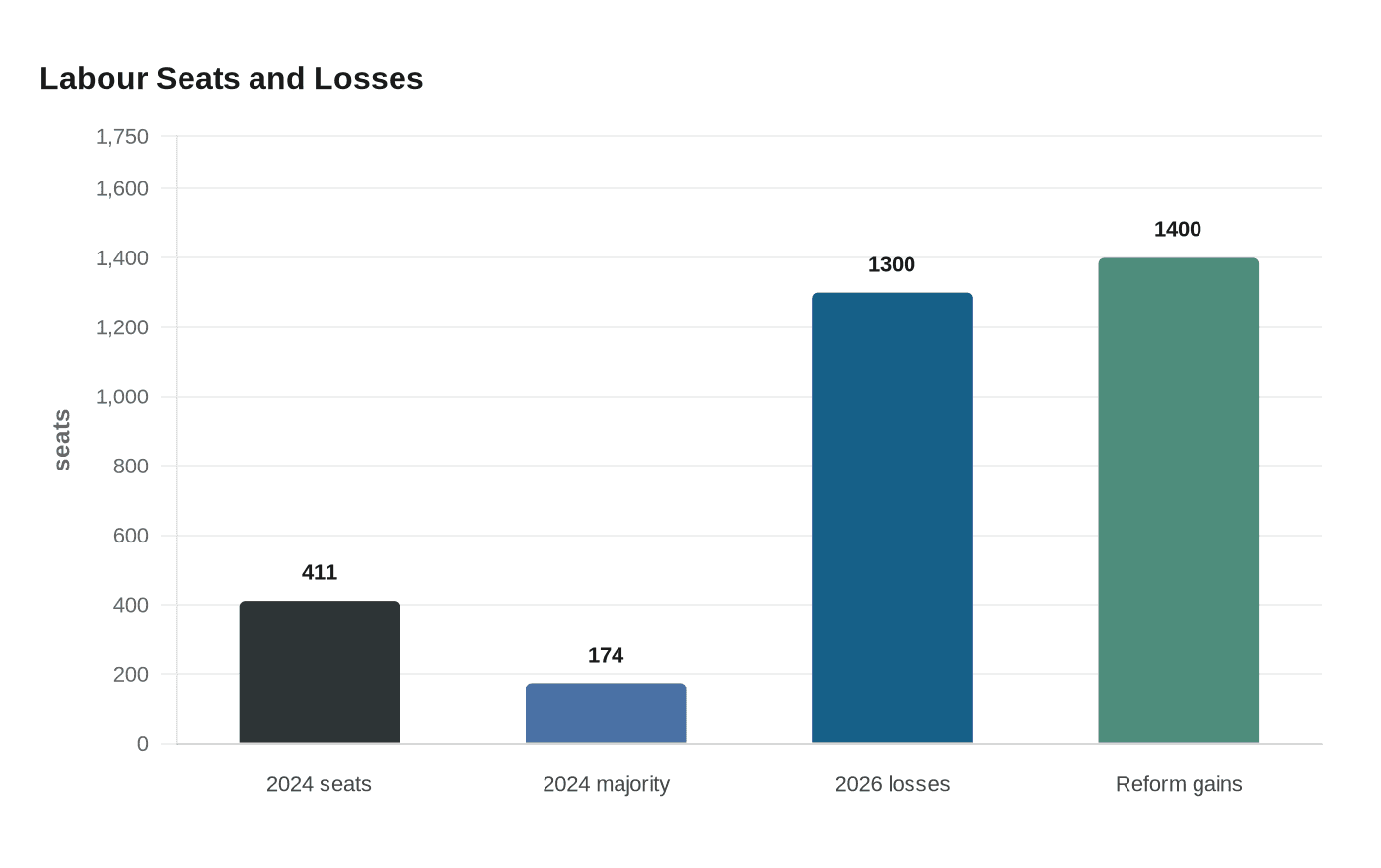
Labour entered the crisis from a position that would have seemed unassailable less than two years ago. On 4 July 2024, the party won 411 seats and a 174-seat majority, ending 14 years of Conservative rule and putting Starmer in Downing Street with a huge parliamentary cushion. That victory now looks politically distant. In the 2026 local elections, held across about 5,000 council seats in England, Labour lost more than 1,300 council seats in early counts, with some later tallies putting the losses above 1,400. Reform UK emerged as the biggest beneficiary of the protest vote, with gains also put above 1,400 seats in later figures.
Starmer tried to arrest the damage by taking responsibility and insisting he would stay to “deliver change.” He repeated that message in his speech on 11 May 2026, saying he would not walk away and promising a broader reset built around closer ties with Europe, growth, defence and energy. The intervention appeared to do what it was designed to do: cool talk of a formal challenge and stop the rebellion from immediately crystallising into a contest for the leadership.
But the pressure did not disappear. Sky News reported that around 40 Labour MPs were calling for Starmer to resign even after the speech, while others were pushing for an orderly transition or a timetable for a new leader. That matters because Labour’s internal rules, changed in 2021, raised the bar for any challenger. A contender now needs nominations from 20% of Labour MPs to force a leadership election, a threshold that makes a swift coup harder than before, even if discontent is spreading.
The politics, then, are not settled. Starmer survived the day because the party does not yet have an obvious route to replace him, not because critics have been persuaded. The gap between Labour’s 2024 landslide and its 2026 local-election slump has sharpened the central test of his premiership: whether he can recover authority quickly enough to stop rivals, inside Westminster and beyond, from turning a temporary reprieve into a second, more dangerous challenge.
This article was produced by Prism’s automated news system from verified source data, official records, and press releases, then run through automated quality and moderation checks before publishing. The system is built and supervised by the people who set the standards it runs under. Read our full AI policy.
Did this article answer your question?

