State Police honor Calverton sergeant as 9/11 illness toll rises
More than 100 state troopers attended services for retired Sgt. Michael Piro, who died from a 9/11-related illness. His death highlights ongoing health impacts for first responders.
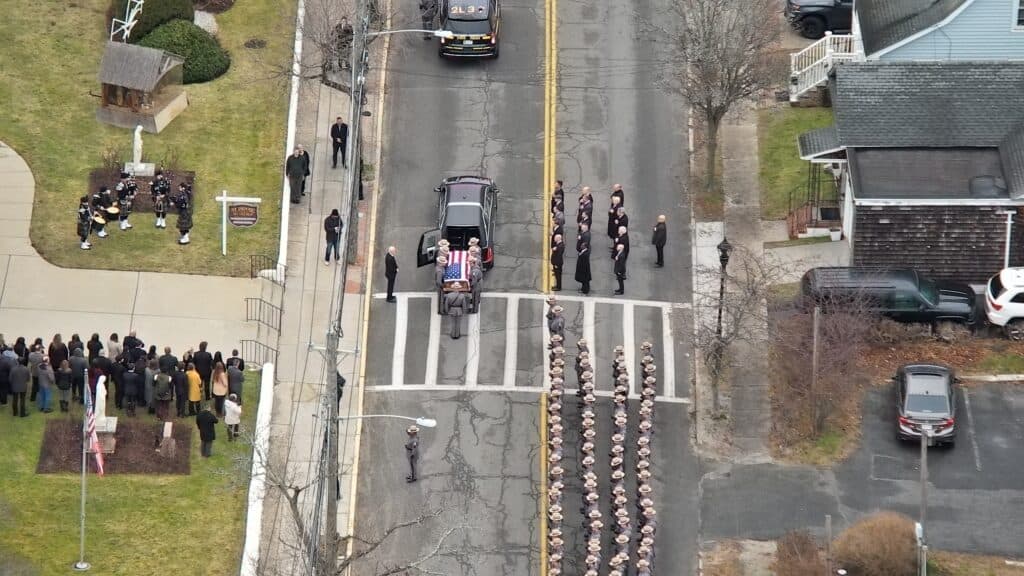
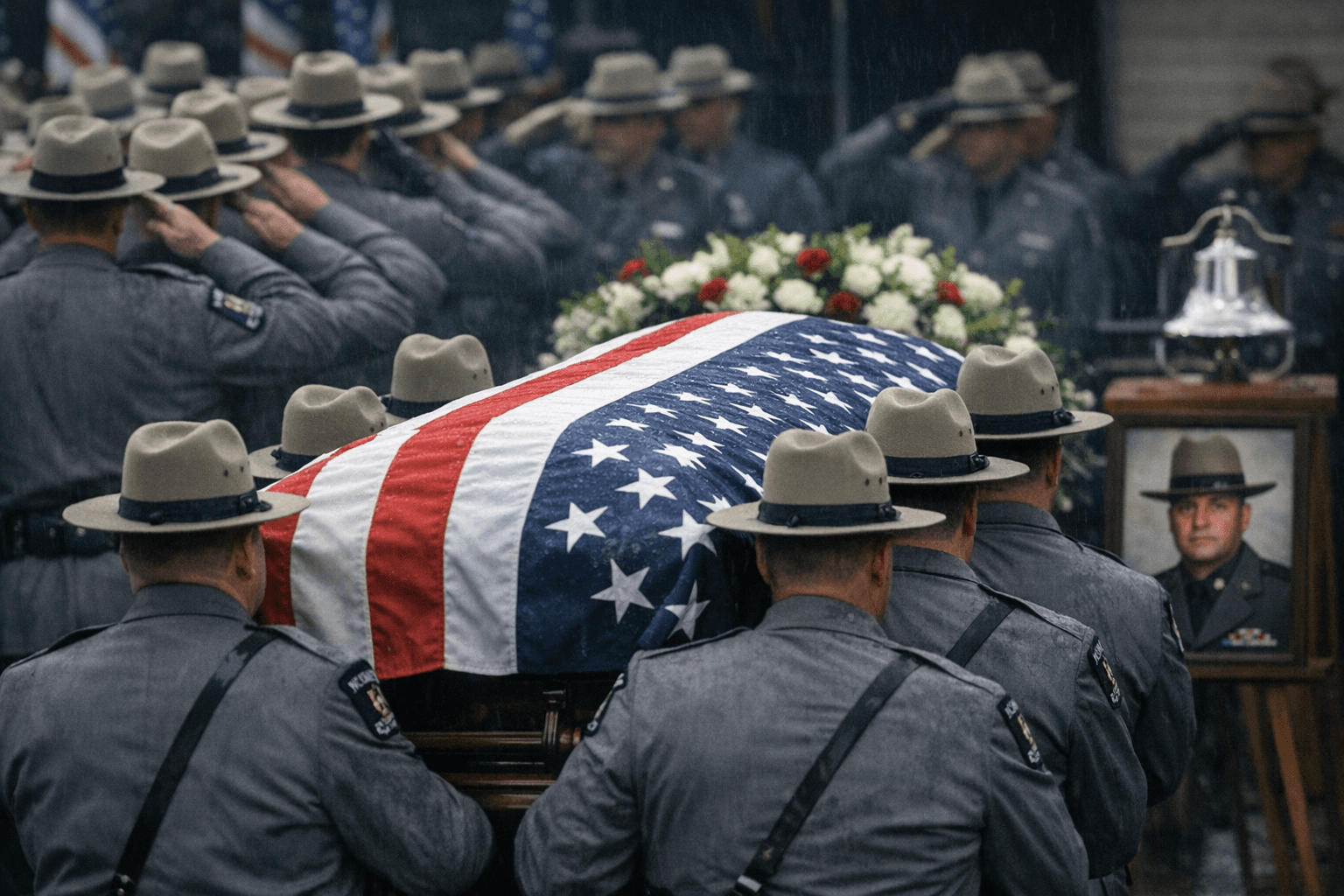
More than 100 New York State Police troopers filled St. Isidore Catholic Church in Riverhead on Jan. 14 to honor retired Sgt. Michael L. Piro of Calverton, whose death on Jan. 6 at age 63 was attributed to an illness linked to his World Trade Center service after Sept. 11. Piro retired in 2015 after 29 years with the State Police. The department held a procession and traditional funeral honors as family members and agency representatives paid their respects.
Piro’s death marks the 39th member of the State Police to die from a 9/11-related illness, a grim milestone that underscores how the health consequences of the attacks continue to unfold more than two decades later. Governor Kathy Hochul ordered flags on state buildings lowered in his honor, a formal recognition of both his service and the prolonged toll borne by first responders.
For Suffolk County residents, the service and procession were more than a departmental ritual; they were a reminder that the East End’s connections to 9/11 persist. Calverton families and colleagues faced a public farewell that reflected the tight-knit nature of the local law enforcement community. The visible turnout of troopers highlighted the emotional and social support networks that form around line-of-duty illnesses and deaths.
The ongoing wave of post-9/11 illnesses raises enduring public health and policy questions for local and state leaders. Decades-long exposure to toxins at disaster sites has produced cancers and respiratory diseases with long latency periods, straining medical surveillance systems and complicating benefit and compensation determinations. Piro’s passing reinforces the need for sustained medical monitoring, timely access to specialty care, and clear pathways to benefits for those who served at the World Trade Center and their families.
Community advocates have long argued that equitable access to care and compensation is essential for families who shoulder the financial and emotional costs of chronic, exposure-linked illness. The continuation of honors and official remembrances, such as the lowered flags ordered by the governor, keeps public attention on those needs while also underscoring systemic gaps in long-term health planning for first responders.
As Suffolk County mourns another loss tied to Sept. 11, the event also serves as a prompt for local officials, health providers, and community groups to reaffirm commitments to monitoring, outreach, and support for affected families. For residents, the immediate impact is personal: neighbors and fellow troopers are grieving, and the wider implication is a reminder that the consequences of that day remain a present public health and policy challenge.
Know something we missed? Have a correction or additional information?
Submit a Tip